
Childs recalled trying to book a GP appointment and being told that there was a seven-week wait.
“By the time you get to that seven weeks, your problems are either much worse, or they’ve gone.”
Kitiona, who had been living on Waiheke for about 13 years, said she “always had the pull to come home” to Rotorua.
“There’s a high need there for more services.”
Kitiona said the practice was about “reducing barriers for people getting in the door”.
“Once you get through there, it’s reducing those barriers even more.”
This included how patients were greeted, cost, environment, and wraparound services, she said.
Kitiona said Health New Zealand Te Whatu Ora had granted the practice interim “very low-cost access” status. This meant the government agency fixed the prices.
Fees on the practice’s website showed people without a community services card aged 18 and older would pay $30.50 for an appointment.
Community services card holders aged 18 and older would pay $20.50.
Appointments for children 14 to 17 cost $13 and were free for children 13 and younger – regardless of community services card status.
She acknowledged it was “still a lot of money for some people” and hoped to use pathways and funding to reduce it.
Kitiona said Te Whatu Ora would assess its status in six months, based on its patient base.
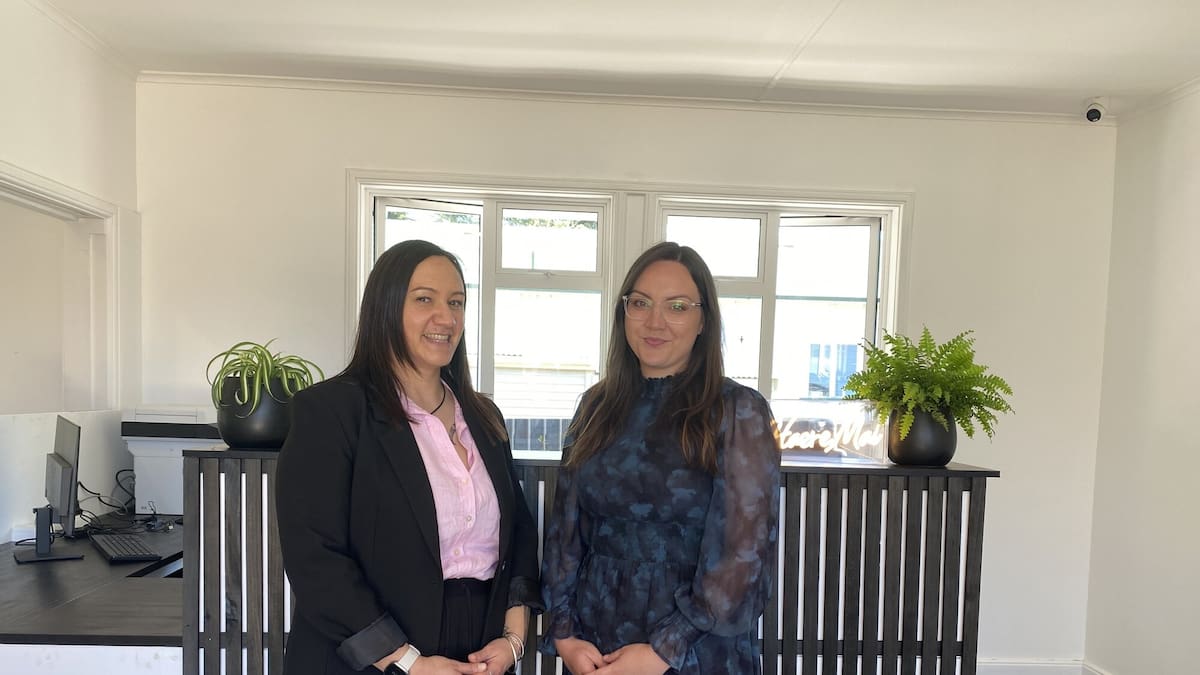
Tau Oranga Health Care co-founders and nurse practitioners Jacinda Childs (left) and Jayme Kitiona are passionate about women’s health. Photo / Megan Wilson
Childs, who had worked in Rotorua practices, said enrolment was a “massive barrier” to getting care.
“Everywhere I’ve worked, we’ve had people coming in: ‘Can we enrol?’”
She would have to tell them: “No, sorry, you can’t’.”
Childs said whānau were already asking if they could enrol at Tau Oranga Health Care when it put up its signs before Christmas.
She said appointments would be 20 minutes instead of the standard 15.
Childs said Kitiona was a long-acting reversible contraceptive provider.
“I’m so thankful that she’s down here because it’s been really hard for us to access that in Rotorua.
“I worked in a practice with 11,000 patients, and we had one provider who was very, very overbooked … so to get somebody to have an IUD put in, it would be months … ”
She said people could see Kitiona “within two weeks”.
Kitiona said ‘tau’ described a feeling of being settled and calm, and ‘oranga’ meant health and wellbeing.
“For us, that really resonated because we want people … coming in to feel that.”
A new kaupapa Māori primary healthcare service provider Tau Oranga Health Care is opening in Rotorua on January 19. Photo / Megan Wilson
Pinnacle Midlands Health Network chief executive Justin Butcher said Tau Oranga Health Care was a strong example of what primary care could look like when led by experienced clinicians and “built around whānau”.
“Nurse Practitioners are highly trained. They can assess, diagnose, prescribe, and manage both everyday and long-term health needs, and they play an important role in improving access to care.”
Butcher said Rotorua, similar to many parts of Aotearoa, was “under real pressure” when it came to timely primary care access.
“New services that make it easier for people to get care, close to home, are important.”
A Pinnacle Midlands Health Network statement said Tau Oranga Health Care would provide comprehensive, whānau-centred primary healthcare, including long-term condition management, screening services, health promotion, and care that supported prevention and early intervention.
The service would also offer a strong focus on wahine health, including assessment and management of perimenopause and menopause and support for common gynaecological concerns.
Additional services included ear health support, including tympanometry and earwax removal.
Megan Wilson is a health and general news reporter for the Bay of Plenty Times and the Rotorua Daily Post. She has been a journalist since 2021.