
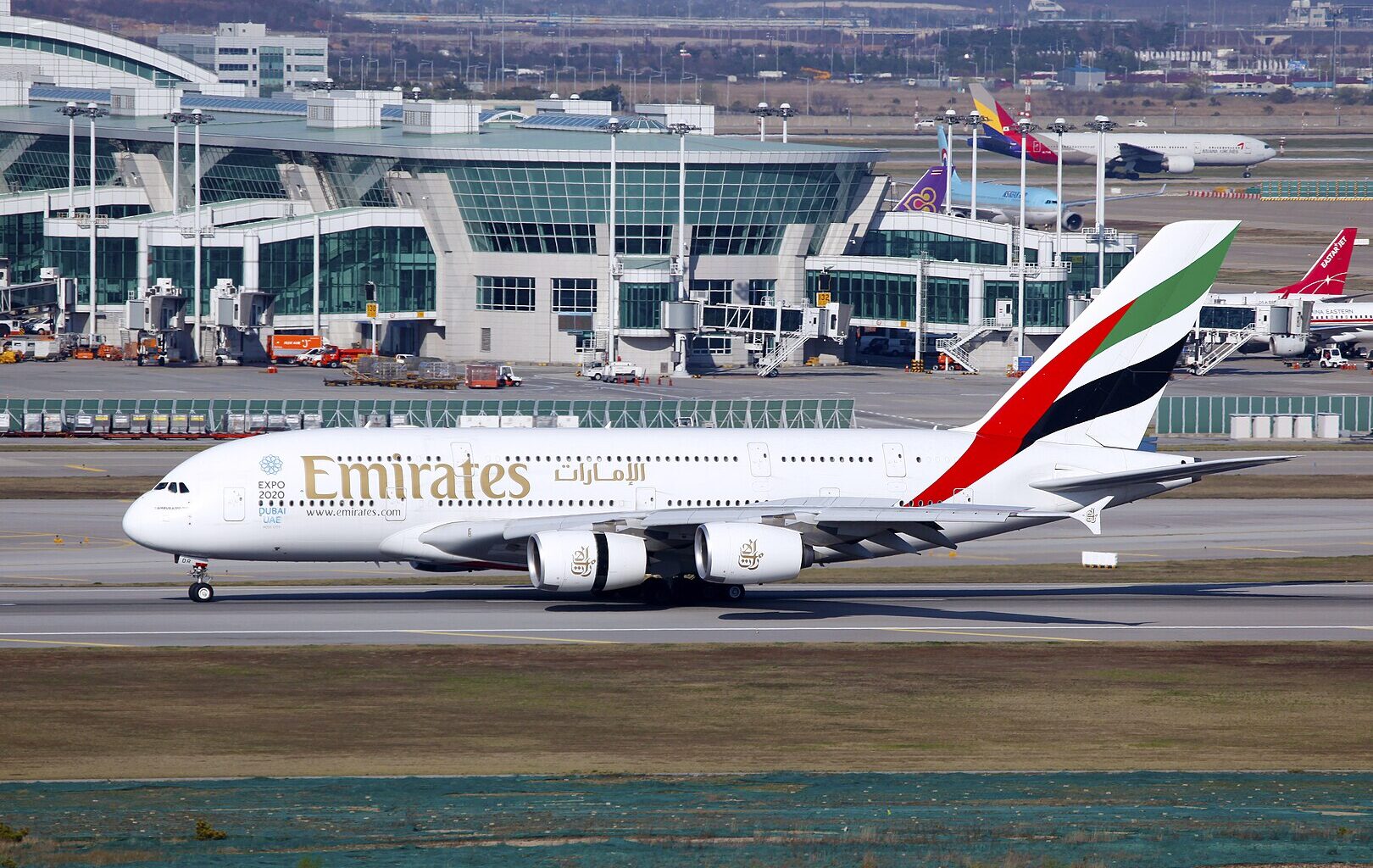
DUBAI- Emirates (EK) has confirmed it will end Airbus A380 operations between Dubai (DXB) and Copenhagen (CPH), with the final flight scheduled for May 31, 2026.
From June 1, Copenhagen Airport (CPH) will no longer see the double-decker aircraft, as Emirates (EK) shifts to a higher frequency strategy using smaller widebody jets.
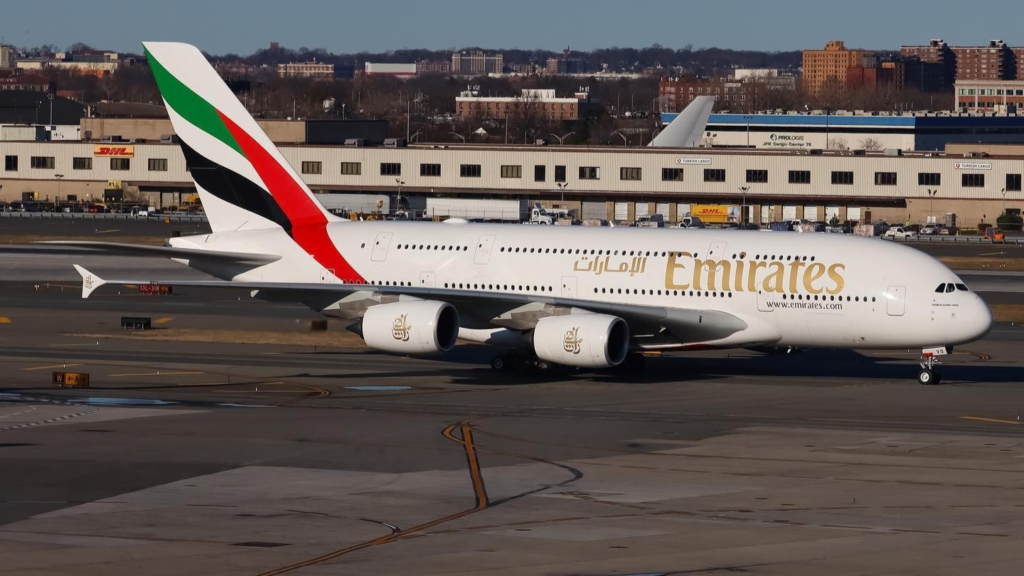 Photo: JFK Spotting
Emirates Ending A380 Ops to Copenhagen
The decision to withdraw the Airbus A380 from Copenhagen is driven by network optimization rather than reduced demand. Emirates is doubling its Copenhagen service from once daily to twice daily, prioritizing schedule flexibility and improved connectivity over raw seat capacity.
The A380 service will be replaced by a Boeing 777-300ER on the existing flight, while a new daily frequency will launch using the Airbus A350-900. This approach allows Emirates to maintain a competitive presence in the Scandinavian market while improving load factors and yields, Simple Flying reported.
Etihad Airways (EY) has also expanded its Copenhagen service, increasing Abu Dhabi flights to daily and transitioning from the Airbus A321LR to the Boeing 787-9. This reflects growing competition and sustained demand in the Gulf to Northern Europe corridor.
Emirates Aircraft History on the Copenhagen Route
Emirates has served Copenhagen since 2011, initially operating the Airbus A330-200. Over time, the route has seen multiple aircraft types, including the Boeing 777-200ER, 777-300, and 777-300ER.
The Airbus A380 first appeared on the route in December 2015 and remained until March 2020, when pandemic-related adjustments brought back the 777-300ER. The superjumbo returned in January 2025, operating a high-density two-class configuration with 615 seats.
This configuration was among the highest-capacity A380 layouts in commercial service. Despite earlier plans to retain it, Emirates has now opted to redeploy the aircraft elsewhere. The airline has not disclosed where the freed-up A380 capacity will be used.
 Photo: Oliver Richter
Twice-Daily Flights Begin June 1
Starting June 1, Emirates will operate two daily flights between Dubai and Copenhagen. The morning and afternoon departures will be handled by the Boeing 777-300ER, while the new evening service will use the Airbus A350-900.
The 777-300ER will feature a 421-seat layout, making Copenhagen one of the longest routes operated with this configuration. The A350-900, seating 298 passengers, represents Emirates’ lowest-capacity long-haul aircraft and introduces premium economy on the route for the first time.
Total daily seat capacity will increase to 1,438 seats, representing a 17 percent rise despite the addition of a second daily flight. This reflects Emirates’ focus on frequency and product diversity rather than maximum capacity.
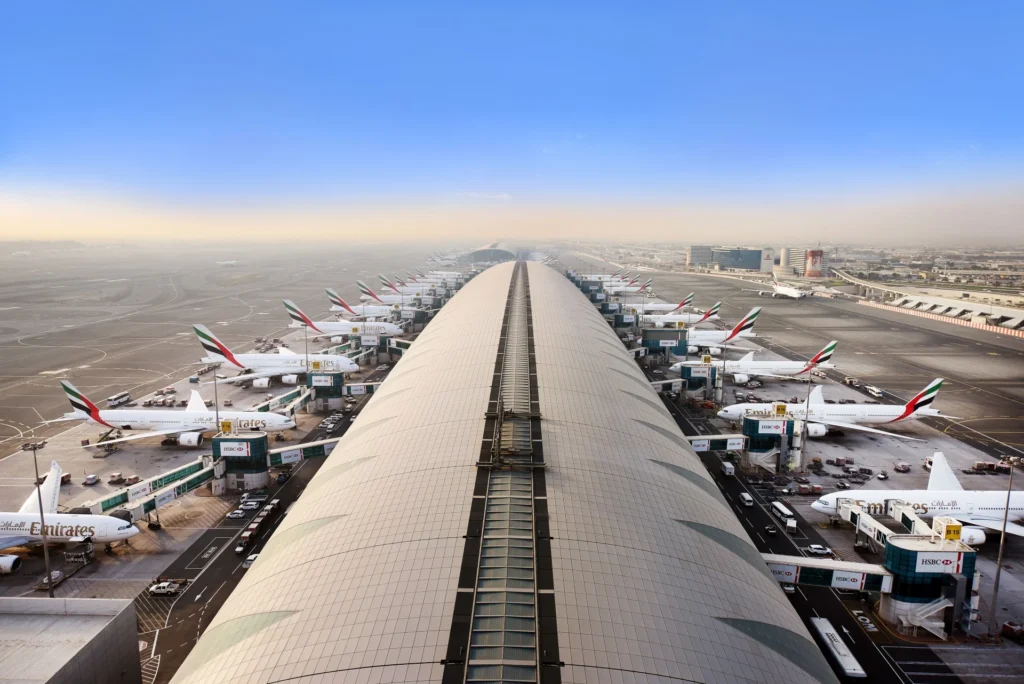 Photo: Dubai International Airport
Improved Connectivity Through Dubai
The new schedule aligns Copenhagen with Emirates’ mid-afternoon Europe departure bank from Dubai, the airline’s second-largest after the morning wave. The return flight arrives in Dubai at 5:55 am, coinciding with a major inbound connection window from Europe.
This timing enhances onward connectivity across Asia, Africa, and Oceania, offering passengers more routing options and shorter connection times.
Booking data for the 12 months ending October 2025 shows that more than 200,000 Emirates passengers from Copenhagen connected onward through Dubai.
India was the largest country market, followed by Thailand and Australia. Other significant destinations included Taiwan, Vietnam, South Africa, Indonesia, the Philippines, Mauritius, and Japan.
Copenhagen to Taipei emerged as the most popular city pair, followed by Bangkok, Bali, and Mauritius. Strong demand for Vietnam has been reinforced by the launch of Vietnam Airlines’ Copenhagen service in December 2025.
 Copenhagen, Denmark; Photo- Visit Copenhagen
Copenhagen Travel Guide
Copenhagen combines thoughtful urban design, deep history, and one of Europe’s strongest food scenes. The city values livability, which shapes how visitors experience it.
This guide covers practical planning details, the best times to visit, where to stay, what to see, and how to move through the city with confidence.
Understanding Copenhagen Beyond the Highlights
Copenhagen does not overwhelm visitors with landmarks. Its strength lies in balance. Clean public spaces, strong cycling culture, and people-first planning define the city more than monuments.
Travelers who approach Copenhagen at a slower pace tend to enjoy it most. Neighborhood walks, long meals, harbor swims, and bike rides reveal why the city consistently ranks high for quality of life.
Arriving in Copenhagen
Copenhagen Airport is located about eight kilometers from the city center. It is one of the most efficient airports in Northern Europe.
The metro connects the airport to central Copenhagen in roughly 15 minutes. Trains and buses are also available. Taxis are reliable but costly compared to public transport.
Visa and Entry Requirements
Denmark is part of the Schengen Area. Travelers from the EU, UK, US, Canada, Australia, and many other countries can enter visa-free for short stays.
Passports should be valid for at least three months beyond the departure date. The upcoming ETIAS authorization will apply to visa-exempt travelers once implemented.
Best Time to Visit Copenhagen
May, June, and September offer the best mix of mild temperatures, long daylight hours, and fewer crowds. July is quieter due to local holidays, while August is the busiest month for tourism.
Winter brings short days and cold temperatures, but December stands out for holiday markets, Tivoli Gardens decorations, and a strong sense of hygge.
Weather and Daylight Overview
Summer temperatures range from 18 to 25 degrees Celsius, with daylight lasting up to 17 hours. Winter temperatures hover near freezing, with daylight limited to about seven hours.
Weather can change quickly year-round, so layered clothing is essential.
How Long to Stay
Three days allow coverage of central neighborhoods and major sights. Five days is ideal for a relaxed visit that includes food-focused experiences and time outside the city center.
Copenhagen rewards travelers who do not rush.
Budget Expectations and Payments
Copenhagen is expensive by European standards. Dining, accommodation, and attractions reflect local wages and quality.
Cards are accepted almost everywhere, including small cafes and public transport. Cash is rarely needed. Tipping is not expected, as service charges are included.
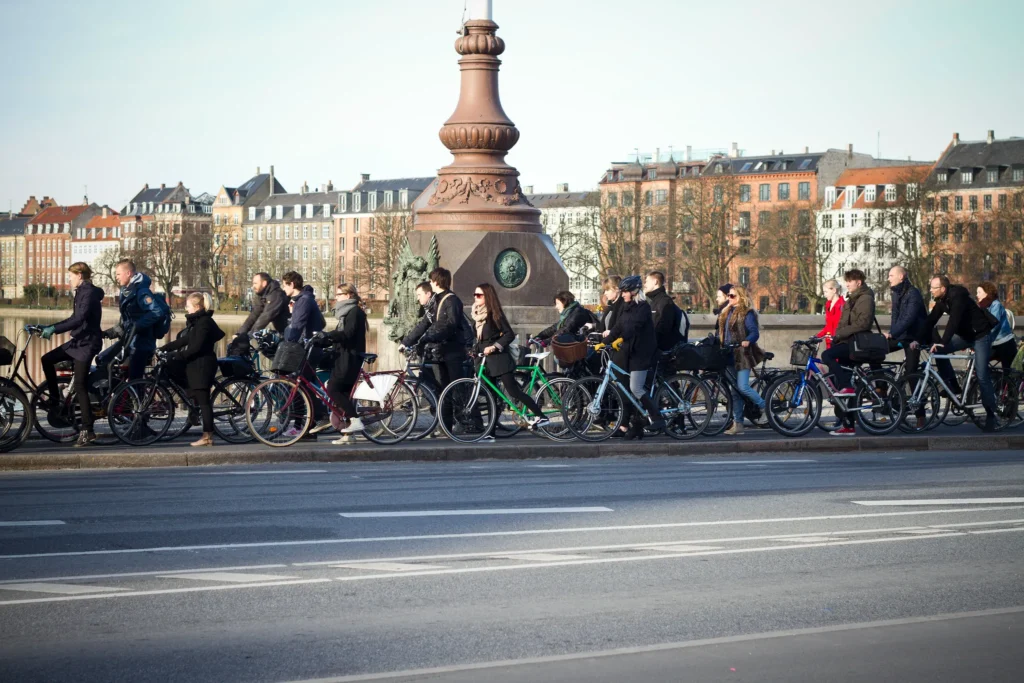 Bicycle Rush Hour Copenhagen; Photo- Mikael Colville-Andersen | Flickr
Getting Around the City
Cycling is the most efficient way to explore Copenhagen. The city has dedicated bike lanes, flat terrain, and clear signage. Bike rentals are widely available.
Public transport is reliable and easy to use. Walking works well in central districts. Non-cyclists will find buses and metro stations accessible and frequent.
Neighborhoods to Know
Indre By is the historic center, ideal for first-time visitors. Vesterbro offers dining and nightlife. Nørrebro is known for culture and street life. Østerbro is quieter and residential, close to parks and the waterfront.
Choosing the right neighborhood shapes the experience more than the hotel category.
Where to Stay in Copenhagen
Manon Les Suites and Villa Copenhagen suit travelers seeking high-end design and amenities. Coco Hotel offers boutique charm in a local setting. Copenhagen Marriott provides space and canal views. Square Hotel delivers simplicity and central access.
Key Sights and Landmarks
Nyhavn
The colorful harbor is iconic but crowded. A short visit is sufficient.
Kastellet and The Little Mermaid
The statue itself is underwhelming. Kastellet’s fortress paths and waterfront views are the real draw.
Copenhagen University Library
A neo-Gothic landmark opened to the public in 2023. Free English tours run daily at 1 pm.
Frederik’s Church
Known as the Marble Church, its copper dome dominates the skyline. The interior is bright and symmetrical.
Royal Palaces and History
Rosenborg Castle
A Renaissance palace surrounded by the King’s Garden. Advance tickets are recommended. The Crown Jewels are a highlight.
Christiansborg Palace
Seat of Denmark’s government and royal receptions. The tower offers free panoramic views.
Amalienborg Palace
The royal residence. The daily changing of the guard takes place at noon.
 Photo: Etihad
Unique Experiences in Copenhagen
Tivoli Gardens
One of the world’s oldest amusement parks. Evening visits showcase lighting, design, and seasonal events.
Freetown Christiania
An autonomous neighborhood with a strong alternative culture. Photography restrictions apply in certain areas.
Troll Hunt by Thomas Dambo
Large wooden troll sculptures are hidden around the city’s outskirts. Access often requires a bike or a car.
Harbor Tours and Urban Swimming
Canal tours highlight modern architecture. In summer, locals swim at harbor baths such as Islands Brygge and Nordhavn.
Day Trips From Copenhagen
Kronborg Castle in Helsingør is about 45 minutes away by train. Roskilde offers Viking history and a major cathedral. Malmö, Sweden, is reachable in 35 minutes via the Øresund Bridge.
Where to Eat in Copenhagen
Reffen Street Food
A waterfront food market built from shipping containers. Affordable, social, and lively in the evenings.
Smørrebrød
Traditional open-faced sandwiches on rye bread. Recommended spots include Selma, Meyers i Tårnet, and Rørt.
Michelin-Star Dining
Copenhagen holds 26 Michelin stars. Kiin Kiin offers modern Thai cuisine. Restaurant Jordnær focuses on seafood-driven tasting menus.
Language, Safety, and Etiquette
English is widely spoken. Signage is clear and bilingual. Copenhagen is very safe, even at night.
Cyclists have priority in bike lanes. Pedestrians should stay clear. Emergency services can be reached by dialing 112.
Stay tuned with us. Further, follow us on social media for the latest updates.
Join us on Telegram Group for the Latest Aviation Updates. Subsequently, follow us on Google News