
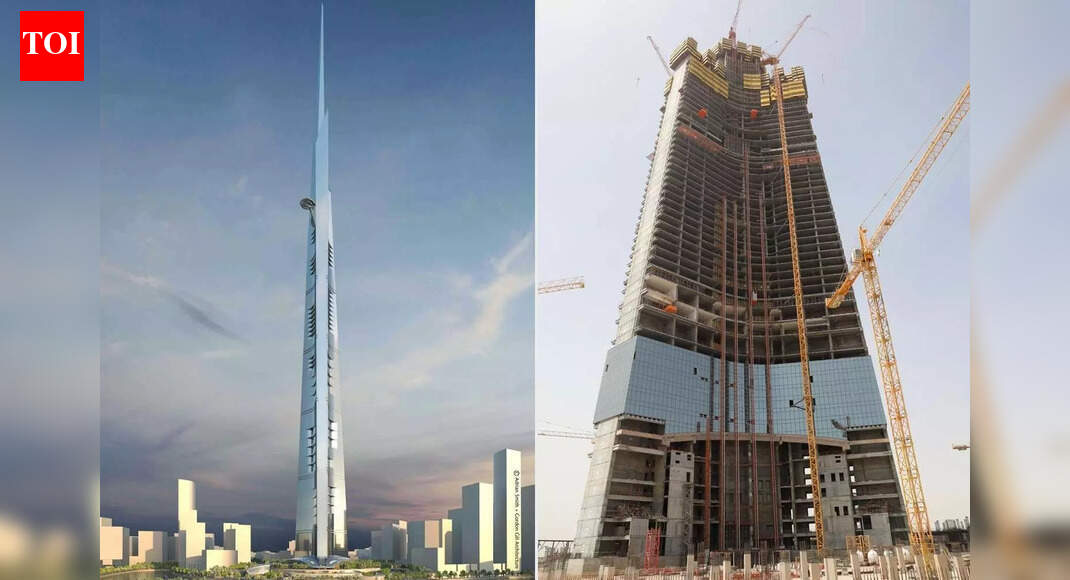
 Saudi Arabia is pushing the limits of architecture and ambition with Jeddah Tower, a megastructure designed to become the tallest building in the world, overtaking Dubai’s iconic Burj Khalifa. Rising on the Red Sea coast, the tower is not just about height, it represents the Kingdom’s vision for the future, blending engineering excellence, luxury living, and global symbolism.Once completed, Jeddah Tower will mark the first structure in human history to cross the one-kilometre height mark, redefining what cities and skylines can look like in the 21st century.
What is Jeddah Tower?
Jeddah Tower is the centrepiece of the Jeddah Economic City, a large-scale urban development designed to transform Jeddah into a global business and tourism hub.Key project highlights:Planned height: Over 1,000 metres (more than 3,280 feet)Floors: Around 130+ storeysStatus: Construction resumed in 2024–2025 after earlier pausesExpected completion: Late 2020s, subject to construction progressThe tower is being developed with backing from major Saudi investors and aligns closely with Vision 2030, Saudi Arabia’s national transformation strategy focused on diversification beyond oil.
What will be inside the world’s tallest tower?
Jeddah Tower is designed as a vertical city, combining multiple functions within a single structure. Planned facilities include:Luxury hotel occupying the lower and mid sectionsHigh-end residential apartments with panoramic Red Sea viewsPremium office spaces at elevated heightsRetail and hospitality zones
The world’s highest observation deck, surpassing Burj Khalifa’sThe tower will feature dozens of high-speed elevators, some among the fastest ever installed, engineered to move people efficiently across extreme vertical distances. Advanced climate control and energy-efficient façade systems are built into the design to manage heat, wind pressure, and sustainability challenges at record heights.
Unbelievable engineering
Designed by Adrian Smith + Gordon Gill Architecture, the same firm behind Burj Khalifa, Jeddah Tower uses cutting-edge engineering to remain stable at unprecedented height.Key engineering features include:A tapered, aerodynamic form to reduce wind impactA reinforced concrete and steel core for structural stabilityAdvanced foundation systems designed for extreme load-bearingSmart building technologies for safety, energy efficiency, and operationsAt over one kilometre tall, wind forces, material stress, and vertical transportation become as critical as height itself, making Jeddah Tower one of the most complex engineering projects ever attempted.
Cost
While exact figures vary by phase, the tower alone is estimated to cost over $1 billion, while the broader Jeddah Economic City project runs into tens of billions of dollars.This scale of investment reflects Saudi Arabia’s intention to:Attract global business and tourismCreate long-term employment opportunitiesPosition the Kingdom as a leader in mega-infrastructure and innovationRather than a standalone building, Jeddah Tower is designed to anchor an entire urban ecosystem around it.
Beating Burj Khalifa
Since 2010, Burj Khalifa (828 metres) has symbolised architectural supremacy. Jeddah Tower is set to surpass it by nearly 200 metres, shifting the global height record and redrawing the competition for the world’s tallest building.However, the goal is not rivalry alone. Jeddah Tower represents:A new era of Middle Eastern architectural leadershipSaudi Arabia’s growing confidence on the global stageA move from record-breaking for prestige to city-shaping developmentOnce complete, it will stand as a defining symbol of Saudi Arabia’s transformation, visible from miles away, and remembered for generations.Jeddah Tower is more than a building under construction, it is a statement of intent. It shows how Saudi Arabia is using design, engineering, and scale to reshape its cities and global image.When it finally opens, the world won’t just see a taller tower than Burj Khalifa, it will witness the next chapter in human ambition written in steel, concrete and sky.