
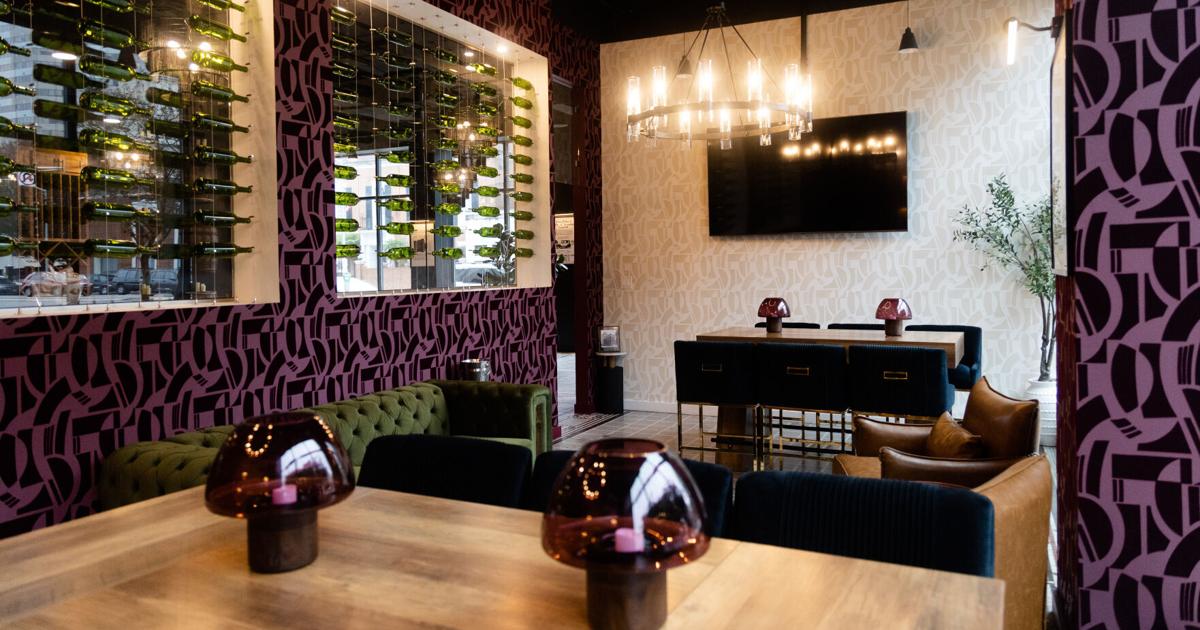
“When they said they wanted it to be luxurious, I was like, ‘Oh, we gotta have velvet,’” Boyd said. “And then they said, ‘OK, well, comfortable.’ Well, you gotta have leather.”
Next, Boyd said she starts thinking about translating a feeling into physical decor and creating what Boyd calls “intentional moments” that are unique and memorable.
Kim Moon, an interior designer at the prominent South Carolina architecture, interior design and planning firm Garvin Design Group, does the same, working to build different focal areas for every space she designs — from University of South Carolina’s dining halls to Halls Chophouse.
Moon said the goal is to create layers to draw “your eye and yourself through the space” with interesting design elements like mosaic tile, unique shapes or textures.
Some restaurants might choose to highlight the hostess stand or the kitchen, but Moon said the most important place to feature in a restaurant is the bar, which often makes the most money for a restaurant.
“The bar is kind of the focal point coming into the restaurant. You want to stay and linger there, so a couple bar stools, something that’s inspiring, whether it’s a view or the bar detail components overhead,” Moon said. “It’s a jewel, that when you come into the restaurant, like, ‘Oh, yeah, I want to go there.’”

A rendering of the future bar at Slip 53, designed by Garvin Design Group.
Slip 53/Provided
Balancing style and function
In addition to incorporating visually appealing items for dining spaces, Moon also works hard to incorporate a variety of hard and soft surfaces. This diversification is helpful for multiple reasons, but primarily to ensure durability.
“Restaurants can really take a beating,” Moon said. “They need to be cleaned thoroughly daily, multiple times daily … so all of the touch surfaces have to be really durable, but you have to couple that with making those very high end and special.”