
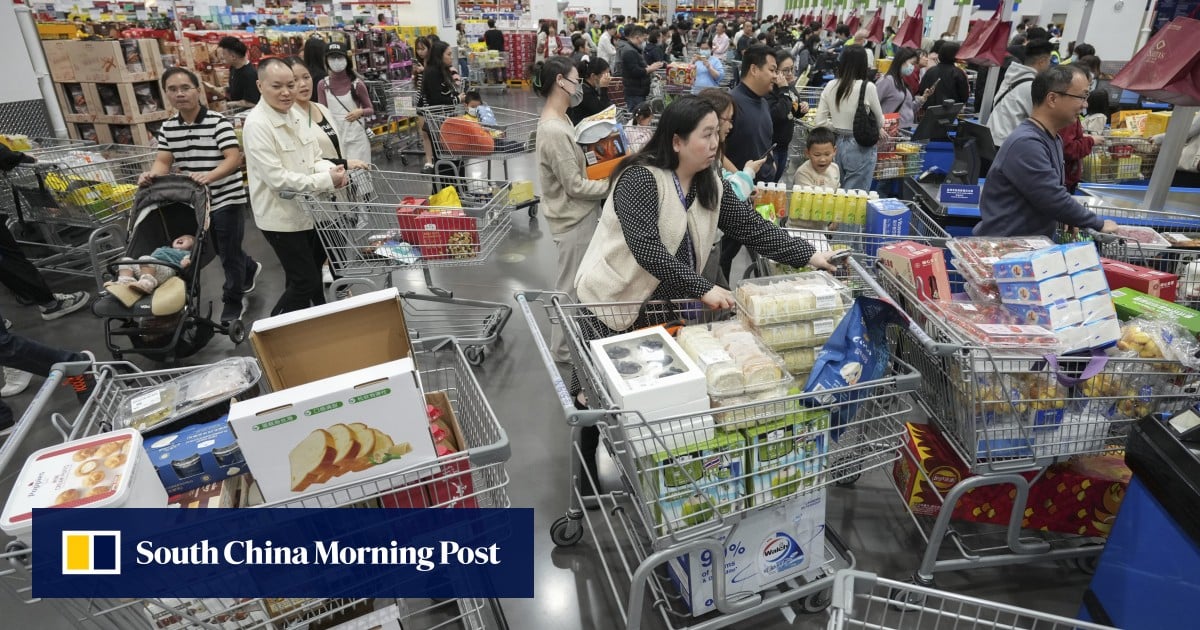
In a premium supermarket in Shanghai one recent weekend, 33-year-old information technology specialist Zhao Wenyu paused in front of the health food aisle, comparing protein content and ingredient lists on imported granola and organic milk – rather than checking discounts.
Zhao now spends around 3,000 yuan (US$420) a month on organic food, nutritional supplements and functional beverages, up from about 1,200 yuan three years ago. “I don’t mind paying more if I am satisfied with the product’s quality,” she said, adding that health and long-term value had become bigger priorities than bargains.
The rise of the upper-middle-income population was fast becoming a pivotal force shaping China’s consumer landscape in 2026, even amid an economic slowdown, according to PwC China. This surge in demand offered significant opportunities for international brands known for their quality and value. However, experts said that winning over this new generation of affluent consumers posed a challenge.“The Chinese government has identified expanding domestic demand as a top economic priority for 2026,’’ said Carrie Yu, consumer market industry leader at PwC China, adding that this focus was expected to support sectors such as retail, hospitality, and cultural and creative industries.
She said that as the upper-middle-income consumer base grew, discretionary spending was increasingly directed towards premium products that delivered tangible quality and value.
 Chinese households with annual disposable income above US$25,000 reached 64 million in 2024 and are projected to nearly double by 2029. Photo: AFP
The scale of this demographic is significant. Economist Intelligence Unit estimates showed that Chinese households with annual disposable income above US$25,000 reached 64 million in 2024 and were projected to nearly double by 2029. Households earning more than US$35,000 totalled 26.8 million in 2024, surpassing those in Germany, Japan, the UK and France.