
From Rotorua to the world stage
Geater is the head professional cycling mechanic for Team Jayco AlUla, an Australian outfit based just out of Milan, Italy.
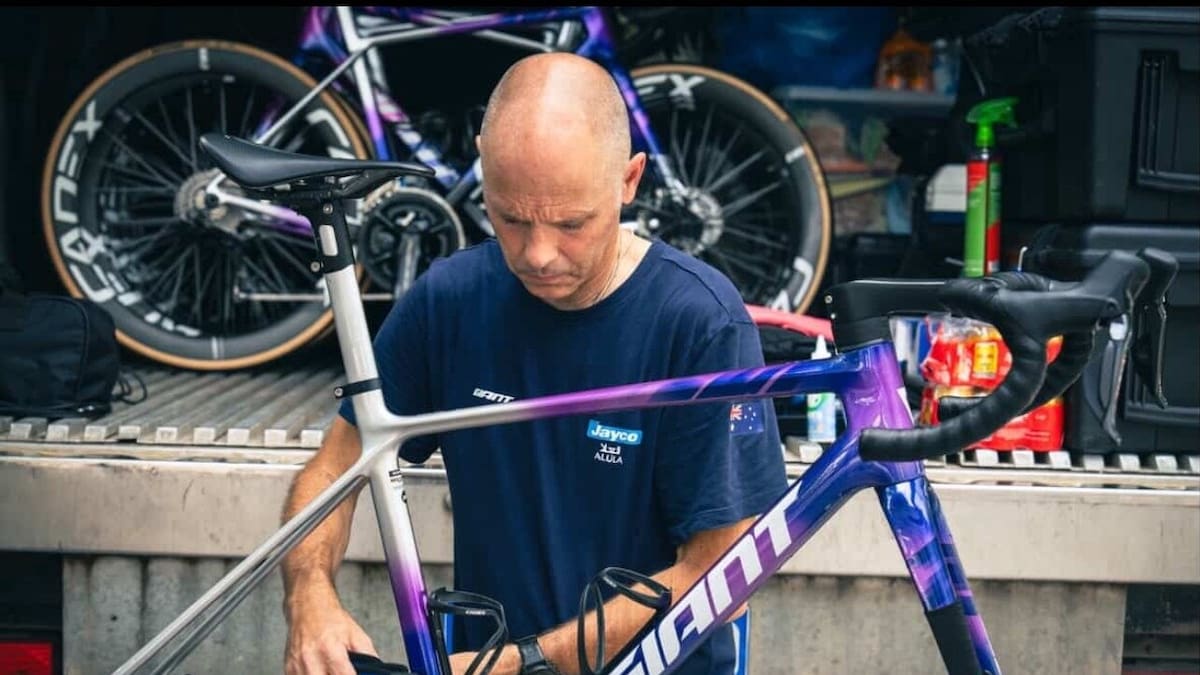
Building and maintaining bikes for elite riders competing at the highest level, his days often stretch to 14 hours, spent preparing equipment, fixing bikes and supporting riders through races.
His pathway into professional cycling was not planned.
At 19, he left Rotorua for Europe, hoping to race as an amateur, but realised he was not good enough to make it as a rider.
What he did have, thanks to time spent working in his parents’ Rotorua bike shop, were mechanical skills.
While staying with a friend who was racing, a professional team found itself short a mechanic and needed someone to fix bikes. Geater stepped in.
One opportunity turned into another. Within a few years, he was working full-time on the European professional cycling circuit.
The 49-year-old lives in Varese, Italy, and has spent nearly three decades travelling with world-tour teams, working at the biggest races on the calendar, including more than 20 Tours de France, the Giro d’Italia and the Tour of Spain.
Craig Geater went from Rotorua to the world cycling stage as a mechanic.
How Rotorua’s cycling scene changed
The city mainly revolved around road cycling when he was a teenager.
Rotorua produced a steady line of strong riders, he said, and club racing was part of everyday life. Training rides ran several times a week and, as Geater recalled, “everyone would go training together”.
He said Rotorua hosted a popular 12-hour night mountain bike race that sent riders through the city and forest from dusk until dawn.
Over time, that landscape shifted.
Traffic, he said, had made road riding increasingly difficult. Cyclists were now “always in the way”, and the road environment had become far less welcoming.
Mountain biking took over.
What began as a handful of trails grew into a globally recognised network.
He said Rotorua now attracts riders from across New Zealand and overseas, many travelling specifically for the forest. Some arrive for international events such as Crankworx, others simply for weekend riding.
Craig Geater is shown here working on a cycle.
Geater said the success reflected how carefully the trail network had been built.
The trail system allowed riders to cover a range of tracks, with clear grading for all abilities and safe separation from vehicles and walkers.
“There are so many different levels,” he said. Children, elders, beginners and experienced athletes all rode. Competition became optional.
He also watched the sport become more inclusive, particularly for women, who increasingly rode solo or in groups as mountain biking offered a safer alternative to busy roads. The rise of e-bikes further broadened participation, bringing new riders into the sport.
On the rare occasions Geater returned home, he no longer cycled on the roads of his youth. He chose mountain and gravel tracks instead, often alternating routes in the forest from week to week.
For Geater, Rotorua’s transformation from a road-cycling town to a world-class mountain biking destination was exactly where the city needed to be. He said he did not think the industry needed to “grow more”, describing the scene as already “super successful” and “going really well”.
Geater said he would be “happy” to stay in the sport for a few more years.
But once he put the long days and constant travel behind him, some time to “just chill out” and “relax” in New Zealand was on the cards.
Annabel Reid is a multimedia journalist for the Bay of Plenty Times and Rotorua Daily Post, based in Rotorua. Originally from Hawke’s Bay, she has a Bachelor of Communications from the University of Canterbury.