
In a frantic effort to reset his unpopular domestic agenda, President Donald Trump now is trying to show that he actually does care about protecting consumers. Last week, he issued an edict commanding his “representatives” to lower the interest rates on mortgage loans by purchasing $200 billion in mortgage bonds, though experts doubt it will have much effect. This week he declared that the credit card companies must lower the interest they charge on card balances to no more than 10% per year, though he lacks any clear authority to make that impractical notion happen.
 (eurobanks/iStock)
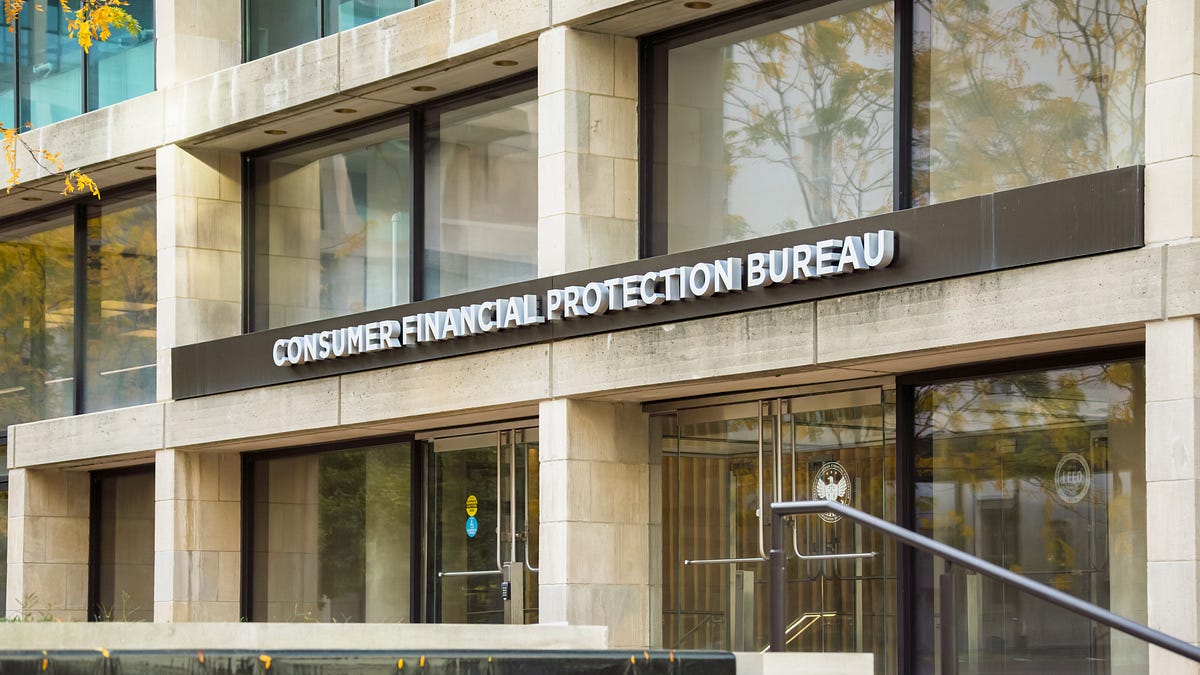
As he yo-yos erratically between treating affordability as a “fake narrative” and making bizarre moves to confront the growing issue, Trump remains entangled in a problem of his own making. Egged on by his zealous DOGE team, one of his first acts was to try to shut down the Consumer Financial Protection Bureau, which was designed specifically to protect consumers of financial products like mortgages and credit cards. Picking the CFPB as one of DOGE’s first targets reflected a lack of recognition of the likely consequences. But now that the results of reduced consumer law enforcement are kicking in, he is rushing about like the Queen of Hearts, her face purple with rage, shouting “Off with their heads” to undo the damage he has done. As Lewis Carroll told us next, “Nobody moved.”
The better answer here is to keep the cops on the beat who can best address these issues and let them do their work to protect consumers. That is what Congress did when it made the CFPB the law of the land 15 years ago. It remains the law of the land today. Remarkably, most of the faithful CFPB employees have stayed doggedly on the job, even though they have been vilified and prevented from doing the work they were hired to do. A glimmer of sanity emerged recently as Russell Vought, the acting director whose lawless decrees have halted the agency’s work, backed down in the face of a court order and finally exercised his authority to request funding for the CFPB for the second quarter of the current fiscal year. But this forced climb-down will not amount to anything unless the CFPB starts actively working again to protect consumers from the financial predators who seek to harm them.
Much of that work is truly uncontroversial. The consumer response team handles a huge volume of consumer complaints and turns them into solutions that often resolve issues by making things right for consumers. Consumer education helps people understand better how to protect themselves and assert their rights. The rule writers carry out legislative mandates by providing the framework that has safeguarded the mortgage market against the kind of reckless behavior that almost wrecked the economy during the financial crisis of 2008. They also had developed rules to safeguard every consumer’s right to access and share his or her own individual financial data – a right we all should care about. The work done by supervision and law enforcement officials can be adversarial at times, but it is necessary to make sure wrongdoers are not harming people by violating the law and getting away with it.
Nothing undermines affordability like getting ripped off without having the right officials on your side who can and will do something about it. And nothing encourages abusive conduct like companies knowing that if they rip people off, those officials have been idled and will no longer stand in their way. This is an unnecessary problem that can readily be fixed. One way to address the problem of affordability is simply to let the CFPB do its important work.
Richard Cordray served as the first director of the U.S. Consumer Financial Protection Bureau from 2012-2017. His book, “Watchdog,” tells the story of the CFPB and its work to protect consumers.