
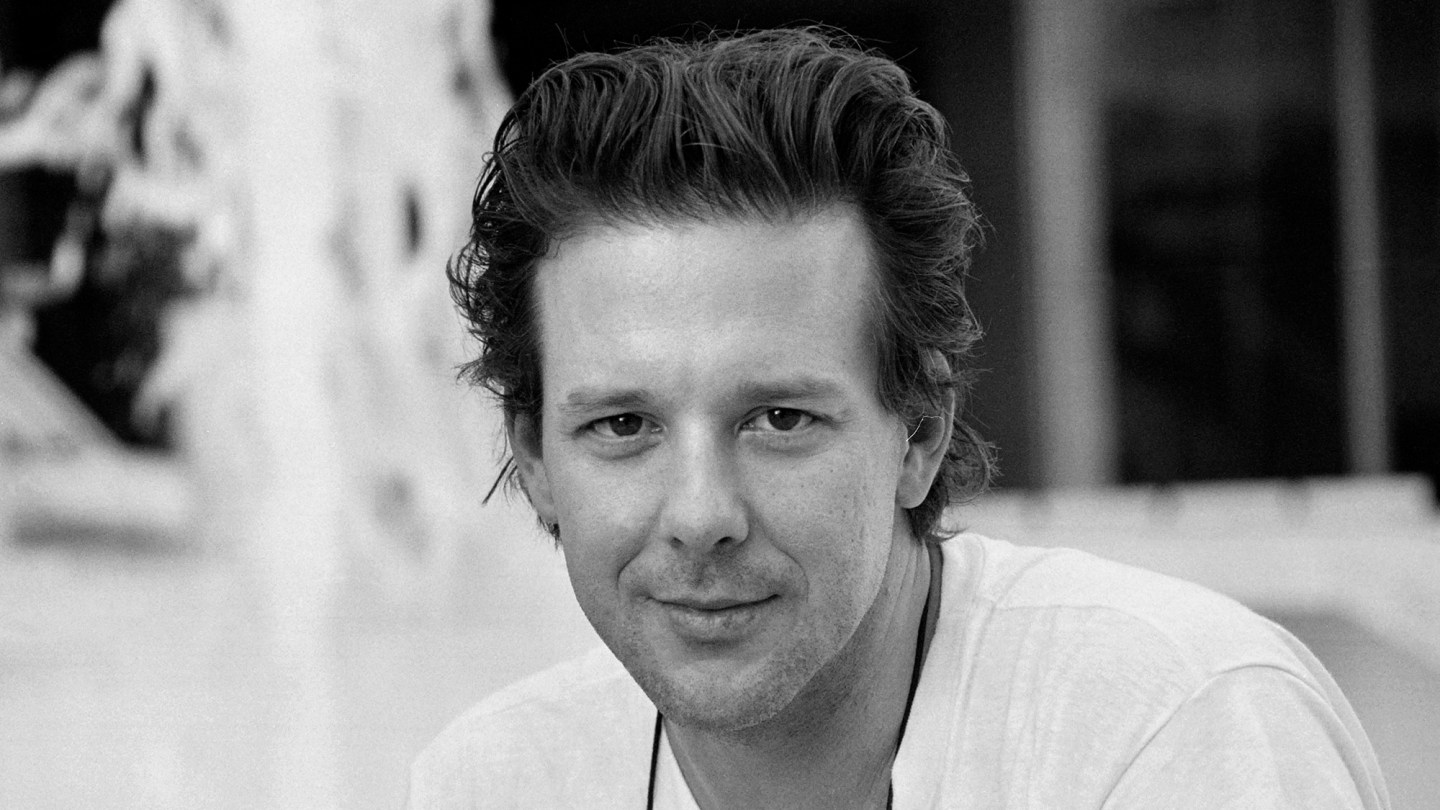
I once spent the better part of an evening alone with Mickey Rourke in his West Village apartment, talking about his life, his career and everything he’d done to derail both. The conversation was so fascinating, so shocking, so heartbreaking, there were even moments when I forgot the loaded pistol on the coffee table between us.
There was also a syringe of B12, several packs of Marlboro Reds and a man who seemed determined to confess every mistake he’d ever made before he’d let me leave.
We talked for four or five hours — it felt more like a week and a half — and I had a front-row seat as Rourke all but flagellated himself, marching the stations of the cross of his own career. He wept more than once. He lit one Marlboro off the tip of another. And again and again, he came back to the same point: Everything that had gone wrong, he’d done to himself.
The thing I remember most from that evening — other than the gun — was how contrite Rourke seemed. He didn’t owe me anything, much less an apology, but it felt as if he was giving me one and that he wouldn’t let me leave until I gave him absolution and told him everything would be OK.
This was back in 2008, when Rourke was making the promotional rounds for The Wrestler and attempting — once again — to claw his way back. But just the other day, some 18 years later, I began thinking about that interview. I took another look at my transcripts, wondering if they might contain some clues as to what’s going on with Rourke right now, as he once again skids into what looks like rock bottom.

In 2022, dealing with a fresh set of setbacks.
Paul Archuleta/Getty Images
During the past couple of weeks, the 73-year-old actor has found himself back in the headlines after it was reported that he was facing eviction from the Los Angeles home he’d been living in, owing nearly $60,000 in unpaid rent. A GoFundMe campaign was quickly launched on his behalf by a member of his management team, prompting a fresh wave of concern — and confusion — after Rourke posted a video disavowing the fundraiser. “If I needed money, I wouldn’t ask for no charity,” he announced in a video post to his 500,000 Instagram followers looking visibly frustrated, even in a cowboy hat with his rescue dog Lucky on his lap.
For those too young to remember his first act in the 1980s, it’s hard to overstate just how electric Rourke once was. He was beautiful and dangerous, with a barely concealed vulnerability that made you want to lean in when he spoke. He made an indelible impression as an arsonist calmly explaining how to get away with murder in Body Heat. He broke hearts in Diner. He became cult-movie royalty as Motorcycle Boy in Rumble Fish. And he delivered a flawless performance in The Pope of Greenwich Village that somehow went unrecognized by the Academy.
And then a lot happened very quickly — a lot of it bad. Rourke tried to explain it to me as he lit another cigarette. “I fucked up real bad,” he said. “I knew nothing about business or politics. I didn’t even know they were in the equation! But it’s a game, and we all have to kiss ass in life. I didn’t know that then. A lot of the actors who are successful, you look around, these guys are college boys — Ben Affleck, Matt Damon. Me, I just thought you’re either great or you suck. I’m not saying I was great, but I knew I was on my way to being great.”
By the end of the 1980s, he was making movies like 9½ Weeks and Angel Heart and no longer was being talked about as one of the greatest actors of his generation — he was being talked about as a sex symbol. It was something he’d never asked for and never wanted. To him, it felt like a death sentence. He ran from it.
Rourke with Kim Basinger in 1986’s 9½ Weeks, the movie that made him — much to his horror — a sex symbol.
Courtesy Everett Collection
What he did next was almost willfully self-destructive. In 1991, he largely walked away from acting and turned to boxing, making a serious run at becoming a professional fighter. By that point, he was done with Hollywood — and Hollywood was done with him. As 9½ Weeks director Adrian Lyne once told me, “If Mickey had died after Angel Heart, he would have been remembered as James Dean or Marlon Brando.”
But Rourke didn’t die. He destroyed himself.
He developed a reputation for being difficult on set. He showed up late. He didn’t learn his lines. He behaved as if he were better than the material he was being paid handsomely to perform. Acting had come so easily to him that he no longer seemed to respect it.
“I’d do some piece of shit for the money and then show up late and fuck everything up,” he said. “More than half the movies I made around that time I didn’t want to do. I bought a house that was way too expensive, cars, entourage, women, jewelry. If you ain’t ever had it, once you get it, you spend it as quick as you can. Simple as that. I ain’t never seen no Brinks truck at a funeral, and there ain’t gonna be one at mine.”
Between 1991 and 1994, Rourke fought in eight professional bouts and didn’t lose a single one. But he destroyed his face in the process. When he returned to acting, he looked like a different man. The pattern returned. He spent what he made. His marriage to Carré Otis became tabloid fodder. The roles got smaller.
Then came The Wrestler. Against all odds, Rourke found his way back. The physical damage he’d endured now served his character. He earned an Oscar nomination and appeared in high-profile studio movies again, including Iron Man 2 and The Expendables.
Rourke in 2008’s The Wrestler, yet another comeback that didn’t end up sticking.
Twentieth Century Fox/Courtesy Everett Collection
And then, slowly but surely, the pattern repeated itself. It wasn’t too long before he once again was relying on friends and Good Samaritans for handouts — a couple hundred dollars here and there for McDonald’s and Marlboro Reds.
Since the GoFundMe story broke, Rourke has continued to surface in the news like a celebrity on some twisted PR death wish. On Jan. 9, he reportedly surrendered a shotgun to authorities for reasons that remain unclear. Around the same time, he also joined the cast of National Lampoon’s Hollywood Hustle, a Tinseltown satire whose roll call includes Tara Reid, Alec Baldwin and Carrot Top.
Rourke is a proud man. There’s nothing wrong with that. In fact, it’s admirable. But over and over again — through the high highs and low lows of an EKG-like career — he has gotten in his own way. For fans, it has always been hard to watch and even harder to look away.
At this point, the rise-and-fall trajectory of Rourke’s career feels like a long-running soap opera — one that’s been airing for nearly four decades now. As a fan, I’d love to see that soap opera end. But sometimes I wonder if Rourke knows how to stop it — or if he even wants to.
That’s what makes the past couple of weeks feel so sad. Not just the headlines, but the repetition. Mickey Rourke may look nothing like the heartthrob who once seduced audiences so effortlessly, but he’s never stopped being a fascinating and compelling actor. He’s like Hollywood’s own Sisyphus — forever pushing the boulder uphill, only to be flattened by it again.
Even now, after everything that’s happened, I’m certain he has more great performances left in him. I just hope he knows that, too.
Rourke as Ivan Vanko/Whiplash in 2010’s Iron Man 2.
Merrick Morton/Paramount/Courtesy Everett Collection
This story appeared in the Jan. 15 issue of The Hollywood Reporter magazine. Click here to subscribe.