
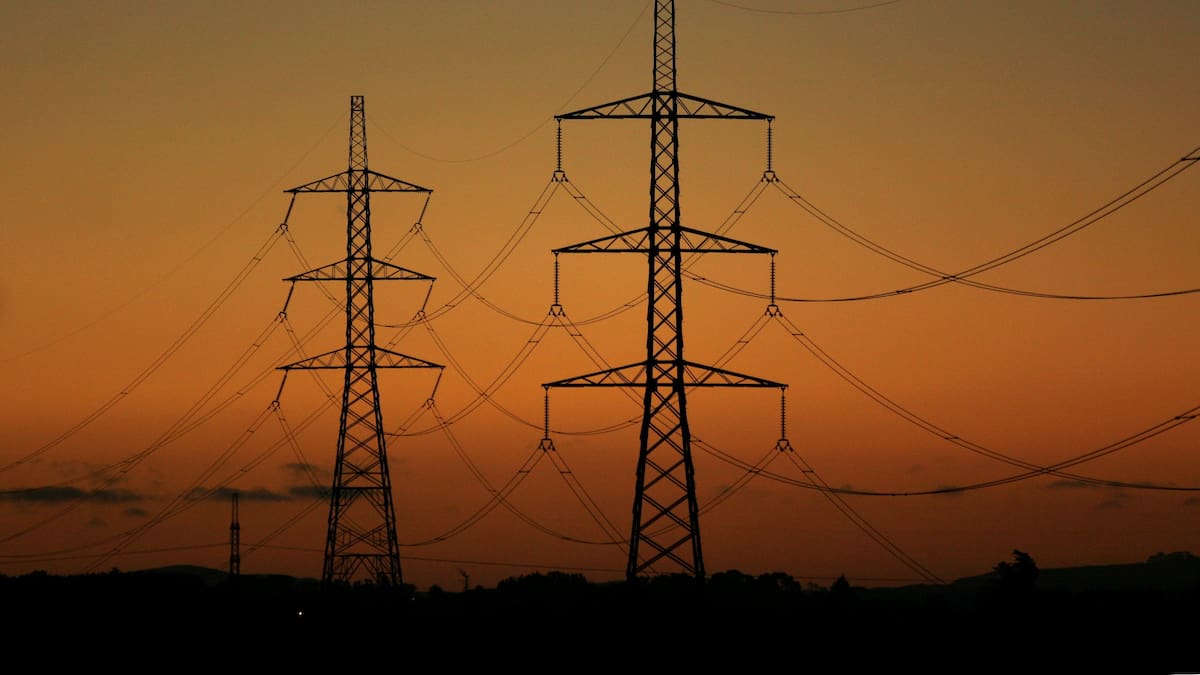
Household prices increased by an average $10 a month in April 2025, reflecting rising levels of investment need for the electricity network.
The Commerce Commission, which is responsible for regulating how much national grid operator Transpower can charge, said from 2026 to 2030 increases were still likely but would be smaller.
While the parties are yet to announce their positions on power, there’s a degree of uncertainty hanging over the sector going into the election, which is expected to be held around October or November in 2026.
But Forsyth Barr senior analyst Andrew Harvey-Greene said the markets don’t seem to be overly concerned about power right now.
The talk in 2025 had been about separating out retail operations from the big four power generators, and re-nationalising the partly-privatised generators Mercury, Meridian and Genesis.
“There’s a question mark on how achievable some of them are – particularly, renationalisation – given the costs involved, which are significant [Forsyth Barr estimates about $20 billion].
“And I’m in the camp that says separation of retail and generation certainly won’t achieve what the proponents are expecting [lower power prices] in my view,” Harvey-Greene told the Herald.
Intense scrutiny
There have been several reports looking into the power sector, which have come under even closer scrutiny since wholesale prices spiked to $820 per megawatt hour in winter 2024.
In response, the Government issued a policy statement to focus the Electricity Authority on security of supply and affordability issues.
In October, a Government-commissioned Frontier Economics report was released.
Around mid-2025, the generator-retailers signed a ground-breaking deal to back up a large strategic coal reserve and allow Genesis to run a third steam-turbine Rankine unit at Huntly.
That has gone a long way to assuage security of supply issues, but the Major Energy Users Group (MEUG) said the response to affordability challenges in 2025 left many dissatisfied – including many politicians across the political spectrum.
“With households facing another round of transmission- and distribution-driven price increases in election year, and with cost-of-living issues likely to be the top issue in the election, we will have another year of uncertainty over the stability and predictability of our market,” MEUG chair John Harbord said in a report for 2025.
“Election policies will likely cover the spectrum, from largely leaving the market alone on the theory it will self-correct, to far-reaching government intervention in the belief that the market is incapable of self-correcting,” Harbord said.
Harvey Greene noted that the much-vaunted Frontier report said there was nothing, structurally, that needed changing.
The one definitive move to be made in 2025 was the Government’s announcement that it would be prepared to participate in future capital raisings in the three partly stated-owned companies – Mercury, Meridian and Genesis.
The Government’s willingness to participate in future capital raisings marked the biggest change in its investment settings since the companies a little over a decade ago, Forsyth Barr said.
On that score, Genesis Energy would appear to be a potential beneficiary of a capital raise, given that its debt is relatively high compared to the others, Harvey-Greene said.
Will LNG imports be the answer to New Zealand’s declining gas reserves? Photo / Getty Images
The importation of liquefied natural gas (LNG) – to alleviate rapid decline of reserves in New Zealand – remains a live issue, and the Government is expected to soon make an announcement on possible LNG procurement.
Harvey Green said there were a number of challenges with LNG, aside from the sheer expense of it.
The LNG challenge
“Within the electricity space, and there’s a high risk – whether it’s LNG or whether it’s something else like diesel peaking – that it may not actually ever be needed,” he said.
He said it was possible that New Zealand could go for five to 10 years without actually needing backup generation offered by gas, given the deal that’s been done to keep Genesis Energy’s ageing Rankines going with an enlarged coal stockpile.
“That [Strategic Energy Reserve Huntly Firming Option] deal will be the first thing that gets called on and, then there are other market arrangements in there such as the demand response deal with the NZAS smelter at Tiwai Point.
“The other key thing is that there is a very large coal stockpile at Huntly now compared to winter 2024, when there wasn’t much coal on the ground, which was one of the issues that it caused problems there.
“Everyone is very aware of the gas market situation now, so the market arrangements are in a much better place.”
The market can also expect a lot more power generation to come on stream.
Over the summer months there’s going to be another 100 megawatts of geothermal generation come to the market, minimising the risks of running out of water.
For the moment at least, the system looks to be very safe – wholesale power prices are low because of heavy rain and snow melt in the South Island.
In the run-up to Christmas, wholesale power prices were extremely low – reflecting full southern hydro lakes and mountain snow melt.
On December 17, the wholesale price at Benmore was just $2.25 per megawatt hour – a far cry from 2024’s $800-plus peak.
Prices have stayed low. This week, prices at Benmore howevered around $10MWh.
Harvey-Greene noted that power bills will be on the rise over the next few years – more a reflection of increased lines charges than actual power prices.
“Everything that’s been talked about in the electricity sector is focused on the generation and retail side, but that’s not actually what’s driving up electricity prices next year or the year after,” he said.
Future prices
ASX power price futures point to wholesale prices easing over the next few years, reflecting the impact of a high number of new power projects coming on stream.
In a report, Harvey-Greene and Forsyth Barr analyst Hugh Lockwood said they believed the political risks to the current setup would be lower in 2026 than in 2014, when Labour and the Greens had a single-buyer model policy.
However, they said the risk was likely to be a headwind for a positive re-rating of the generator-retailers and they had pulled back their stock valuations accordingly.
The political parties are yet to release their policies on policy.
However, there have been sufficient comments to provide an understanding of expectations.
A deal between the big four power generators in 2025 will help support the national grid. Photo / NZME
The most significant potential policy is the renationalisation of the generators – an idea advanced by NZ First minister Shane Jones.
“In our view, it will be very hard to implement and, at current market valuations, cost about $20b,” Harvey-Greene and Lockwood said.
“So long as investors are compensated at market value, there should be limited downside risk.”
Forsyth Barr said a wet winter and avoidance of a repeat of 2024 would also help to keep electricity out of the headlines next year.
The Frontier report, released on October 1, is the latest in a long line of studies into the electricity market.
None of the eight major studies since 2000 have concluded that the electricity market is broken or that it needs to be replaced with something else.
Frontier said: “In general, the market design works well, provided there is enough capacity and energy, so we do not see a need for fundamental changes to the design of wholesale markets.“
Most of the studies have been tasked to look at security of supply and/or electricity-price concerns.
These two issues were aspects of the energy “trilemma” – energy security, affordability and sustainability – that were inherently difficult to solve simultaneously.
“If nothing else, the eight studies have taught us there is no easy solution – and arguably no smoking gun,“ Harvey-Greene and Lockwood said.
Jamie Gray is an Auckland-based journalist, covering the financial markets, the primary sector and energy. He joined the Herald in 2011.
Stay ahead with the latest market moves, corporate updates, and economic insights by subscribing to our Business newsletter – your essential weekly round-up of all the business news you need.