
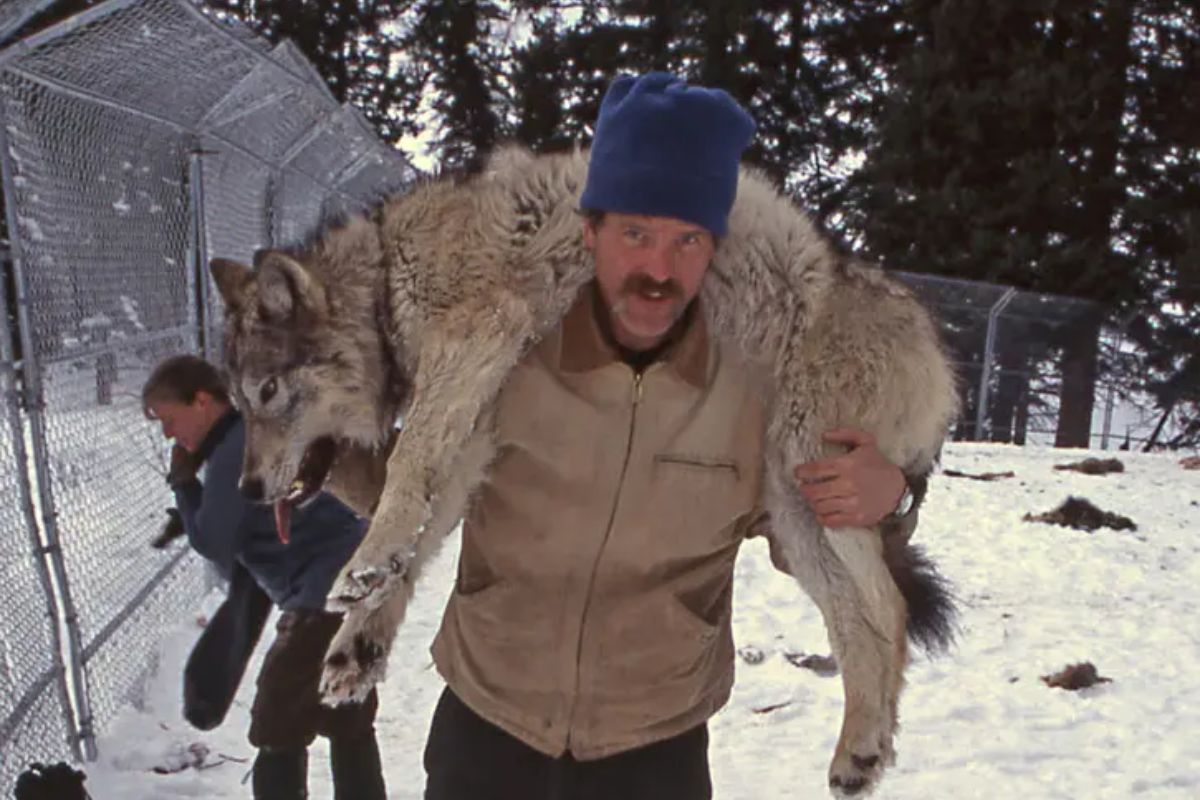
In Yellowstone, in the United States, the Wolves Dogs returned to the streets after decades without packs, following the extermination of the last one in the 1920s. The reintroduction was marked by controlled logistics, acclimatization enclosures, and a public debate that brought to light… Wolves at the heart of wildlife policy.
With the absence of WolvesThe moose population grew sharply and put pressure on grasslands, shrubs, and young trees, generating scientific concern about degradation, erosion, and plant death as early as the 1930s. The change in attitude towards wild ecosystems led to legal milestones, and in 1995, the operation brought the predator returns to the park.
Wolf eradication and the ecological vacuum in Yellowstone
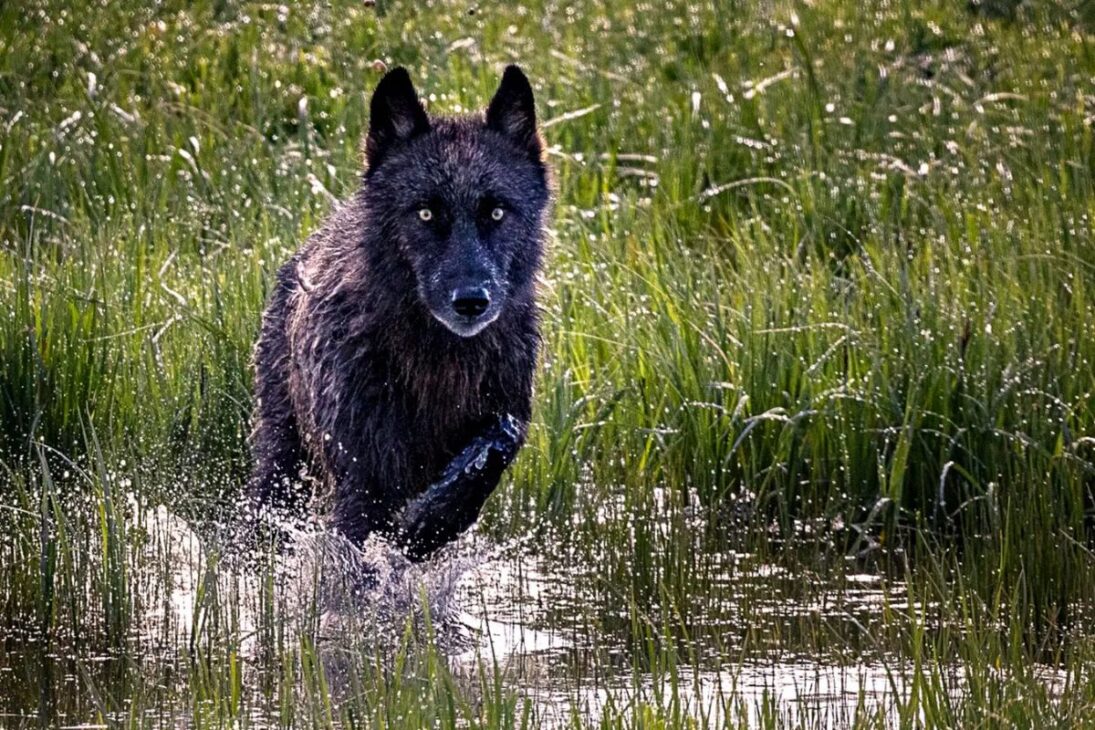
When the Hayden expedition explored Yellowstone in the late 19th century, packs of Wolves They roamed the park. Between 1872 and 1926, the persecution intensified, and, by the end of the 1920s, the Wolves They were hunted to local extinction.
— ARTICLE CONTINUES BELOW —
See also other features
The quietest city in the world, where cell phone signals are prohibited, household appliances are monitored, and technological isolation prevails.

Thirteen pine martens are released in northwest England, returning after more than a century, roaming forests, helping to balance ecosystems, putting pressure on invasive grey squirrels, and reigniting a real experiment in the recovery of British wildlife on a regional scale.
Seabirds expelled for decades are returning to forgotten islands, depositing tons of guano, fertilizing dead soil, making plants sprout from nothing, restoring coral reefs, and proving that birds can transform arid landscapes much faster than humans.
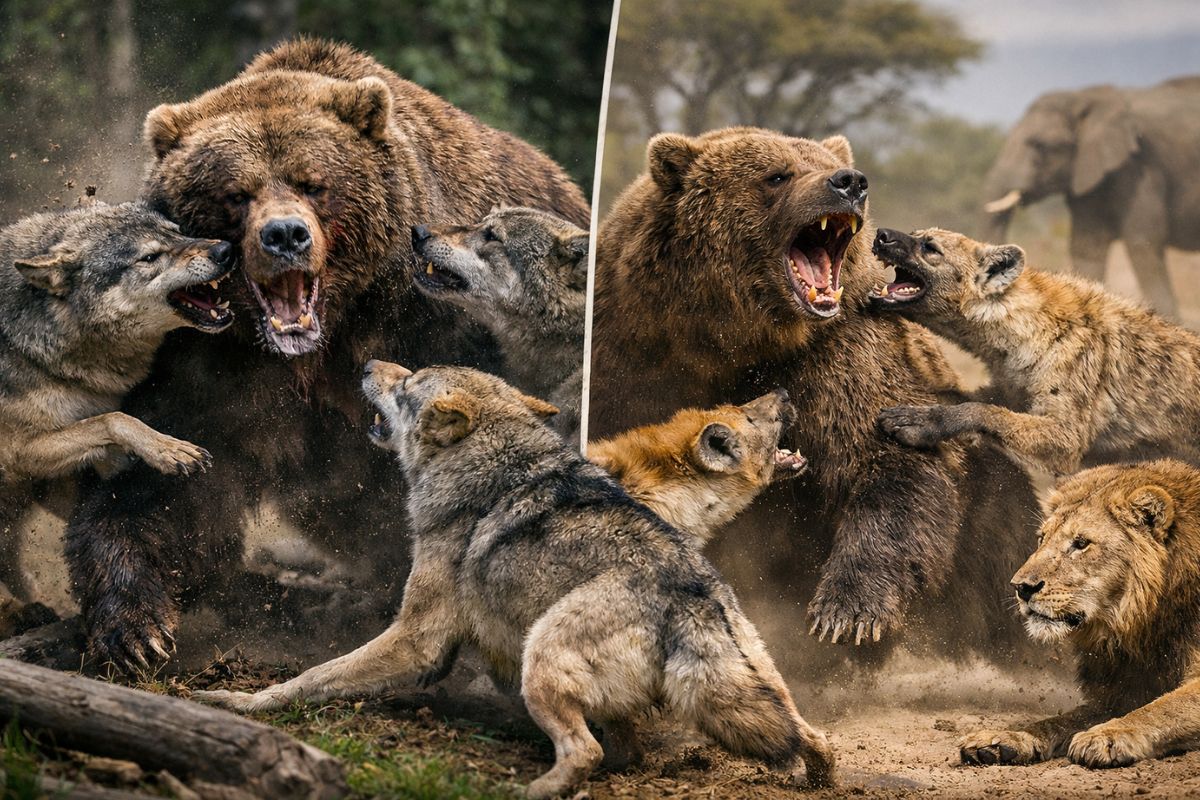
These animals were pitted against brown bears, considered invincible, and the result was surprising: brute force doesn’t decide everything; packs of animals, African giants, crocodiles, and even bison show how strategy, numbers, environment, and adaptation can dominate a legendary predator.
The immediate effect reported was an imbalance in herbivores.
Without Wolves To compress and redistribute moose, the landscape began to suffer from overgrazing, with impacts on open valleys and areas of vegetation regeneration.
The return in 1995 and the operation that brought wolves from Canada.
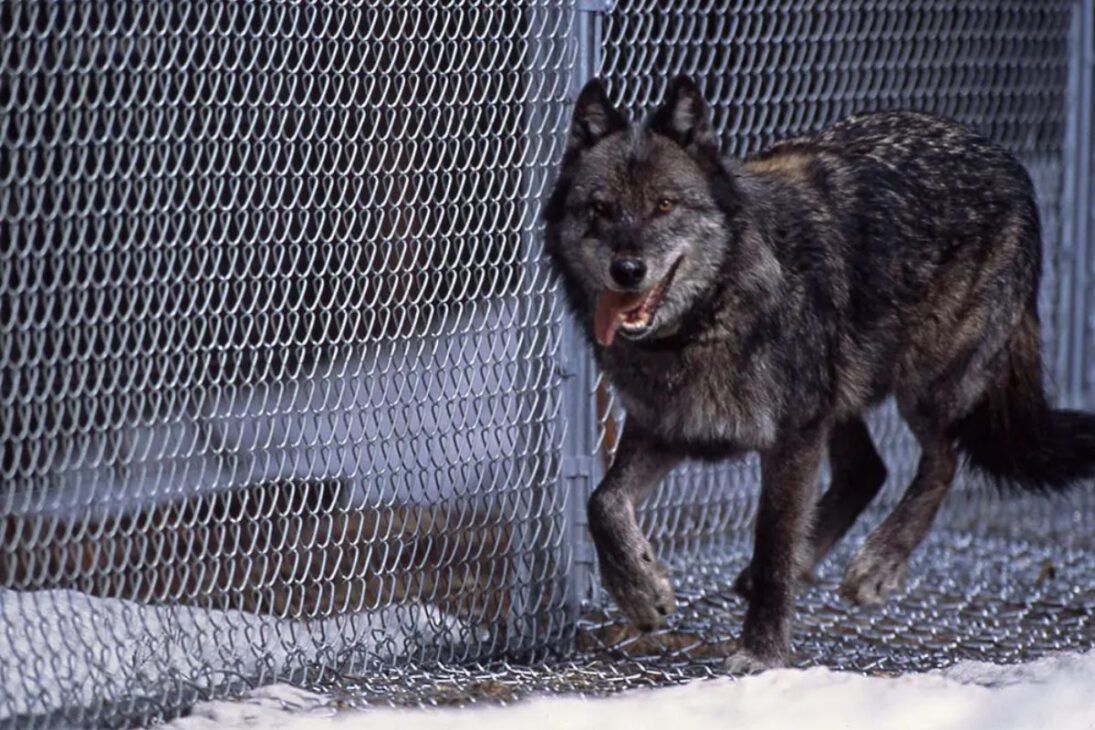
On January 12, 1995, the white truck entered through the Roosevelt Arch carrying eight Wolves from Jasper National Park in Alberta, Canada.
They were the first. Wolves wandering around Yellowstone since the 1920s.
The operational concern was that the Wolves Transplanted, expensive, and with an instinct to return home, they headed north.
To enhance adaptation, Yellowstone built three acclimatization enclosures to house 14 Wolves for several weeks, and moose carcasses were discreetly placed so that the Wolves to experience the new environment.
The reintroduction of Wolves This generated controversy among farmers near the park, who feared that the animals would escape the protected area and kill livestock.
On the other hand, wildlife biologists argued that the Wolves They were fundamental to the ecosystem, mainly for controlling moose and preventing damage to pastures.
The conflict solidified as a clash of visions: protecting a predator and ensuring ecological restoration within Yellowstone versus the perceived insecurity outside the park’s boundaries, where the presence of Wolves It is seen as a direct cost for rural properties.
The case of wolf #10 and the illegal shooting in Montana.
In the last week of March, the venues were opened and some Wolves They dispersed.
Wolf number 10, the alpha male of the Rose Creek pack, headed north almost immediately and crossed the border into Montana. His mate, number 9, who was pregnant, followed soon after.
On April 26, 1995, near Red Lodge, Montana, wolf #10 was unlawfully shot and killed by Chad McKittrick, who received a prison sentence and a fine.
Number 9 and her eight pups were rescued and returned to the park, and the lineage of this pair can be traced back to most current wolf packs. Wolves.
What changed next: moose, open valleys, and the debate that never ended.
In the following years, the Wolves They reduced the moose population and helped protect open valleys from overgrazing.
At the same time, it was recorded that the number of moose killed was double the estimated number, which fueled protests from local hunters, who criticized the situation. Wolves They would end up killing all the moose.
Today, the debate remains heated. Within the park, there are those who maintain that the Wolves They helped to “save Yellowstone”.
Outside the park, in nearby towns, the common narrative is that… Wolves They kill for pleasure and intimidate farms and wildlife alike.
How many wolves are there in Yellowstone and why does the number fluctuate?
The population of Wolves In Yellowstone, the number varies, and has fluctuated between 83 and 123 since 2009.
This track reinforces that the management of Wolves It is dynamic, with variations in packs, mortality, and social pressure.
The reintroduction was also gradual: by the end of 1996, 31 Wolves They were relocated to the park, consolidating a presence that began to require ongoing monitoring and decisions regarding coexistence, risk, and conservation.
The “ecological waterfall” and the narrative of transformation in Yellowstone
The return of Wolves It gained fame as an example of an ecological cascade, often described as capable of regenerating forests, causing species to reappear, and even influencing rivers, sometimes summarized as “visible even from space.”
In the case presented, the documented core of the impact revolves around… Wolvesmoose, pastures, and the social conflict that accompanies any reintroduction of predators.
The point that remains, with or without narrative exaggeration, is that… Wolves Yellowstone also reignited the discussion about what constitutes a “healthy” ecosystem, who pays the cost of conservation, and how to… measures success when science and politics compete for the same territory.
Do you think the reintroduction of Wolves In Yellowstone, was the conflict with ranchers and hunters worthwhile, or should the park have sought another way to control the elk?