
 A rare celestial event is approaching. On August 2, 2027, the longest total solar eclipse in over a century will occur. This phenomenon will bring minutes of darkness to parts of Africa and the Middle East. Skywatchers in India will witness a partial solar eclipse near sunset. Safety precautions are essential for viewing this spectacular event. Imagine the sky turns dark, in stark daylight, where the Moon’s shadow steals the Sun right at midday, wrapping the world in an eerie twilight for some seconds, where stars become visible, and shadows vanish.Solar eclipses have amazed humans for centuries, making ordinary days into magical ones that make people only wonder and explore scientific reasons.And even though the Earth has experienced numerous solar eclipses over the years, one of the longest solar eclipses is yet to come and enthusiasts are waiting with a baited breath!The Earth will experience the longest total eclipse in over a century on August 2, 2027, promising minutes of pure darkness across vast lands.These events remind us of Earth’s tiny place in the cosmos, pulling millions to chase shadows and ponder the heavens. Whether you’re a stargazer or just love a good daytime night, this one’s a must watch on the bucket-list.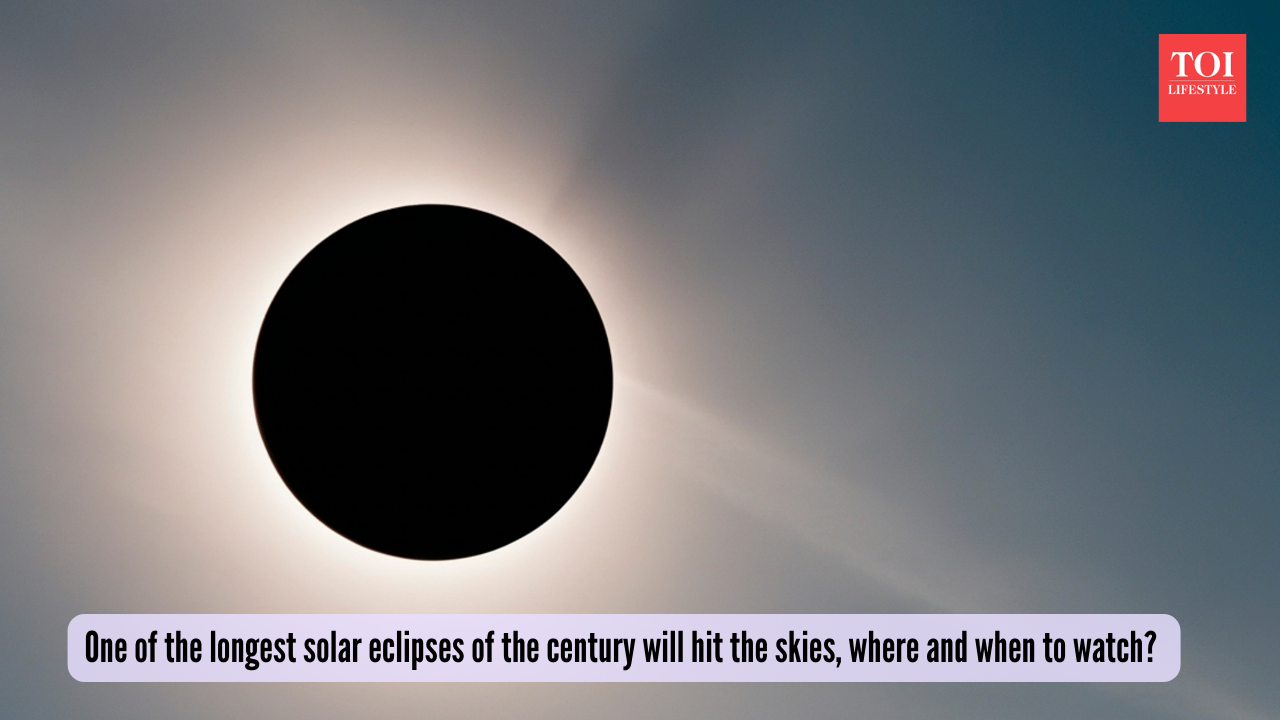
One of the longest solar eclipses of the century will hit the skies, where and when to watch
When does a total Solar Eclipse take place?
A total solar eclipse happens when the Moon fully blocks the Sun, making the viewers experience a short span of darkness in the path to brief night. On August 2, 2027 people will experience up to 6 minutes 23 seconds of totality, one of Earth’s longest land-based eclipses in 100+ years. This is one of those rare eclipses as most last under 5 minutes due to orbital speeds.
Why is the eclipse so long?
One of the major reasons for the longevity of the eclipse is because Moon remains at the perigee or the closest to Earth, so looks bigger. On the contrary, Sun remains at aphelion or the farthest point to the Earth, so it looks smaller, stretching coverage. Path nears equator, slowing shadow over ground. NASA calls it ideal for corona studies, per astronomical data. 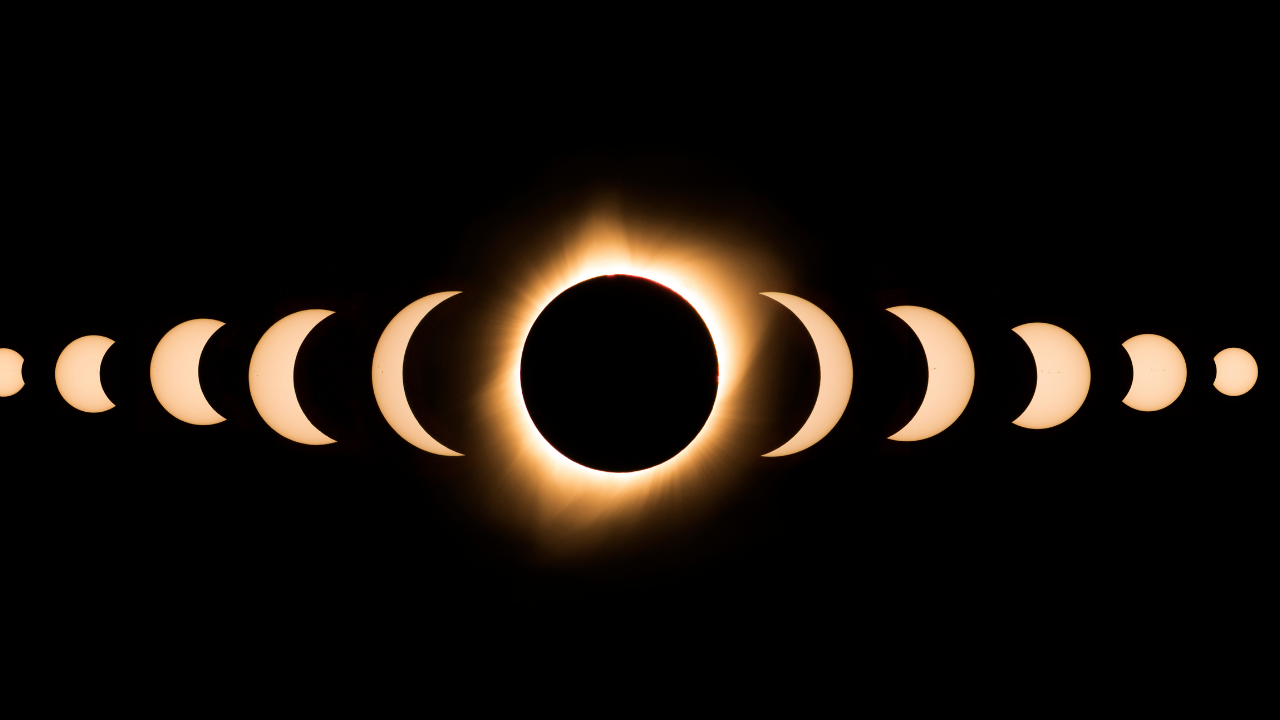
Total solar eclipse in phases
Where will the eclipse be visible with totality
Shadow starts in the Atlantic Ocean, hits southern Spain in Cadiz, Gibraltar, Morocco, Algeria, Tunisia, Libya. In Egypt at Luxor where totality reaches the max, Sudan, Saudi Arabia including Jeddah, Yemen, Somalia. Ends in Indian Ocean near Chagos, according to Space.com. 258km wide path draws tourists; clear skies favoured in Egypt, Libya.
Will the eclipse be visible in India?
That said, skywatchers across India, from Delhi and Mumbai in the north/west to Chennai and Kolkata in the south/east, will catch a partial solar eclipse near sunset.Expect it to start around 3:34 PM IST, peak at about 4:30pm, with up to 17% of the Sun obscured in places like New Delhi, and will finish by 5:53 PM IST. The Sun will look like a cookie with a bite taken out, but it’ll never fully vanish.
Safety tips to view the eclipse
Use only ISO 12312-2 rated ones. Regular sunglasses or homemade filters won’t cut it.If there are no glasses? Poke a tiny hole in cardboard, let sun shine through onto another sheet below. It is a safe and fun way to observe an eclipse.