
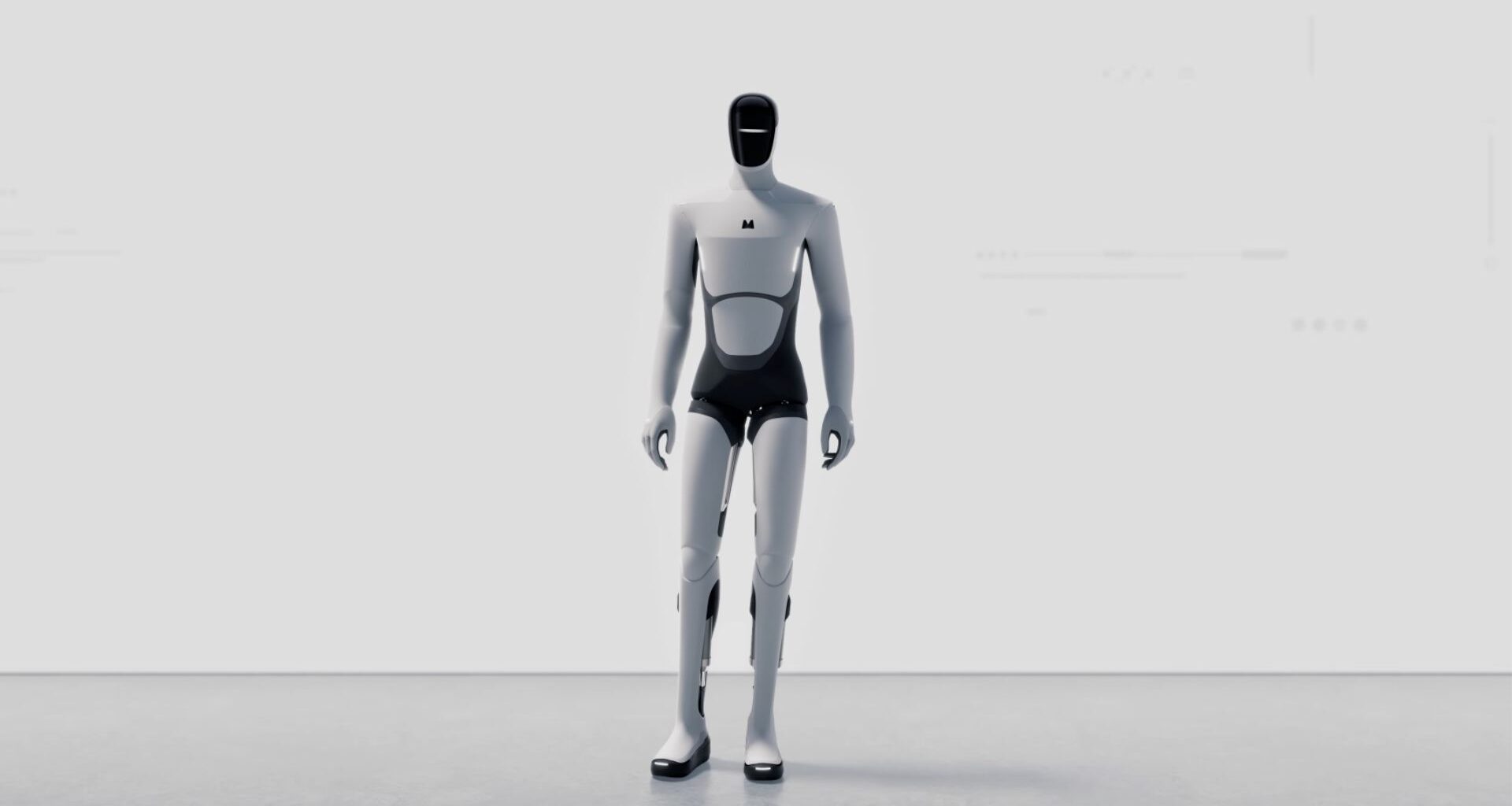
Chinese startup Matrix Robotics has officially launched MATRIX-3, its third-generation humanoid robot, marking a major step forward in physical artificial intelligence.
The new platform represents a ground-up redesign spanning algorithms, hardware, and applications, shifting humanoid robots from rigid task execution to adaptive interaction with the real world.
Designed as a safe, autonomous, and highly generalizable system, MATRIX-3 combines biomimetic sensing, dexterous manipulation, natural human-like movement, and a new cognitive core capable of zero-shot learning.
The company says the robot is built to move beyond industrial settings into everyday commercial, medical, and home environments.
Humanoids go cognitive
MATRIX-3 is positioned as a major advance in the evolution of physical artificial intelligence. Described as a safe, autonomous, and highly generalizable platform, MATRIX-3 is designed to perform complex, human-like tasks while adapting to real-world environments rather than following rigid, pre-programmed instructions.
“The philosophy of MATRIX-3 is to integrate machine intelligence into human physical spaces as naturally and safely as possible,” said Allen Zhang, CEO of Matrix Robotics, in a statement.
At the core of MATRIX-3’s physical interface is a new biomimetic design that gives the humanoid robot both “skin” and “touch.” Its chassis is wrapped in a three-dimensional woven, flexible biomimetic fabric that creates a soft, approachable exterior while embedding a distributed sensing network beneath the surface. This structure cushions physical contact and detects impact forces in real time, improving safety during close human–robot interaction.
Complementing this is a multimodal perception system in which high-sensitivity tactile sensor arrays embedded in the fingertips can detect pressures as low as 0.1 newtons. These tactile inputs are fused with data from an upgraded vision system driven by a large-scale spatial perception foundation model, forming a visual–tactile feedback loop that allows MATRIX-3 to assess material properties, object geometry, and grip stability. As a result, the robot can reliably handle fragile, deformable, and flexible objects.
Dexterity meets intelligence
MATRIX-3 also represents a significant leap in movement and manipulation. Its newly developed 27-degree-of-freedom dexterous hand closely mirrors human anatomy, using lightweight, cable-driven actuation to achieve fast, precise motion. This design enables the robot to use standard tools, operate delicate instruments, and manipulate soft items such as fabrics.
Full-body mobility is supported by a natural humanoid gait generated by a general motion control model trained on extensive human motion-capture datasets. Integrated linear actuators provide high power density with low noise, supporting stable, agile, and coordinated whole-body movement.
Underlying these capabilities is a new cognitive core developed by Matrix’s intelligence division. The proprietary neural network architecture enables zero-shot generalization, enabling MATRIX-3 to understand basic physical principles and execute new tasks from natural-language instructions without task-specific training.
Through universal intelligent manipulation, the robot autonomously plans grasps, adjusts force in real time, and navigates obstacles using seamless hand–eye coordination.
The claims and demonstration remain limited to video footage, and MATRIX-3’s real-world performance has yet to be independently verified. In particular, the speed, sensitivity, and freedom of hand movements shown—if replicated reliably outside controlled demonstrations—would represent a genuine breakthrough in humanoid robotics.
Matrix Robotics has announced an early access program for selected industry partners, with pilot deployments of MATRIX-3 scheduled to begin in mid-2026.