
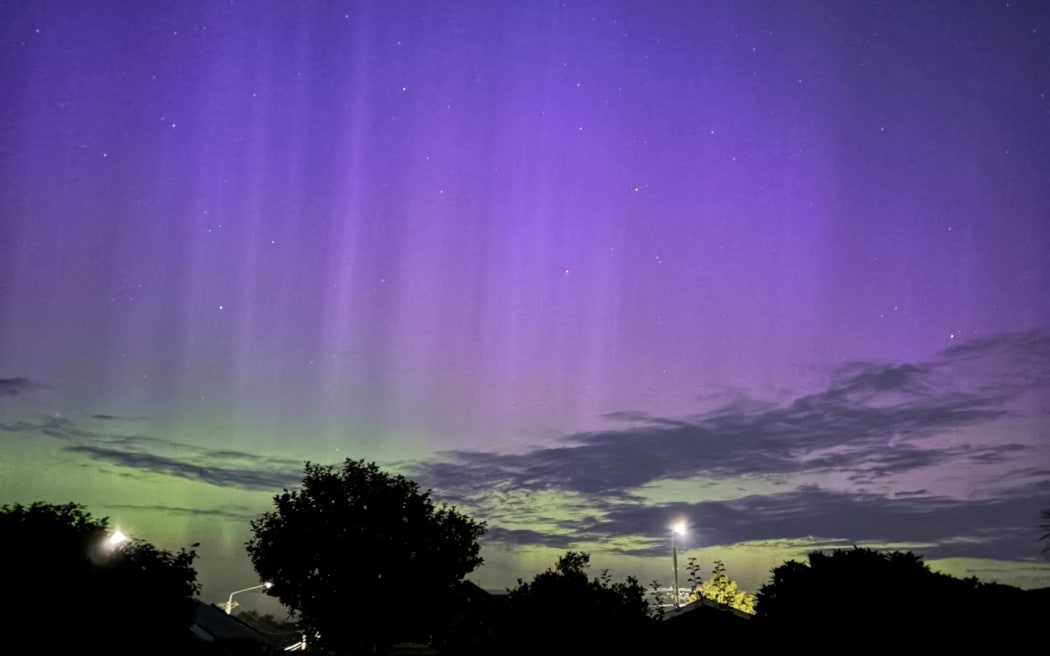
An aurora seen from Hoon Hay, Christchurch.
Photo: Rebecca Bull / RNZ
Rays from the biggest solar storm of the last couple of decades hit the Earth overnight, causing aurora visible in both the north and south extremes of the globe.
The lights were caused by a storm that nearly hit the highest level on the scale used by space weather monitors to measure magnetic disturbance.
Do you have photos? Share them with us at: iwitness@rnz.co.nz
Early Tuesday morning, NOAA’s Space Weather Prediction Centre (SWPC) posted on X: “An S4 severe solar radiation storm is now in progress – this is the largest solar radiation storm in over 20 years. The last time S4 levels were observed was in October, 2003.
But, it noted: “Potential effects are mainly limited to space launch, aviation, and satellite operations.”
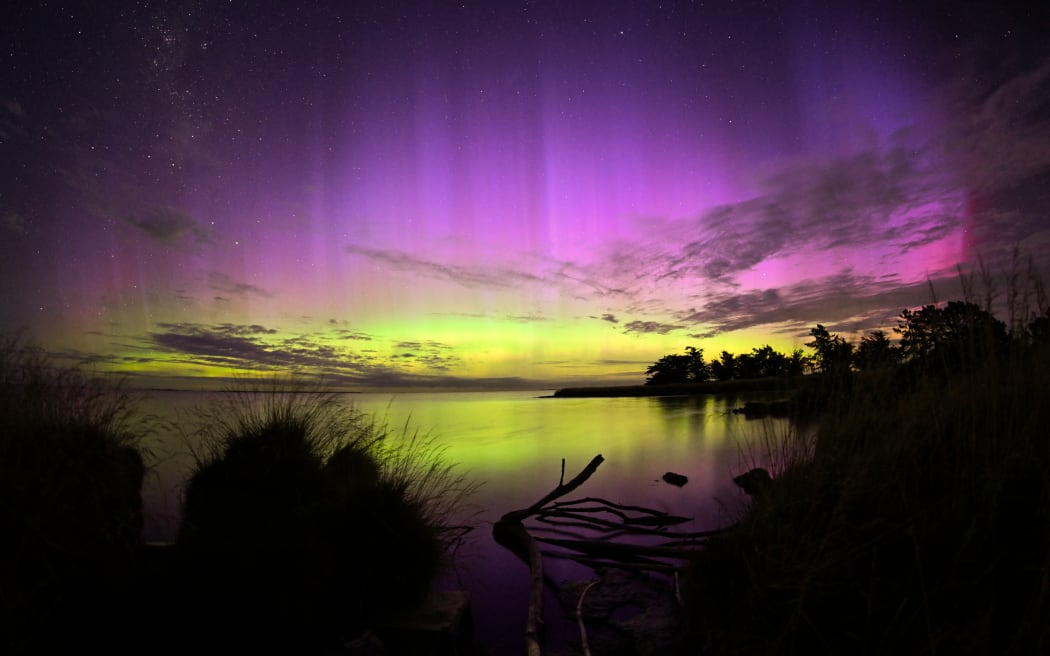
The Aurora Australis, also known as the Southern Lights, glows on the horizon over the waters of Lake Ellesmere on the outskirts of Christchurch, New Zealand, on 21 January, 2026.
Photo: SANKA VIDANAGAMA / AFP
Disturbance is measured on the K-index. According to the SWPC, it reached Kp8, out of a possible Kp9.
The solar storms of October 2003 caused power outages in Sweden and damages to power transformers in South Africa, CNN reported.
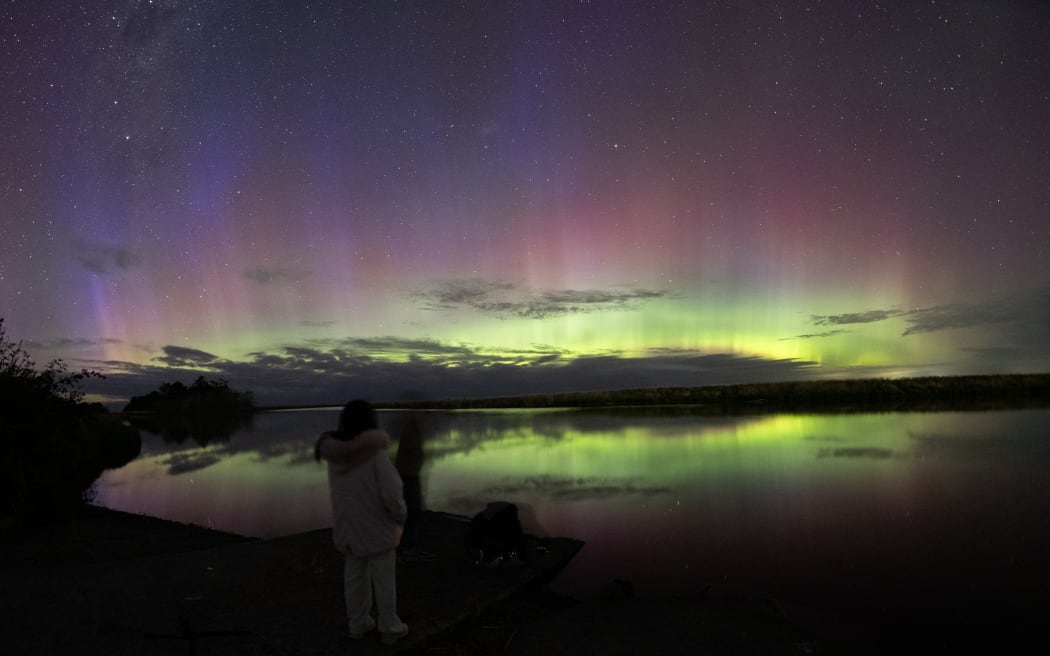
People look at the Aurora Australis, also known as the Southern Lights, as it glows on the horizon over the waters of Lake Ellesmere on the outskirts of Christchurch, New Zealand, on 21 January , 2026.
Photo: SANKA VIDANAGAMA / AFP
Some viewers posted pics and clips to social media. Sadly, cloud cover ruined the view for some New Zealand skywatchers.
The National Emergency Management Agency (NEMA) told RNZ the coronal mass ejection arrived in Aotearoa about 8.30am on Tuesday, and was “not expected to cause significant impacts for NZ”.
The agency had activated its Space Weather Science Advisory Panel, which had considered international space weather monitoring and forecasting agencies, as well as current information from the NZ-based monitoring network.
“On current conditions, the panel advises this event is not concerning for NZ and no significant impacts are expected. NEMA and Transpower will continue to monitor the situation.”
There were no updates from Transpower overnight.
Sign up for Ngā Pitopito Kōrero, a daily newsletter curated by our editors and delivered straight to your inbox every weekday.