
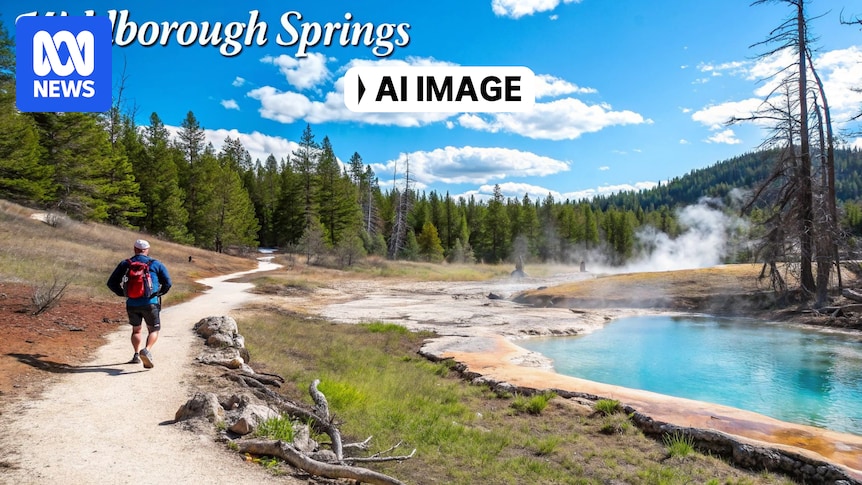
According to the Tasmania Tours website, Weldborough Hot Springs offers a “peaceful escape” and an “authentic connection to nature”.
The “secluded forest retreat” even features in the “7 Best Hot Springs Tasmania Experiences for 2026”.
The website says walkers are greeted by pools “rich in therapeutic minerals”.
“This makes it a popular destination for those looking to immerse themselves in Tasmania’s raw beauty,” the site reads.
“Its reputation as a tranquil haven has made it a favourite among local hiking groups, wellness retreat organisers, and anyone wanting to experience one of the more untouched hot springs Tasmania has to offer.”
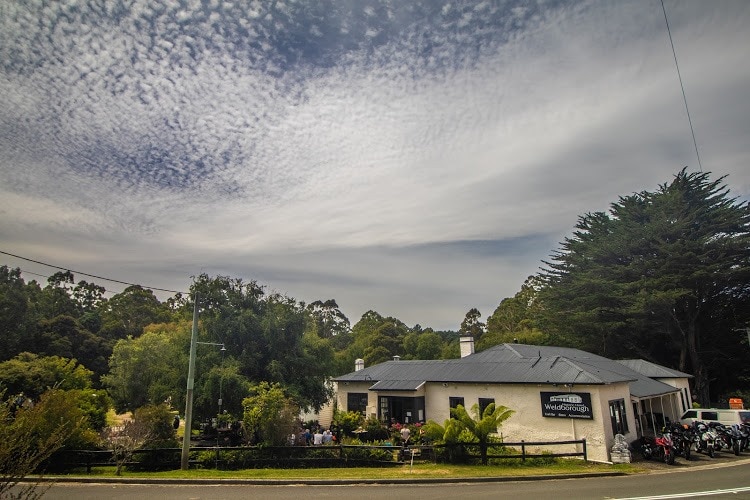
What visitors can actually expect if they drive out to Weldborough in north-east Tasmania: the local pub. (Facebook: Weldborough Hotel)
And with the webpage lacking directions, excited travellers have descended on the area’s other famous landmark — the Weldborough Hotel, about two hours’ drive north-east of Launceston — to ask how they can find the idyllic pools.
The problem is, the hot springs, as depicted in the imagery, do not exist.
A confused publican and confused guests
It is a problem that publican Kristy Probert encountered regularly.
“The Weld River, which runs through Weldborough, is freezing cold, it’s definitely, definitely not a hot spring,” she said.
“They’re more likely to find a sapphire than … to find a hot spring, to be honest.”
Ms Probert said she was getting daily phone calls and in-person visitors asking about the hot springs, some even wanting to book accommodation.
“I actually had a group of 24 drivers turn up there two days ago that were on a trip from the mainland, and they’d actually taken a detour to come to the hot springs,” Ms Probert said.
“I said, ‘If you find the hot springs, come back and let me know and I’ll shout you beers all night’ — they didn’t come back.”
The location is listed on the website alongside the very real Hastings Caves and Thermal Springs in southern Tasmania, along with some more questionable inclusions, such as freezing Liaweenee and remote Savage River.

Visitors will not find a scene like this at Savage River. (Tasmania Tours)
The Tasmania Tours website had several articles and blog posts on must-see destinations on the Apple Isle, including “12 unmissable things to do in Hobart for 2026”.
As with the hot springs article, many appear to be written by AI, and include generated pictures purporting to be Tasmanian locations.
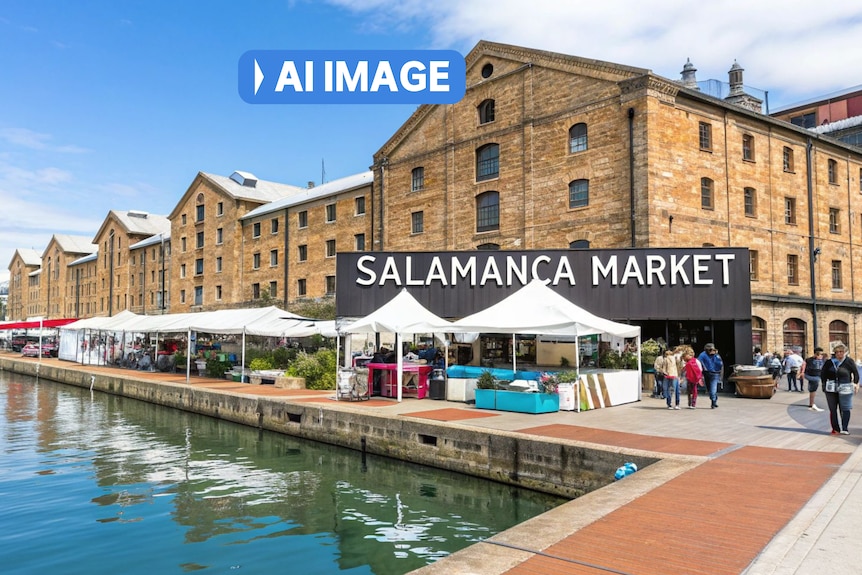
An AI-generated image on the Tasmania Tours website purports to show Salamanca Market. (Tasmania Tours)
Company relies on AI to ‘compete with the big boys’
Tasmania Tours is operated by Australian Tours and Cruises, a New South Wales business that runs several other websites for booking tours in other states.
Owner Scott Hennessy said: “Our AI has messed up completely.”
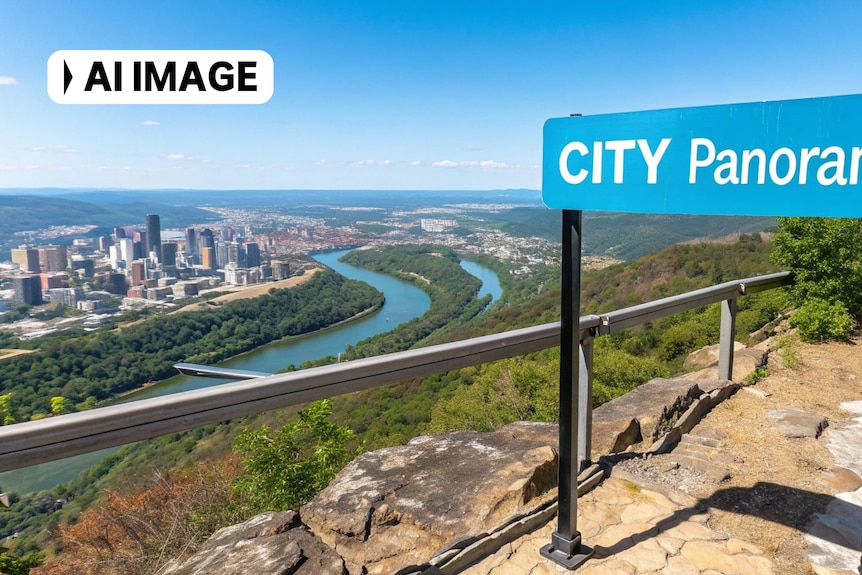
An image purporting to be from Kunanyi/Mt Wellington overlooking Hobart looks more like a Brazilian landscape. (Tasmania Tours)
He said the company had outsourced marketing material to a third party, which used AI to create some of its content.
Mr Hennessy said that while all posts were normally reviewed before being posted, some had been made public by mistake while he was out of the country.
The hot springs article was posted in July 2025.
“We’re trying to compete with the big boys, and part of that is you’ve got to keep your content refreshed and new all of the time,” Mr Hennessy said.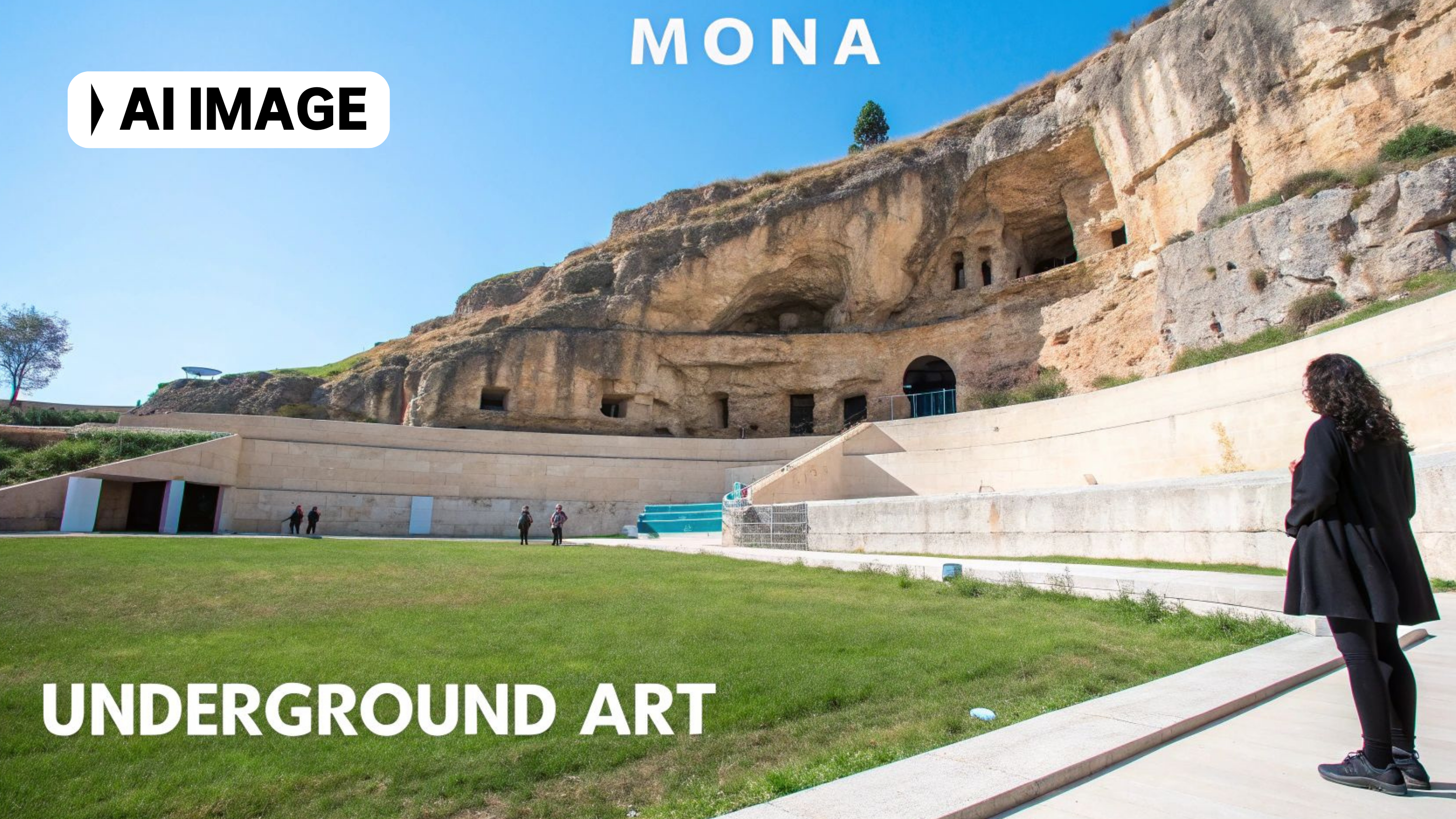
The Museum of Old and New Art, also known as MONA, features a range of rock faces, but none like this. (Tasmania Tours)
‘Three-legged wombat, crocodile-looking things’
Mr Hennessy said the use of AI content was necessary in order to compete for prominence in online searches and win over customers.
“We don’t have enough horsepower to write enough content on our own, and that’s why we outsource part of this function,” he said.
“Sometimes it’s perfect and really good and does what you hope it would do, and sometimes it gets it completely wrong.
“I’ve seen it create animals I’ve never seen before — three-legged wombat, crocodile-looking things.”
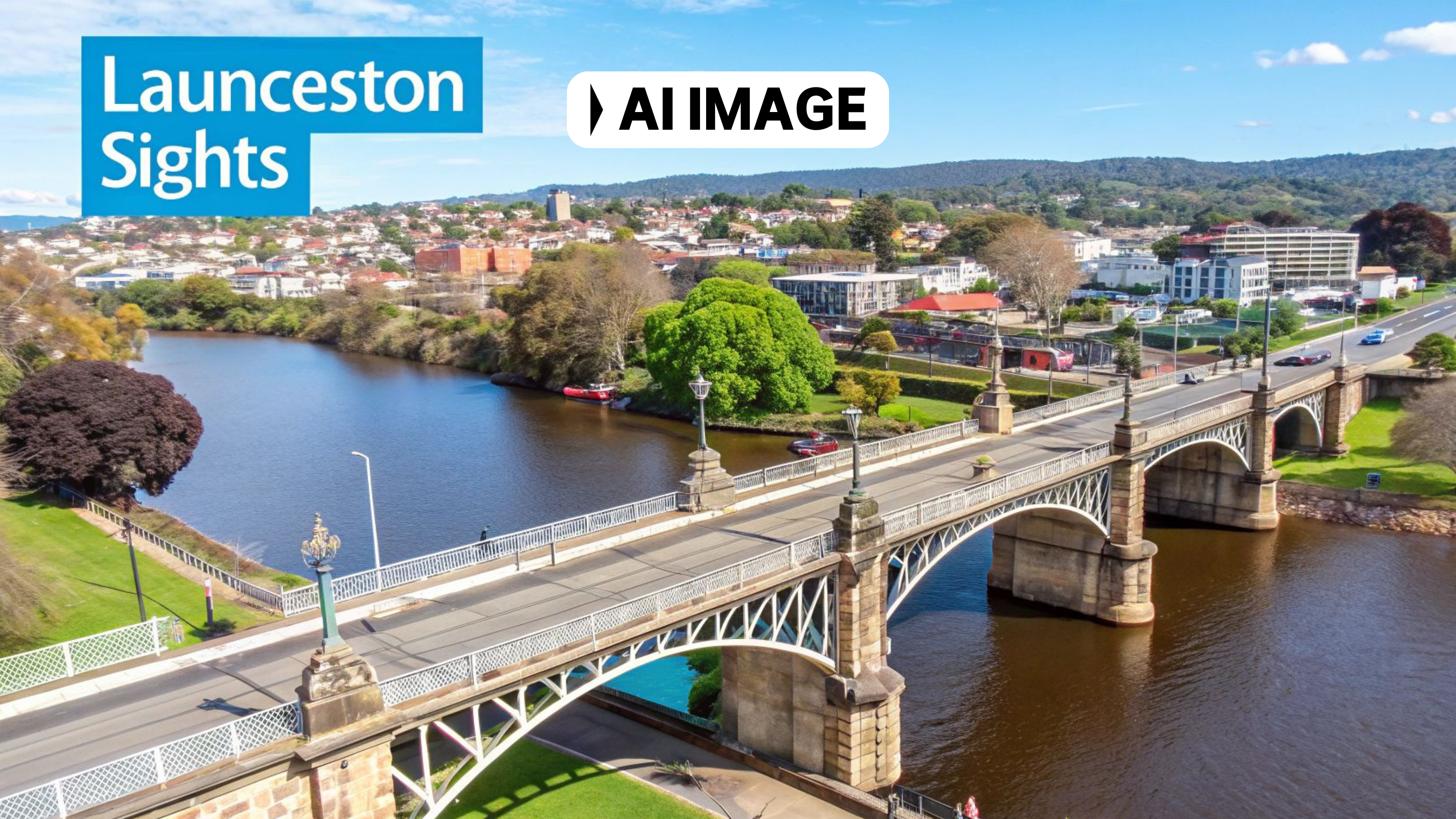
This image is clearly not Launceston, despite the city having multiple bridge crossings of the Tamar River. (Tasmania Tours)
Mr Hennessy said all the AI-generated blog posts had been taken down and were being checked thoroughly.
He assured anyone looking to book through Tasmania Tours that it was, in fact, a real website, selling real tours.
“We’re not a scam, we’re a married couple trying to do the right thing by people … we are legit, we are real people, we employ sales staff,” Mr Hennessy said.AI resulting in traveller mistakes
Destination Southern Tasmania’s Anne Hardy said serious attention needed to be paid to “AI hallucinations”, with use of the technology becoming more prevalent.
Loading…
“What we know is that now about 90 per cent of itineraries that are generated by ChatGPT actually have at least one error in them, and we also know that 37 per cent of people rely on AI to generate their itineraries,” Professor Hardy said.
Common mistakes can include opening times, inaccurate descriptions of what is offered at a location, how long a walk may be, or what equipment is needed.
She said the phony hot springs website was a “very good lesson in terms of quality control”.
“That’s the problem with the internet and selling online … now businesses need to always keep ahead of the curve and they need to be easily found when people put in searches and that type of thing,” Professor Hardy said.