
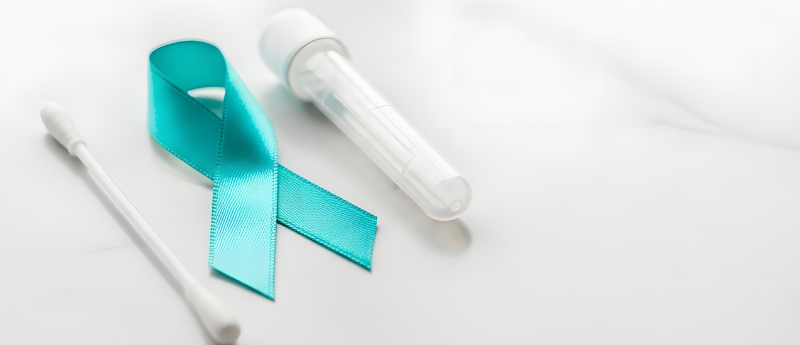
Researchers have shown that visual aids and multilingual resources could boost women’s confidence in HPV self-collection and increase cervical cancer screening uptake rates.
At-home kits that allow women to collect their own samples for HPV testing have been shown to improve cervical cancer screening rates. But some women lack confidence in their ability to complete the collection themselves.
In a new study published in the journal Cancer Management and Research, UF Health Cancer Institute researchers used community focus groups to zero in on ways to improve patient education materials on HPV self-collection.
 The oncologist’s communication toolkit for language-equitable cancer care
Discover practical steps that oncologists can take to improve language concordance, and therefore the quality of cancer care provided, in their own clinics.
“Our study identifies ways we can make education materials more accessible and reduce barriers to getting screened, therefore empowering women to collect their samples at home,” said lead author Rahma Mkuu, Ph.D., an assistant professor in the Department of Health Outcomes and Biomedical Informatics.
Screening for HPV is extremely important because 99% of cervical cancers are caused by HPV, the human papillomavirus. The virus causes infection that can eventually become cancers of the cervix, throat, anus, vulva and penis. Screening can result in monitoring and treatment of cervical cancer abnormalities three to seven years before they develop into cancer.
In May 2025, the Food and Drug Administration approved the United States’ first at-home cervical cancer screening tool, and most U.S. insurance providers will cover this method starting in 2027. At-home kits allow HPV testing without needing a Pap smear, which can be a distressing experience.
In the new study, researchers conducted three focus groups with 13 women living with chronic conditions in ZIP codes associated with high poverty rates in North Central Florida. Women living with chronic conditions and in poverty have a higher risk of cervical cancer than the general population because they have lower screening rates.
Among the 50 United States, Florida ranks third-highest in cervical cancer incidence. Several counties in the region the UF Health Cancer Institute serves in North Central Florida have higher rates of cervical cancer than the state.
“Our catchment area is made up of rural areas, so self-sampling can also help address access issues, giving women the opportunity to screen at home in a convenient and private way,” Mkuu said.
The researchers identified three areas of opportunity to improve education materials. One was to use clear and simple language to educate people about cervical cancer and how to mail in samples. Another was to use visual aids to make instructions easy to follow. The third was to offer materials in more languages.
Improving education materials and instructions may boost women’s confidence about the self-collection of HPV samples, ultimately increasing cervical cancer screening rates, the researchers said.
Stephanie Staras, Ph.D., co-leader of the UF Health Cancer Institute’s Cancer Control and Population Sciences research program, was the study’s senior author. The study was funded by the National Cancer Institute.
This article has been republished from the following materials. Material may have been edited for length and house style. For further information, please contact the cited source. Our press release publishing policy can be accessed here.