
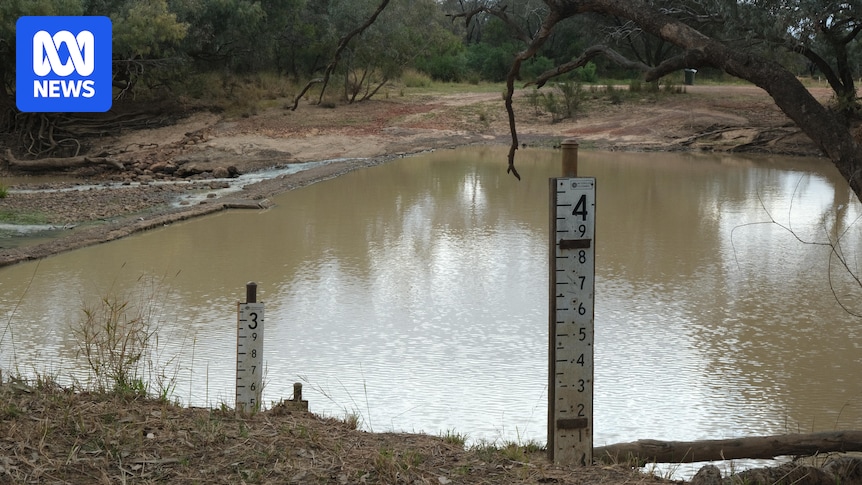
When John Wharton first became a mayor in Queensland’s North West, the early flood warning system was little more than a list of phone numbers and the local radio station.
“People in the Gulf downstream would ring me to find out how high the river was in Richmond or Maxwelton or in Marathon or Hughenden,” he said.
“I would ring those land owners on that river and and I would put it out on the ABC Radio, Mount Isa, and everybody could hear where the river levels were.”
Almost 30 years later the Richmond mayor said landholders were again hitting the phones during the flood emergency.
“We’re back to doing that again and this is disappointing because we’ve got so much technology … and there’s so many gauges that aren’t working,” Cr Wharton said.
As key gauges failed when they were needed most, politicians at all levels of government started pointing fingers.
But bringing the devices back online will take more than a blame game and it starts with understanding how they failed in the first place.
Why gauges fail
Ben Caddis is a flood engineer who has worked with warning and forecasting systems internationally and across Australia. (Supplied: Kingfisher Hydro)
Ben Caddis is a flood engineer with more than 20 years of experience in warning and forecasting systems.
He has installed gauges on rivers throughout Queensland and Australia.
Mr Caddis said there were several types of gauge, including some that only transmitted rainfall data, others that only monitored changes in river height, and some that did both.
“Queensland’s landscape is so varied and it’s so diverse … selecting a gauge is a balance between a number of things,” he said.
They can be automatic or manual. Automated devices collect and send data via a dedicated mobile phone, radio or satellite network.
Manual gauges must be read in person by a volunteer or local staff member, which is sometimes impossible during severe weather.
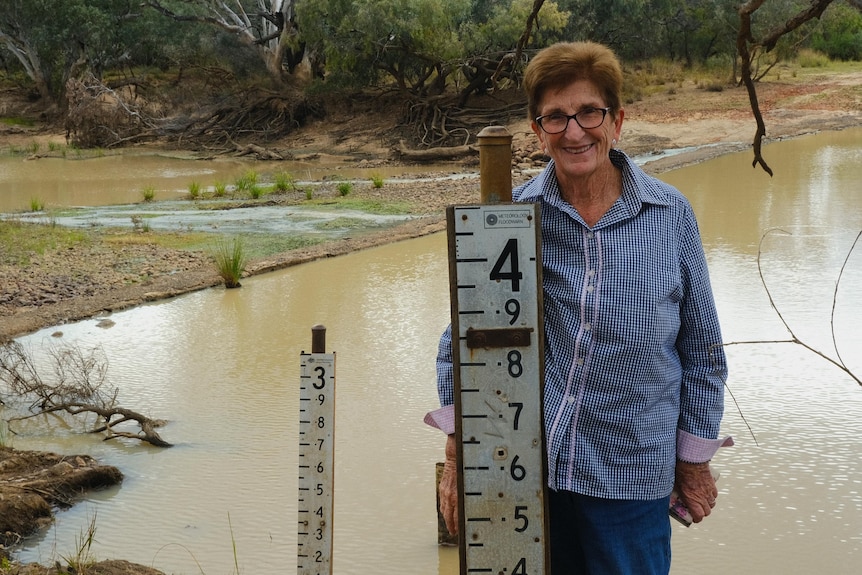
Nan Pike says she would like to see more automated river gauges on the Paroo River. (ABC Rural: Maddelin McCosker)
An ABC analysis of the 1,322 automatic gauges monitoring Queensland rivers found 168 did not have a reading on the Bureau of Meteorology website.
Mr Caddis said there were many reasons a gauge went offline.
“We can often find ants have made their way in or disrupted the telemetry system and [caused an] outage of the power system,” he said.
Remote gauges relied on solar or battery power, which Mr Caddis said could also fail.
“You can have failure of the the solar panel or the equipment connecting to that, failure of the instrumentation, blockage of air lines and so forth,” he said.
“Although they’re there to detect floods, they can be damaged when even larger floods than what they were designed to monitor come through.”
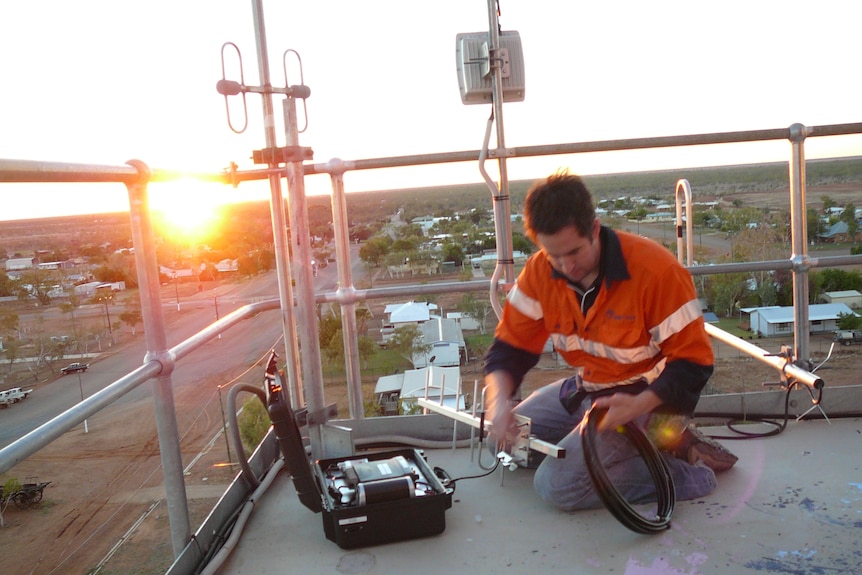
Ben Caddis has installed flood warning infrastructure in parts of Queensland. (Supplied: Kingfisher Hydro)
Mr Caddis said generally the gauges were designed to be robust with little maintenance, but there would always be some that failed during an event.
“But the idea around the gauge placement is that there are sufficient number of rain and river gauges,” he said.
“If any one of them goes out, they can rely on another gauge upstream or downstream to provide redundancy for the system.”
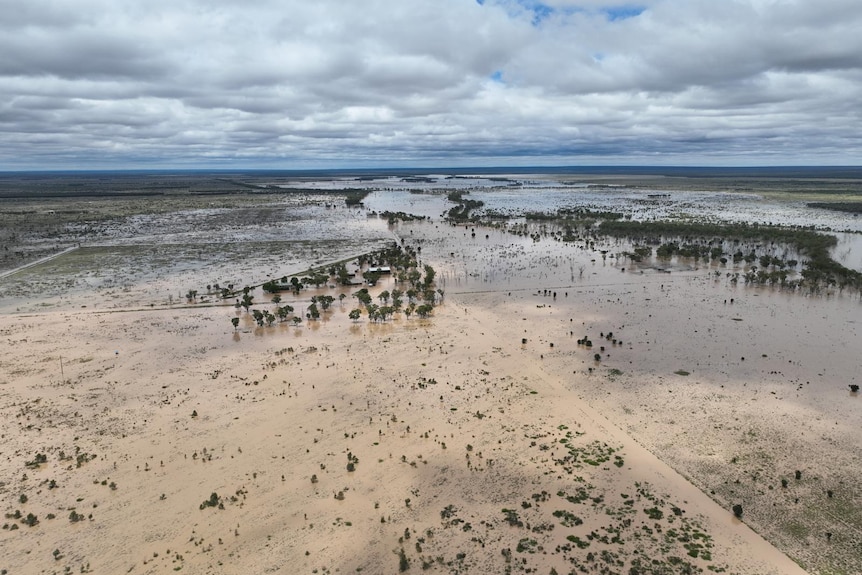
Alice River Station in Central Queensland was impacted by floodwaters. (Supplied: Cam Anderson)
Carpentaria Shire Mayor Jack Bawden said his concern was that the devices were not fit for purpose in his region.
“We did the right thing and we had them [gauges] serviced about eight weeks ago, and they failed,” he said.
Maintain the gauge
In the McKinlay Shire, cattle producers around Julia Creek were hit hard by a monsoon trough around Christmas and then again by ex-Tropical Cyclone Koji, with stock losses across the state likely to reach more than 100,000 head.
Many believe more animals could have been saved if the gauges had been working.
McKinlay Mayor Janene Fegan said there was confusion over who was responsible for the technology, especially when ownership changed.
“Some [gauges] are in our names, but not necessarily being handed over with who does the repairs and maintenance,” she said.
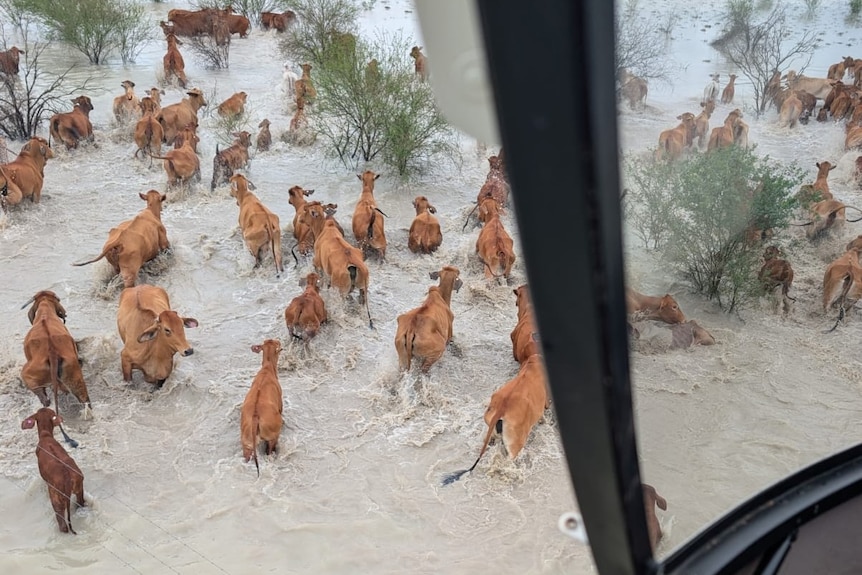
Authorities say close to 50,000 head of cattle have been lost in the latest floods in Queensland’s north-west. (Supplied: McKinlay Shire Council)
In one case it took more than a year to fix a “major river gauge” in the Burke Shire because it was on private property and could not be accessed.
About two thirds of the nation’s gauges are owned by councils, state agencies and other organisations such as pastoral companies and mining operators, who are required to maintain and fund them.
The BOM only owns about a third of them, but over the next decade that will change.
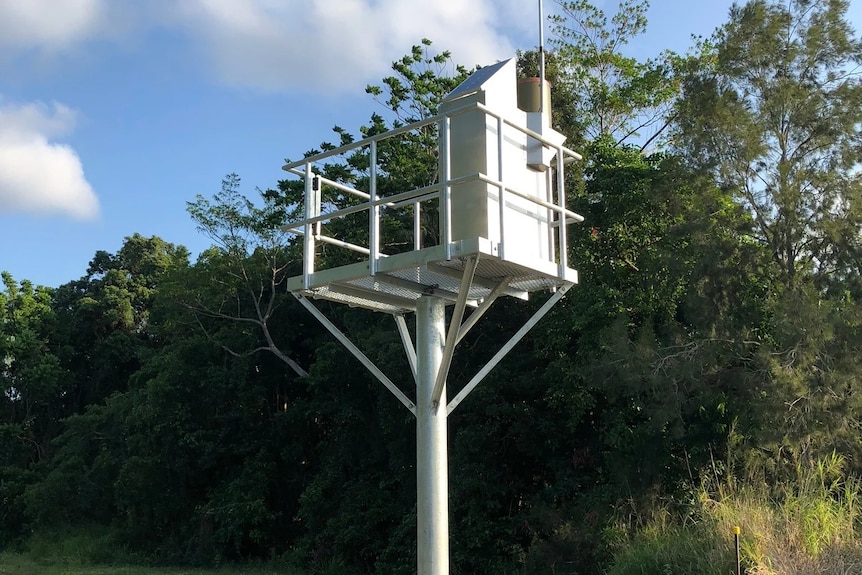
A rain and river gauge at West Plane Creek, near Sarina in North Queensland. (Supplied: Kingfisher Hydro)
A $236-million federal project announced in 2023 will see 1,600 mostly local government-owned rainfall and river height gauges acquired across the country.
The ongoing maintenance costs will be split between the BOM and the state or territory government.
But Burke Mayor Ernie Camp said more automated gauges were also needed.
“At the end of the day, you can’t say a job is complete when it’s only half done,” he said.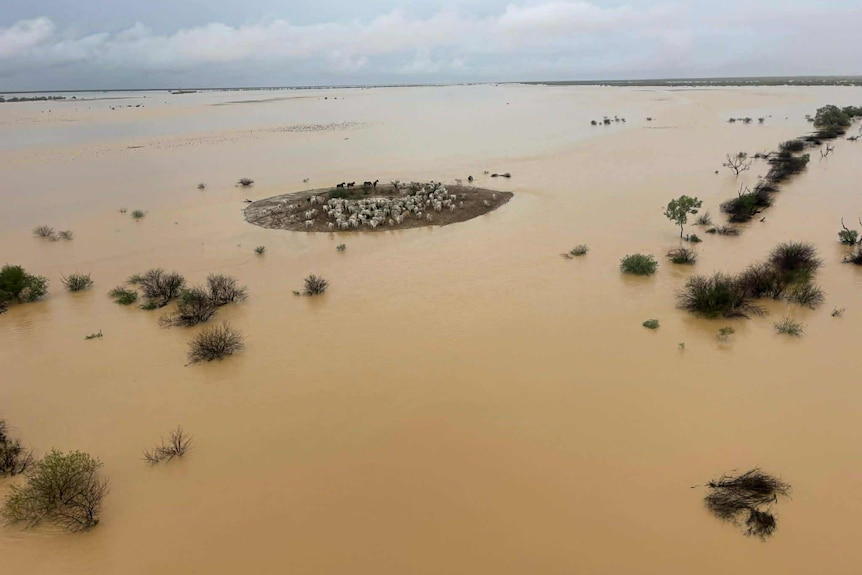
Cattle producers in north-west Queensland are still searching for missing livestock. (Supplied: Jaye Hall)
So far, 267 Queensland gauges have been acquired and a BOM spokesperson said the project was on budget and on schedule.
“Ownership and maintenance of flood warning infrastructure in Australia has historically been varied and complex,” the spokesperson said.
“This is part of the reason for the Flood Warning Infrastructure Network program to simplify ownership and standardise maintenance arrangements.”