
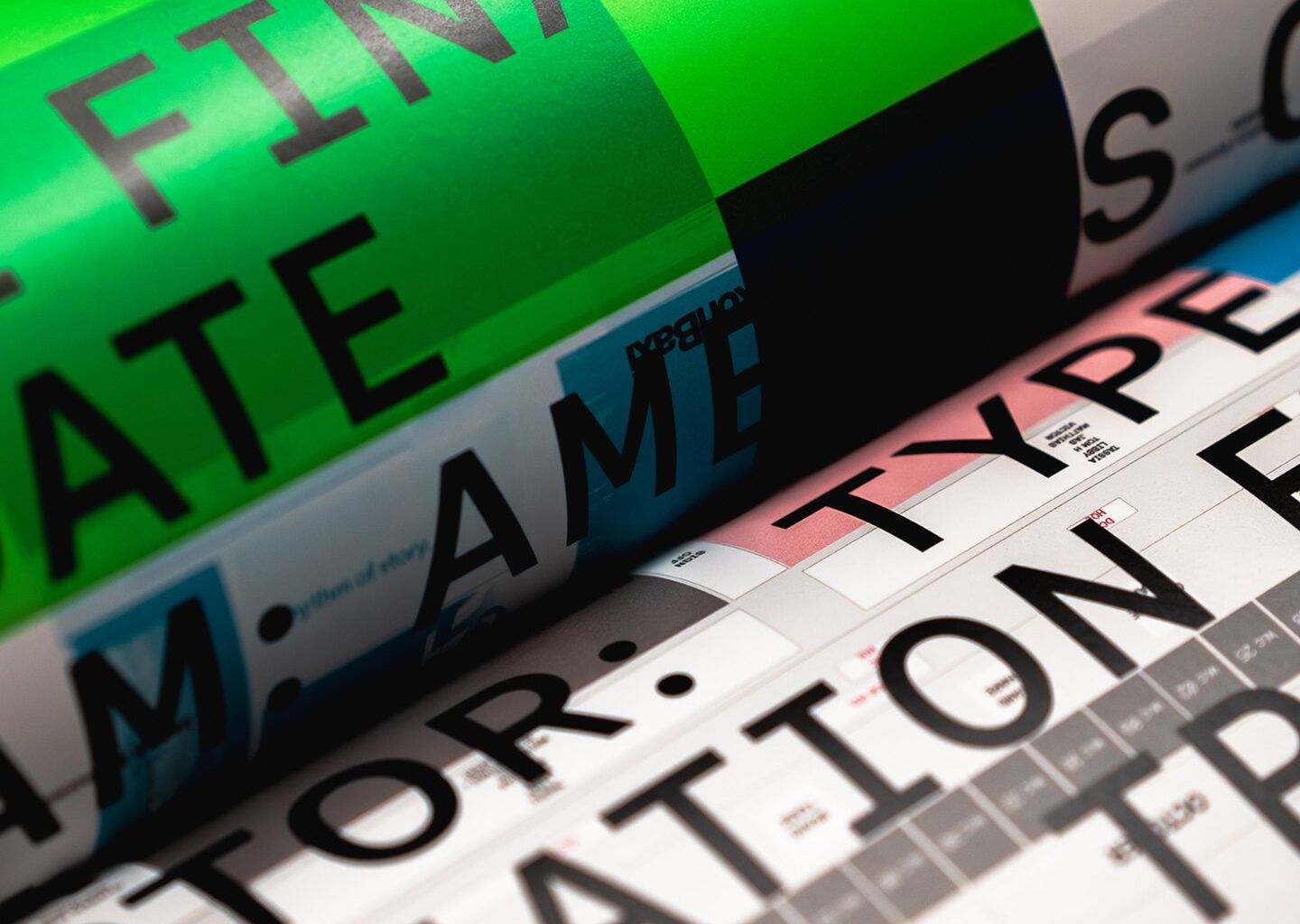
“We started by asking everyone to collect images regularly. Just spontaneous snapshots as we went. Of everything. Sketches, screens, notes, half thoughts, moments in motion. Over time it became this huge grab bag of elements,” Simon says. Stepping back to take a birds-eye view on this self made archive of material, the team felt that the permanence of a book (in contrast to the contents ephemeral, ongoing and unfinished nature) would be an interesting format to consolidate the project. A publication would become an unchanging record of their creative methods, frozen in time.
In their commitment to paper, the team made some important decisions around the book’s layout. Going for something that felt distinctly “anti-polish” and “anti case study”, DixonBaxi’s aim was not to overly curate the publications pages, but instead make them all the more expressive. Screenshots, photos, mockups and drawings all intercept one another in a collage of different colours and forms – things that communicate the energy of the work and “being in it together”, says Simon, were at the forefront of the book’s visual language.
“Usually, everything people see is polished and finished. Smoothed out. It makes it hard to see that creativity is messy, uncertain, and full of wrong turns. Creativity is often presented as certainty, when in reality it is full of doubt, disagreement, excitement, and moments where you feel completely lost… The point of the book is the mess”, he adds.
Stamped with neon green and produced in the hefty format of a twelve inch vinyl (a nod to the agencies start designing record covers), Remix is a manifesto that’s hard to miss wherever it sits: “You might not open it, but you cannot ignore it,” Simon says. For DixonBaxi, the book’s making was all about “remembering the privilege of making things together, and not losing that feeling along the way”. Running through all of its pages of patchwork visuals are excerpts that slowly form a conversation about creativity and running an agency – a collective typographic texture that demonstrates the idea that “creativity does not come from a single author or a single moment. It comes from people responding to each other in real time, building trust, pushing, questioning, and moving ideas forward,” Simon ends.