
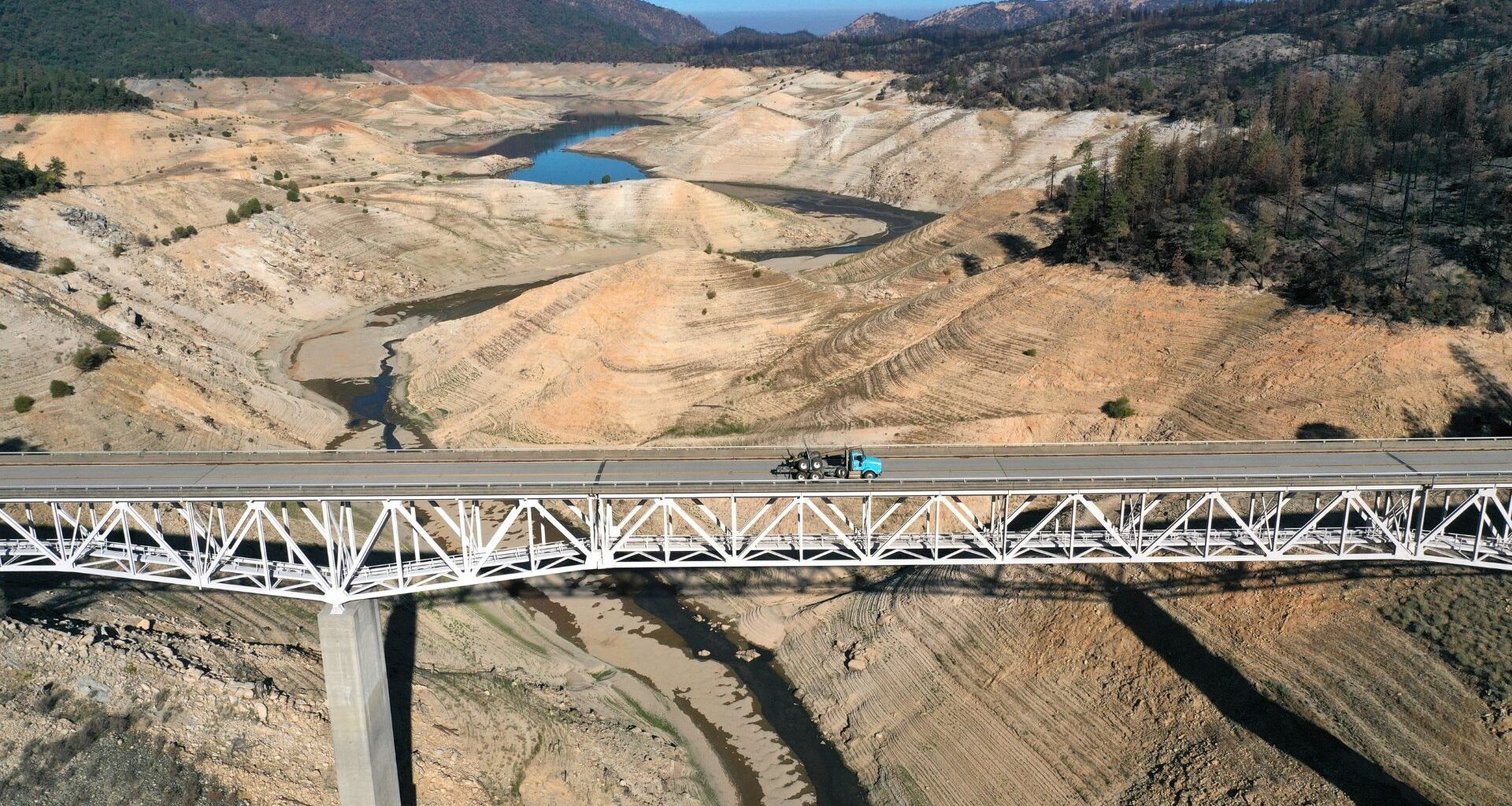
Water use in California was lower than officials estimated it would be between 2000 and 2020, according to a new report.
The findings raise questions about the accuracy of long-term water-demand projections, which could have knock-on effects on costs borne by consumers, but overall the news that water demand is lower than projected is positive for the state and its regular battles against drought, experts told Live Science.
You may like
Water management has long been a key issue in California, which has about 8.5 million acres (3.4 million hectares) of irrigated cropland. Crops like grapes, almonds and pistachios anchor the state’s economy, creating hundreds of thousands of jobs. Agriculture makes up about 40% of California’s annual water use, on average, with another 10% being used by communities and the other 50% being put back into the environment.
But the supplies of this precious resource are often at risk in the state, thanks to lengthy droughts, long-term depletion of groundwater supplies and population growth.
Projections of water use generally assume it will go up as the population increases, but California has introduced many water-saving measures. So to investigate how projections compare with actual usage, Johanna Capone, a graduate student at Virginia Tech, and Landon Marston, an associate professor in the Virginia Tech Department of Civil and Environmental Engineering, assessed the state’s Urban Water Management Plans, which were prepared every five years by 61 California urban water suppliers from 2000 to 2020.
They found that water suppliers consistently overestimated future demand by an average of 25% for five-year projections, and 74% for 20-year projections.
This overestimation stems primarily from predictions of how much water each person would use, rather than from assumptions about population growth, Capone and Marston reported in a study published Nov. 21, 2025, in the journal Water Resources Research. While suppliers generally projected stable or increasing per-capita demand, actual water demand per capita declined by 1.9% annually between 2000 and 2020, meaning water demand no longer neatly correlates with population growth.
“I think the overall takeaway is that California has been doing a great job in reducing demand,” Capone told Live Science. “The state is clearly on the right path.”
The findings match those from other similar research.
You may like
“This trend is consistent with what I have seen not only in California but also in other regions,” Cooley said. She is an author of a 2020 study that also saw a decline in per capita water use in 10 of California’s water suppliers between 2000 and 2015.
She said there has been a gradual decoupling of water use and population growth, so we can no longer assume that the two are linked.
“This study has shown, what other studies have shown, that we can grow and support economic development, using less water,” Cooley said, “and efficiency is a key strategy for helping us do that.”
Capone credits the reductions in water use to water-related initiatives, educational campaigns and financial incentives — such as rebates for replacing turf with drought-tolerant landscaping — driven by state policies like the California Green Building Standards Code and the Model Water Efficient Landscape Ordinance.
These regulations require that new developments use water-efficient versions of devices like toilets, shower heads, sprinklers and washing machines, Cooley said. It also helps when older versions of these devices are replaced by newer, more efficient models. The new initiatives also address outdoor water use by limiting the amount of grass and other plants that require a lot of water, she said.
“The denser these communities become and the smaller the lawns, naturally water demand is going to drop in much the same way water demand is going to drop as buildings become more efficient,” Capone said.
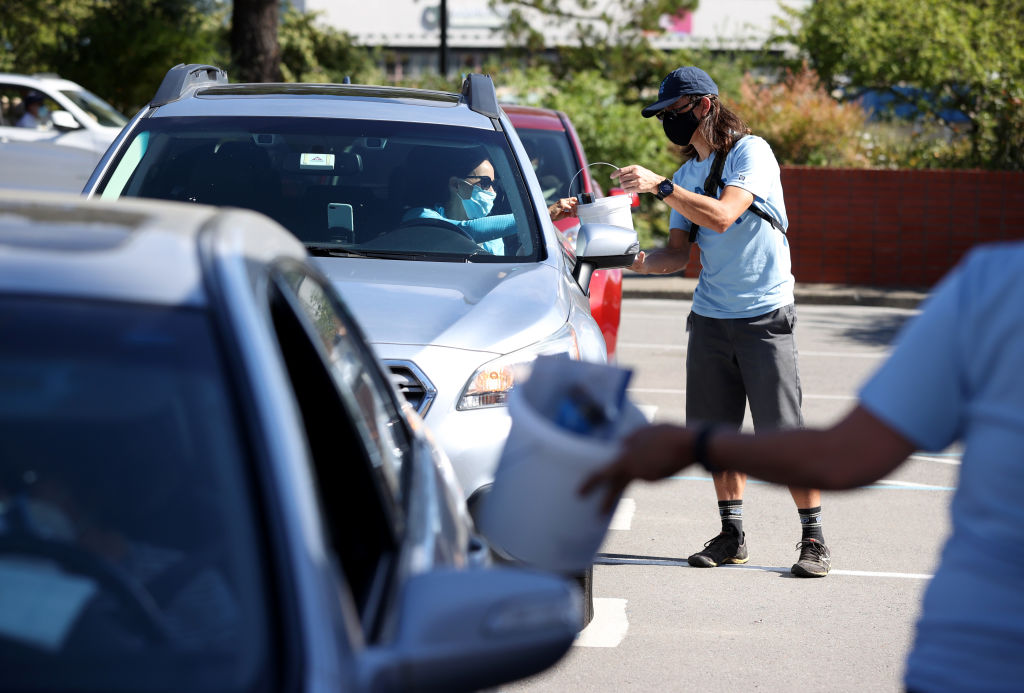
Workers with the Marin Municipal Water District (MMWD) hand out a bucket filled with information on the drought and water saving tools during a “Drought Drive Up” event at the MMWD headquarters on June 12, 2021 in Corte Madera, California. (Image credit: Getty Images/Justin Sullivan)
Yet water suppliers should make their forecasts more accurate to account for changes in water efficiency incentives, she said.
“It’s a difficult balance, because people may see that water demand is getting lower, and hopefully they wouldn’t take advantage of the situation and start watering lawns more,” Capone said. “But it’s important to try to be as accurate and realistic as possible, because if water demand is over-projected, the water suppliers might get hit by extra costs that would get passed on to customers.”
This might require buying in extra water supplies or building new water supply and treatment infrastructure, she said.
The study findings don’t mean California’s water supply challenges are over. “Even as we’ve seen declining water use, we still have water supply issues in California as droughts become more intense and more frequent, thanks to climate change,” Cooley said.
Wet years help replenish stocks of groundwater that California relies on, but it’s the water demand management that ensures enough water remains in reservoirs and in aquifers over the longer term so that when drought returns, the state doesn’t have to apply the strictest water-use restrictions, Cooley said.
An analysis from the Metropolitan Water District of Southern California, which serves roughly 19 million people, found that without the district’s water efficiency initiatives over the past 30 years, stores of water in that area would have been depleted three times during that period.
“The important thing about water demand management is just to be resilient overall, and to be prepared for all that the environment has to throw at you,” Capone said.
One of the biggest challenges is to keep reducing water use as buildings become more efficient and lawns become smaller.
Although water demand per capita declined by 1.9%, on average, annually between 2000 and 2020, a more detailed look at Capone and Marston’s paper shows that per-capita water demand dropped around 2.6% per year from 2000 to 2015 but increased by an average of 0.29% per year from 2015 to 2020. These numbers raise questions about whether water demand management efforts have plateaued.
If so, continued cuts in water use might require a different focus. “When you think of water conservation, you think about the advertising, ‘Brush your teeth without the water on’ and ‘If it’s yellow, let it mellow,’ but it goes so much farther than just the household,” Capone said.
It’s important to look at where else water is being used and see if building codes and landscaping could reduce that usage, she said.
The potential across the U.S. for making water savings is huge. A November study from the Pacific Institute, which Cooley co-authored, found that improving water efficiency in U.S. homes and businesses, and reducing leakage in distribution systems could save between 14.0 and 34.1 million acre-feet of water per year, or between 12.5 and 30.4 billion gallons (115 billion liters) per day, and that even basic upgrades to meet existing standards could cut water use by one-quarter nationwide.
“There are lots of opportunities for us to reduce water use and make our communities more sustainable and resilient,” said Cooley.