
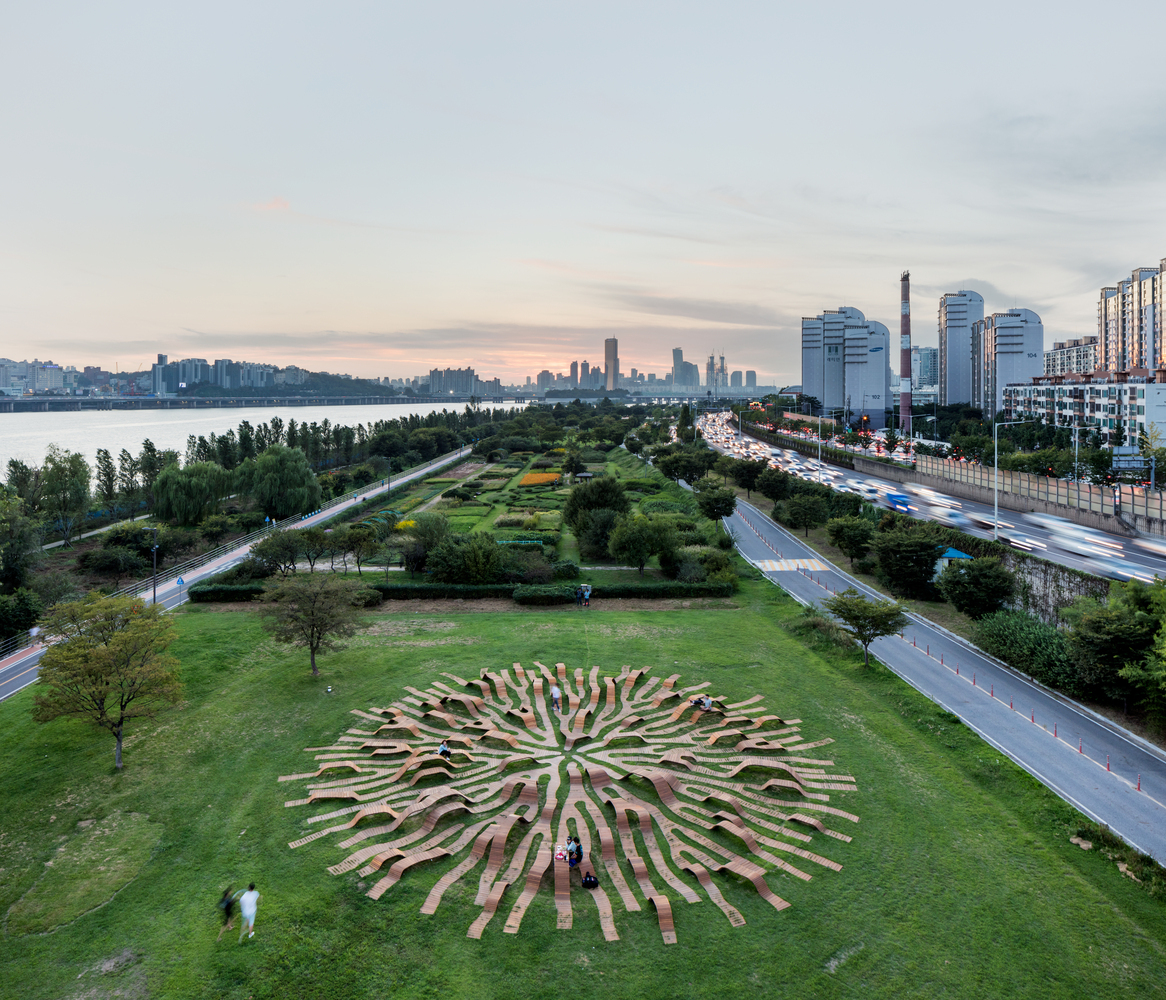
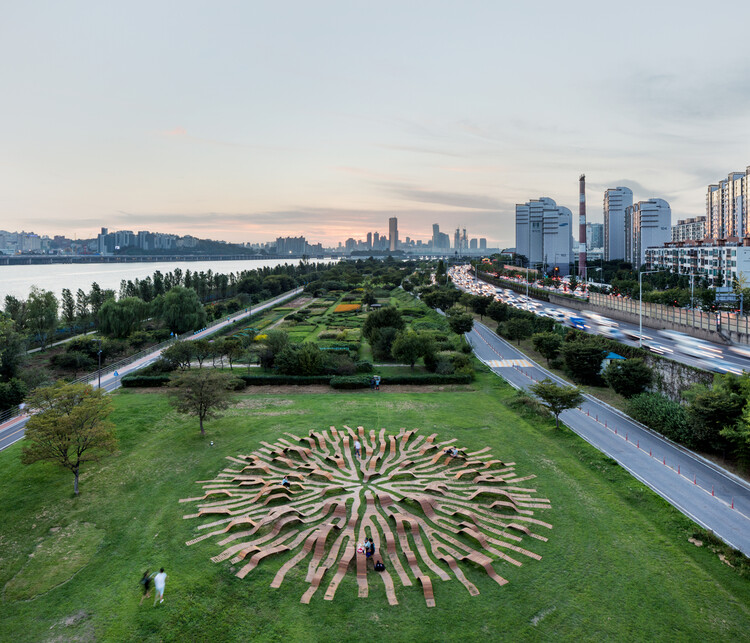
 Root Bench / Yong Ju Lee Architecture . Image © Kyungsub Shin
Share
Or
https://www.archdaily.com/1038009/designing-with-living-systems-discover-the-works-of-yong-ju-lee-architecture
What does it mean to practice ecological responsibility beyond performance metrics or carbon calculations? How can fabrication become a design method rather than a final outcome? Founded in Seoul, Yong Ju Lee Architecture is a practice led by architect and researcher Yong Ju Lee. Across installations, research-driven proposals, and cultural projects, the studio positions architecture as an experimental discipline rooted in making: a process in which design emerges from material behavior, prototyping, and fabrication logic as much as from drawing or representation. Bridging professional practice and academia, his work consistently expands the architectural toolkit through computational design, experimental material research, and an evolving commitment to ecology as a responsibility and a design driver. In 2025, the studio was selected as a winner of the ArchDaily Next Practices Awards.
Ecological responsibility, for Yong Ju Lee Architecture, is understood as an aesthetic and constructive logic in addition to its technical obligation. It is expressed through material selection, often emphasizing biodegradable or low-carbon alternatives, as well as through the way architecture is assembled, optimized, and built. Rather than adding sustainability as an external layer, the work integrates ecological urgency into the project’s formal decisions, structural systems, and fabrication strategies.
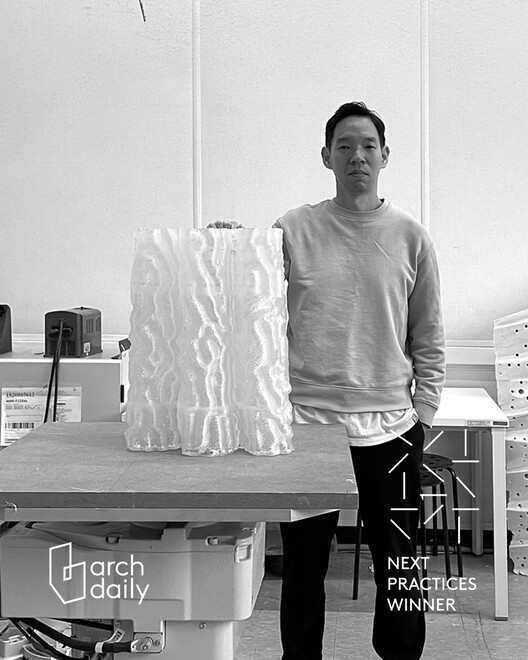 Yong Ju Lee. Background image courtesy of Yong Ju Lee Architecture
This approach is grounded in a belief in material intelligence. Materials are not treated as neutral resources to be shaped into predetermined forms, but as active agents with specific behaviors, constraints, and affordances. Form, structure, and construction logic are developed in parallel, using digital tools and robotic advancements to translate conceptual research into buildable realities. Across the portfolio, architecture, art, and education appear as connected practices, driven by the same creative impulse and tested through continuous experimentation.
Related Article 20 Practices Shaping the Future of Architecture: Winners of the ArchDaily 2025 Next Practices Awards
This framework gives the studio’s portfolio a distinctive clarity across typologies. While the work spans scales, it often gravitates toward projects that invite public engagement and experimental risk-taking. Installations, competitions, and collaborative cultural commissions allow architecture to operate as a civic encounter. In these contexts, design becomes a way of sharpening perception, encouraging people to look again at structure, material, and the everyday conditions of space.
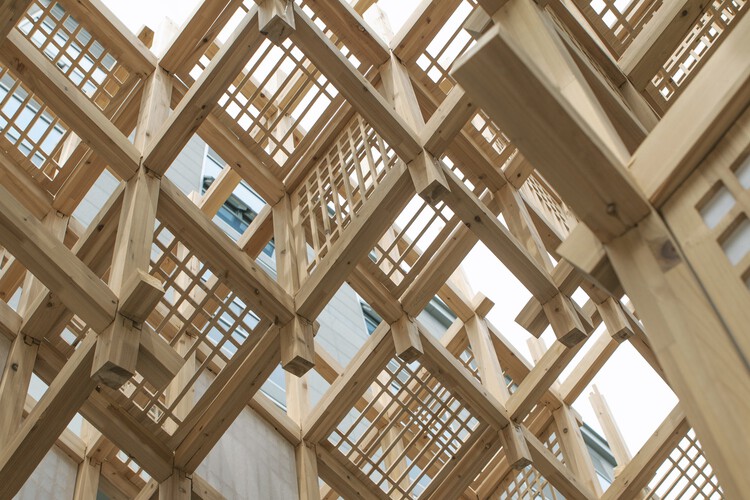 Machum House Pavilion / Yong Ju Lee Architecture . Image © Yong Ju Lee Architecture
Over time, Yong Ju Lee Architecture‘s methodology has evolved from pragmatic, budget-conscious production to a more research-oriented, conceptual practice. Alongside his role as a professor at Seoul National University of Science and Technology, Lee approaches architectural design as a narrative act. It can question conventions, provoke new relationships with the built environment, and expand how space is experienced through technological experimentation and material sensitivity.
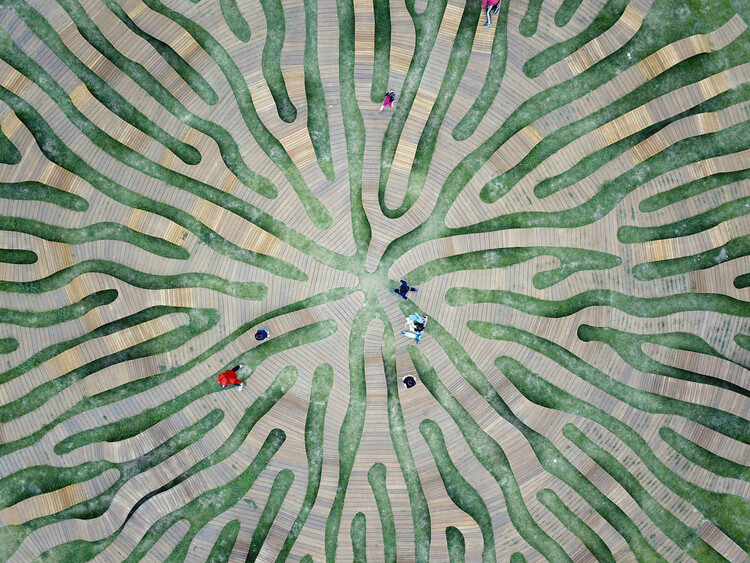 Root Bench / Yong Ju Lee Architecture . Image © Kyungsub Shin
The practice’s work has been exhibited internationally, including at the Museum of Modern Art in New York, the National Museum of Modern and Contemporary Art in Seoul, and the Venice Architecture Biennale. Recipient of awards such as the iF Design Award, the Korean Public Architecture Award, and Architectural Record’s Design Vanguard, Yong Ju Lee continues to shape a discipline that is simultaneously speculative and grounded. It is driven by prototypes, tested assemblies, and the belief that architecture’s future depends on how carefully it learns from the systems it builds.
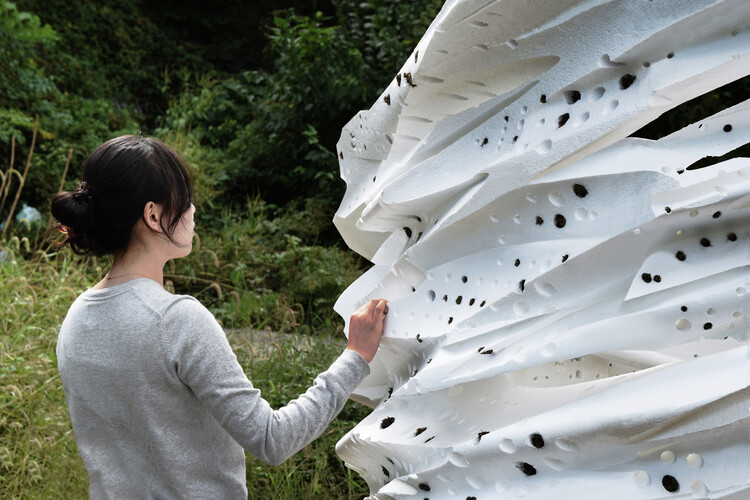 Decomposition Farm: Stairway / Yong Ju Lee Architecture. Image © Yong Ju Lee Architecture
Looking forward, Yong Ju Lee Architecture’s trajectory suggests an expanding interest in how these research methods can operate at new scales. The studio continues to translate material intelligence and fabrication logic into architectural proposals that respond to environmental urgency with precision and imagination. In practice, ecological responsibility is an engine of form-making, a construction ethic, and a cultural position that insists architecture can invent new languages while remaining accountable to the world it inhabits.
Root Bench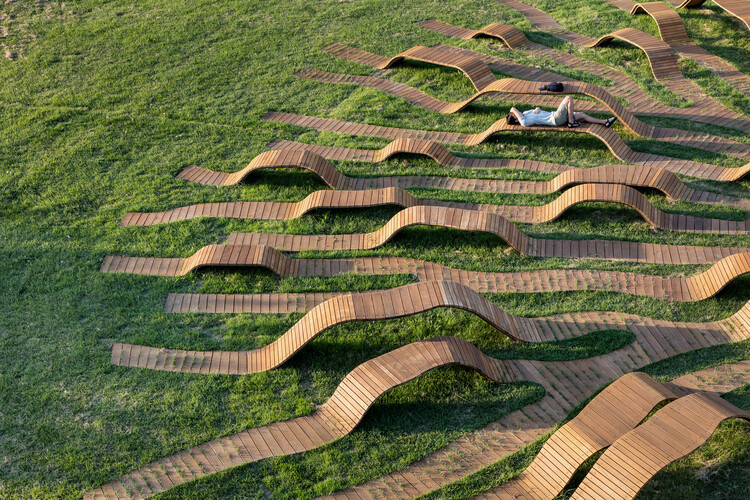 Root Bench / Yong Ju Lee Architecture . Image © Kyungsub Shin
Root Bench is a circular public installation reinterpreting a teenager’s winning sketch from the Hangang Art Competition. The 30-meter-wide bench spreads like organic roots across the park, offering seating at different heights: child (250 mm), adult (450 mm), and table height (750 mm). Designed using a reaction-diffusion algorithm, it visually merges into the surrounding grass while creating a distinct spatial rhythm. A steel frame with concrete footing supports the form, while wooden decking ensures usability and comfort. The project blurs the boundary between artificial construction and the natural environment. Through its geometry and public placement, it encourages physical rest and visual engagement. Rather than an iconic object, Root Bench serves as part of the park’s ecosystem, a sculptural element, and functional furniture. It illustrates how computational design can offer accessible and playful interventions in everyday spaces, serving as a model for how public design can embody ecological sensitivity and algorithmic logic.
Machum House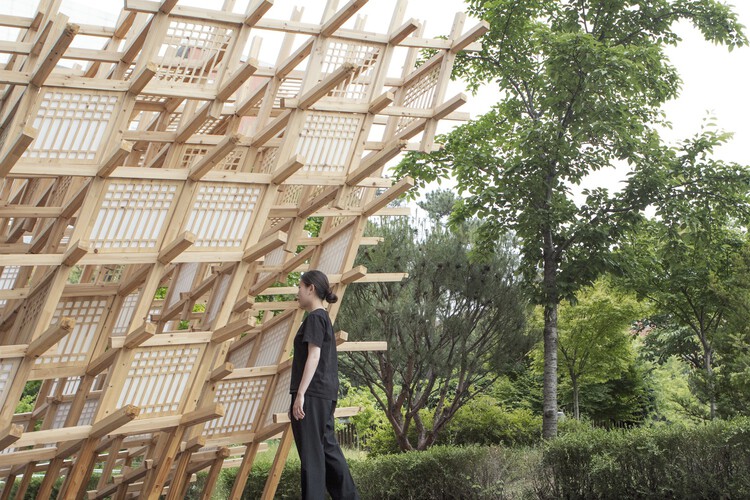 Machum House Pavilion / Yong Ju Lee Architecture . Image © Yong Ju Lee Architecture
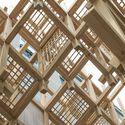
This pavilion explores the reinterpretation of Sagae-machum, a traditional Korean joinery system, through algorithmic modeling and robotic fabrication. Using a deformed coordinate system, vertical and horizontal members interlock without nails, forming a puzzle-like wooden assembly. Over 470 wooden elements, carved with a 6-axis robotic arm, stack into a 3.7-meter-tall pavilion that invites public interaction. By maximizing contact surfaces and introducing tilts, the structure gains multi-directional stability while showcasing the precision of digital tools. Glued Laminated Timber (GLT) is used for sustainability, bridging traditional craftsmanship with contemporary green practices. The project updates ancestral tectonics to meet modern design needs, suggesting new forms of environmentally conscious wooden architecture. It revitalizes lost methods not as nostalgia but as progressive structure, suggesting that robotic precision can unlock further complexity from cultural heritage. This approach demonstrates how digital tools can extend vernacular knowledge into meaningful, material-forward construction systems.
Decomposition Farm: Stairway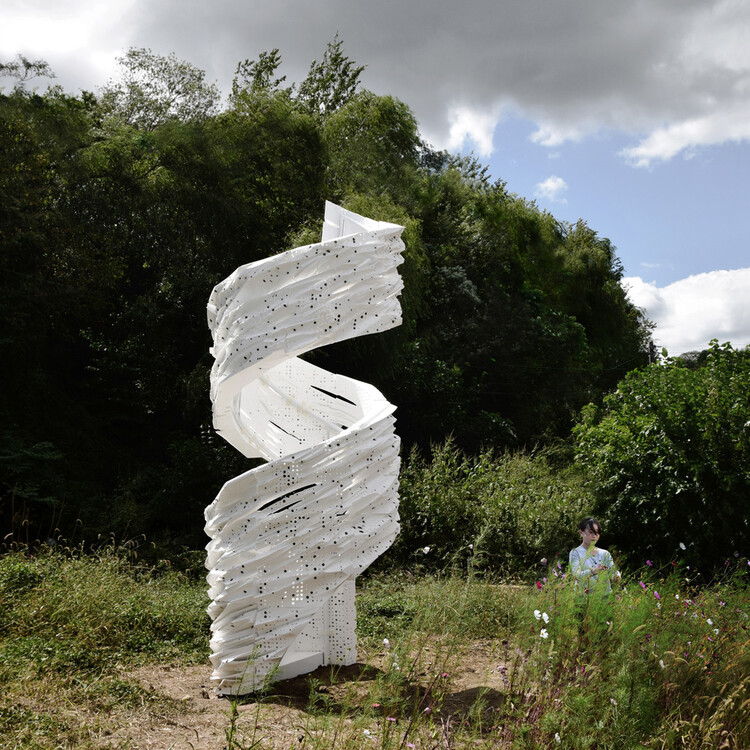 Decomposition Farm: Stairway / Yong Ju Lee Architecture . Image © Yong Ju Lee Architecture
Decomposition Farm is a temporary structure that proposes a radical solution to construction waste. Made of polystyrene foam, the structure is designed to be eaten and decomposed by mealworms. A robotic hot-wire cutter shapes ruled surfaces and straight-line geometries into a spiral staircase. The foam is perforated with thousands of cavities to house mealworms, which digest the material and excrete it as harmless matter, nourishing attached moss. As the foam gradually dissolves, it creates a closed-loop system that integrates artificial form and natural processes. This experiment proposes a carbon-negative lifecycle, challenging the industry’s reliance on slow-decaying materials. It introduces bio-integrated decomposition into architectural thinking as a physical transformation. The stairs’ walkable geometry invites human participation into this cycle, making visible the entanglement of waste, decay, and life. It redefines architectural sustainability not through stasis, but through active biological participation.
Myeonmok Fire Station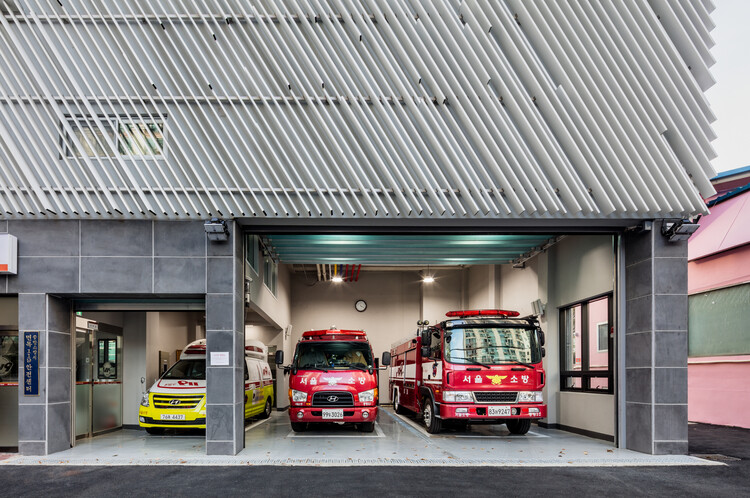 Myeonmok Fire Station / Yong Ju Lee Architecture. Image © Kyungsub Shin
The Myeonmok Fire Station addresses outdated infrastructure by introducing an efficient, symbolic public building in a dense residential district. Programmatically, its layout enhances emergency response by providing a linear arrangement of fire truck garages and open office spaces facing the street. Louvers of two depths (100 mm and 200 mm) form a gradient pattern across the façade, metaphorically capturing the motion of fire engines. These louvers also provide shading and regulate daylight, contributing to passive environmental performance. Rather than relying on bright colors or signage, the building’s identity emerges from its form and material strategy. Bedrooms are located in quieter rear zones, and public-facing programs are placed for openness and accessibility. The station reimagines civic architecture through efficiency, clarity, and subtle symbolism. It stands as an urban marker of safety while introducing architectural thoughtfulness to a building type often reduced to pure function.
Moss Columns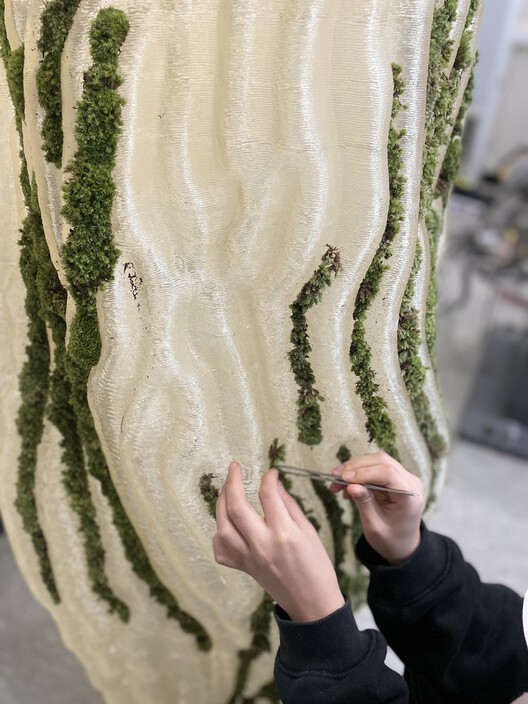 Moss Columns / Yong Ju Lee Architecture . Image © Yong Ju Lee Architecture
Moss Columns is a set of vertical prototypes that explore the integration of living moss into digitally fabricated architectural forms. Each column is generated using a reaction-diffusion algorithm and produced via Fused Granulate Fabrication (FGF), in which a 6-axis robotic arm extrudes PLA pellets. The resulting layered structures incorporate groove patterns specifically designed to support moss growth by optimizing surface geometry and moisture retention.
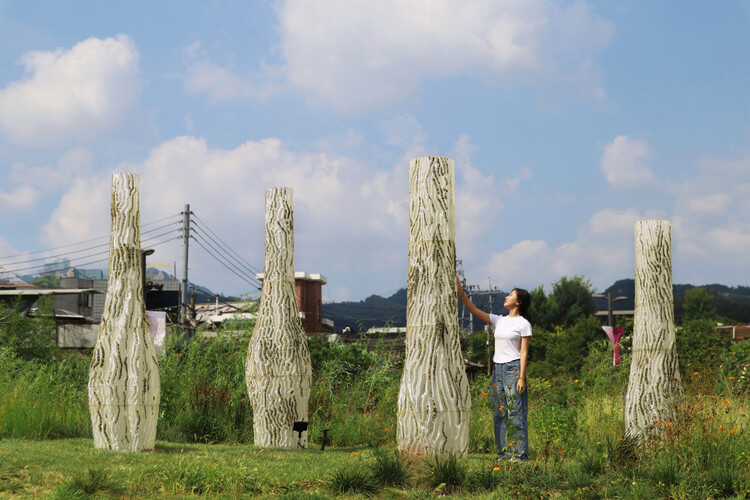 Moss Columns / Yong Ju Lee Architecture . Image © Yong Ju Lee Architecture
The project responds to growing interest in post-pandemic biophilic design by proposing architectural components that actively host and sustain living matter. Rather than treating moss as a surface finish, the columns embed ecological systems into their structure, enabling interaction between users and plants through proximity, respiration, and photosynthesis. The use of biodegradable materials and parametric design points toward new sustainable fabrication methods that merge organic and artificial elements. Together, the columns suggest a scalable system for introducing natural processes into the urban environment—one that is adaptable, materially efficient, and visually expressive.
Vernacular Versatility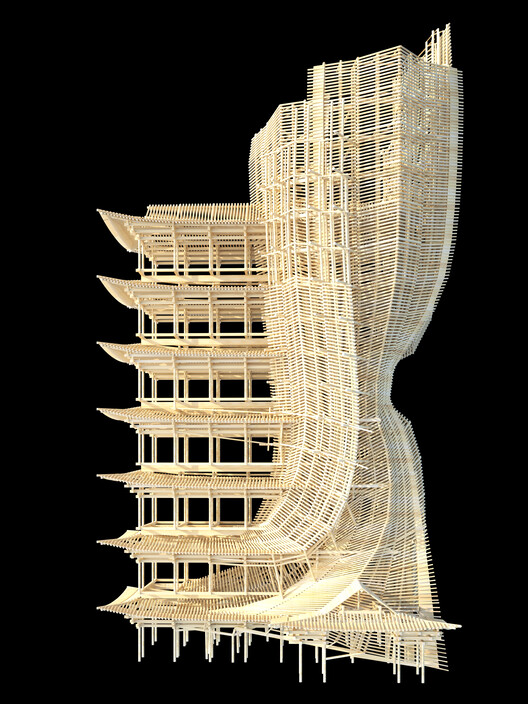 Vernacular Versatility / Yong Ju Lee Architecture. Image © Yong Ju Lee Architecture
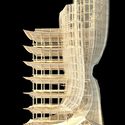
Vernacular Versatility reimagines the traditional Korean Hanok for the vertical city. While Hanok is known for its wooden post-and-beam system and iconic curved roofs, it has historically remained a one-story typology. This proposal employs modern modeling software to adapt its core structural logic—particularly the Gagu wooden joint—into a high-rise framework. The form reflects Hanok’s ecological intelligence, using roof geometry to control sunlight and exposed wood to improve indoor air quality. In the context of hyper-dense urban Korea, where traditional houses occupy less than 1% of the built environment, this tower proposes a vertical Hanok that embodies healing, sustainability, and cultural continuity. Located in a busy commercial-residential zone, it functions like its neighbors but with a distinct architectural message. By embedding tradition into modern programs, the project aims to renew public awareness and appreciation of Korean architectural heritage. It envisions vernacular knowledge not as a static artifact but as a dynamic design logic for the future.
This article is presented by Buildner. As sponsor of ArchDaily’s 2025 Next Practices Awards, Buildner—the world’s leading architecture competition organizer—helps architects get what they enter competitions for: recognition, opportunity, and progress.
Exercise your creativity now: the Buildner UNBUILT Award 2026 is open to all, with a €100,000 prize fund. Submit your unrealized designs and celebrate your creativity now.