
Blue Origin just sent its latest batch of space tourists to the final frontier.
You may like
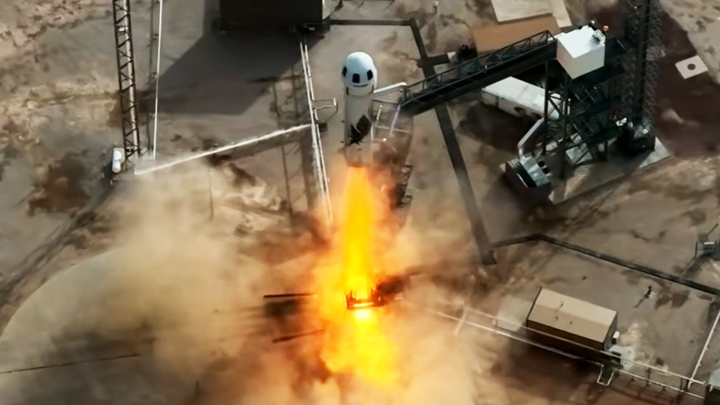
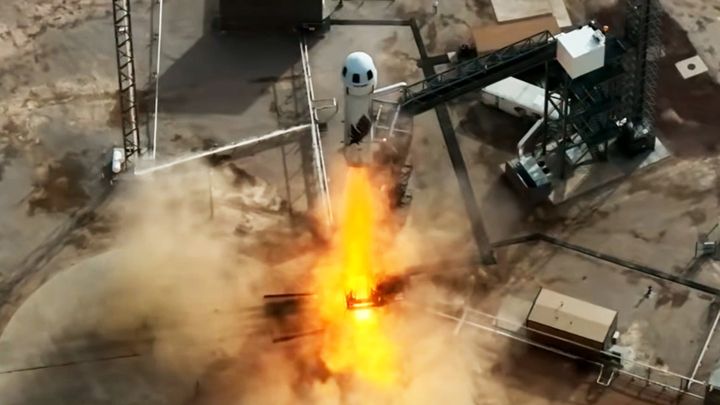
New Shepard launches the NS-38 mission with six passengers on Jan. 22, 2026. (Image credit: Blue Origin)
New Shepard lifted off from Blue Origin’s West Texas launch site today at 11:25 a.m. EST (1625 GMT; 10:25 a.m. local time in Texas), after a brief delay caused by “unauthorized personnel on the range,” according to the Blue Origin stream.
The six people inside the vehicle’s capsule were entrepreneur and pilot Tim Drexler; Linda Edwards, a retired obstetrician/gynecologist; real estate developer Alain Fernandez; entrepreneur Alberto Gutiérrez; Jim Hendren, a retired U.S. Air Force colonel who founded the company Hendren Plastics Inc.; and Laura Stiles, Blue Origin’s director of New Shepard launch operations.
Stiles was a late addition to the crew. She replaced Andrew Yaffe, who had to drop out due to illness but will fly on a future New Shepard mission, according to Blue Origin.
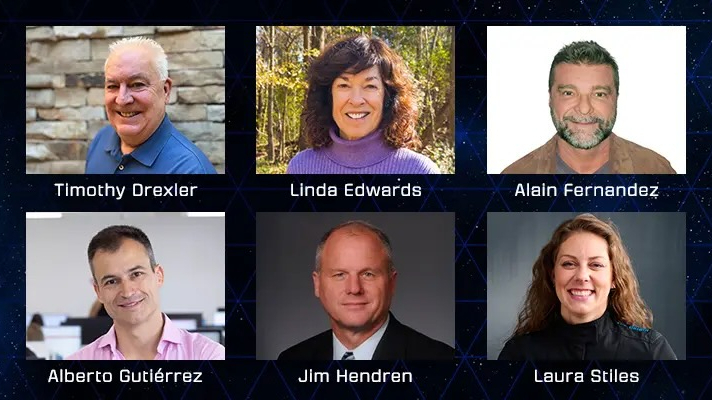
The passengers for Blue Origin’s NS-38 suborbital mission. (Image credit: Blue Origin)
The sextet enjoyed a few minutes of weightlessness and saw Earth against the blackness of space.
They also earned their astronaut wings, as New Shepard carried them above the Kármán Line, the 62-mile-high (100 kilometers) boundary that’s widely recognized as the start of outer space. (It’s not unanimous, however; both NASA and the U.S. Air Force deem space to begin 50 miles, or 80 km, above Earth.) Telemetry during today’s flight indicated the capsule reached an altitude of nearly 350,000 feet (106,680 meters).
NS-38 ended quickly, as all New Shepard flights do. The vehicle’s rocket came back to Earth for a powered touchdown at its designated landing pad at 7 minutes and 20 seconds after liftoff. The capsule followed suit roughly three minutes later, raising a cloud of dust in the West Texas desert as it settled down softly under parachutes.
Blue Origin has now flown 98 people to space over its 17 human spaceflights, the first of which took place on July 20, 2021 — the 52nd anniversary of the Apollo 11 moon landing. That tally includes 92 different individuals, as six people have ridden the capsule twice.
Blue Origin has not revealed its ticket prices. For perspective, Virgin Galactic, the company’s main competitor in the suborbital space tourism industry, charges $600,000 per seat.