
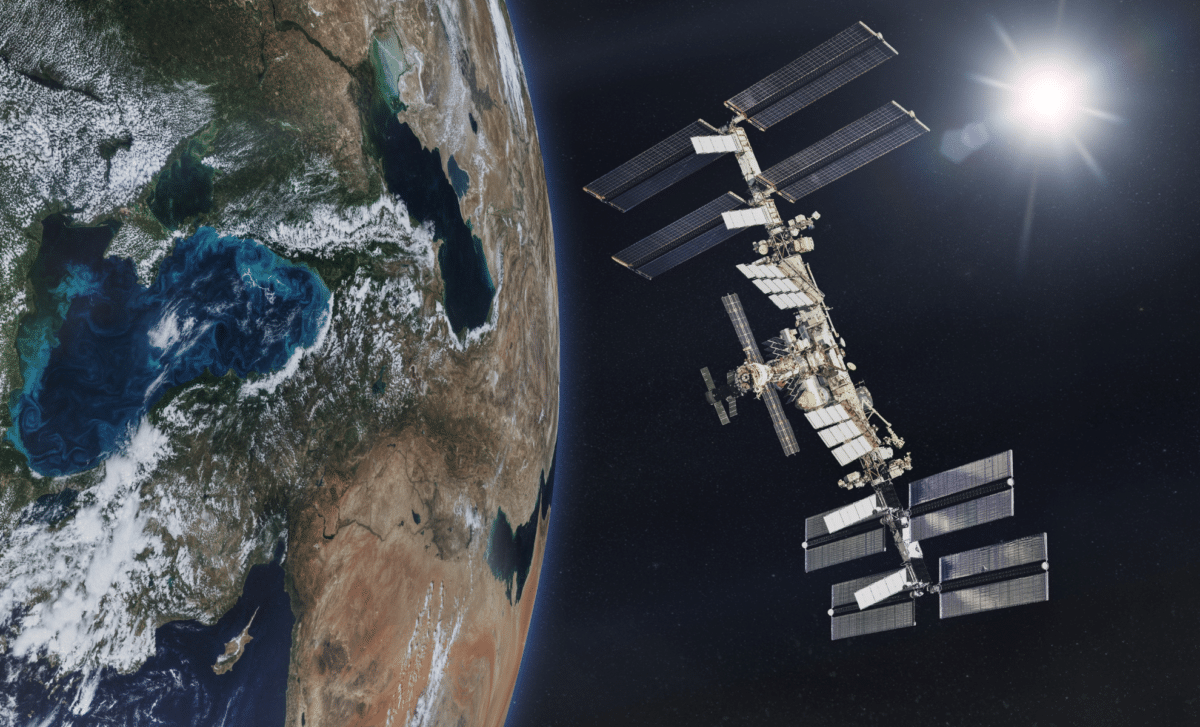
After more than two decades of continuous service in orbit, the International Space Station (ISS) is set to make its final descent in late 2030. NASA and its partners have charted a path to retire the orbital laboratory by guiding it to a carefully selected area in the Pacific Ocean—Point Nemo, also known as the spacecraft cemetery. This decision marks the end of one of humanity’s most ambitious technological collaborations in space.
A Graveyard In The Pacific: Why Point Nemo Was Chosen
The location chosen for the ISS’s reentry isn’t random. It’s one of the most isolated places on Earth, a stretch of the South Pacific Ocean known as Point Nemo. This desolate spot has been the final resting place for hundreds of decommissioned satellites and space stations over the last few decades. The National Oceanic and Atmospheric Administration (NOAA) explains why this location is optimal:
“This remote oceanic location is located at coordinates 48°52.6′S 123°23.6′W, about 2,688 kilometers [1,670 miles] from the nearest land — Ducie Island, part of the Pitcairn Islands, to the north; Motu Nui, one of the Easter Islands, to the northeast; and Maher Island, part of Antarctica, to the south,” officials with the U.S. National Oceanic and Atmospheric Administration wrote in a brief Point Nemo explainer.
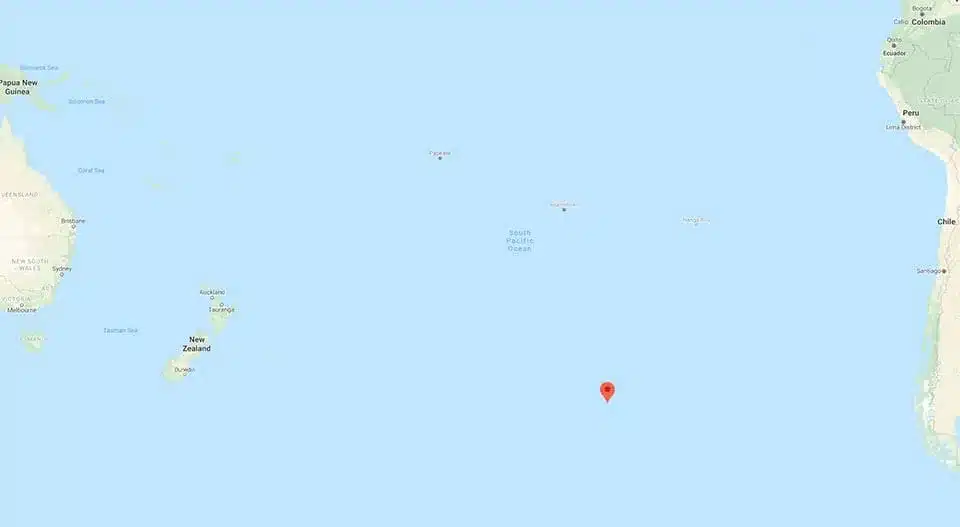 Point Nemo, the point where NASA plans to bring the International Space Station down in late 2030, is the location in the South Pacific Ocean that is farthest from land. (Image credit: NASA/NOAA)
This extreme remoteness minimizes the risk of debris hitting populated areas, ships, or infrastructure. NASA’s approach mirrors strategies used in past controlled reentries, including Russia’s deorbiting of the Mir space station in 2001. While the ISS is larger than any object previously brought down intentionally, the method remains consistent: controlled descent into a sparsely traveled ocean region, maximizing safety while acknowledging the station’s end.
Controlled Destruction: How NASA Will Deorbit The ISS
NASA has laid out a complex yet well-rehearsed plan for safely disintegrating the station. The process will involve a reinforced version of SpaceX’s Dragon capsule, specially modified to handle the unique requirements of such a massive payload. According to Space.com, engineers expect the station to break up in phases:
“NASA engineers expect breakup to occur as a sequence of three events: solar array and radiator separation first, followed by breakup and separation of intact modules and the truss segment and finally individual module fragmentation and loss of structural integrity of the truss,” agency officials wrote in an FAQ about the ISS transition plan.
These stages are designed to ensure that the majority of the ISS burns up upon reentry, reducing the number of surviving fragments. Still, not all components will disintegrate in the atmosphere.
“As the debris continues to re-enter the atmosphere, the external skin of the modules is expected to melt away and expose internal hardware to rapid heating and melting,” NASA added. “Most station hardware is expected to burn up or vaporize during the intense heating associated with atmospheric re-entry, whereas some denser or heat-resistant components like truss sections are expected to survive reentry and splash down within an uninhabited region of the ocean.“
The use of historical data from previous missions such as Skylab and Mir has helped shape these procedures. In 1979, the uncontrolled reentry of Skylab resulted in debris falling over Western Australia, a reminder of what careful planning now avoids. With over 460 tons of mass to manage, the ISS’s descent will be the largest controlled deorbiting ever attempted.