
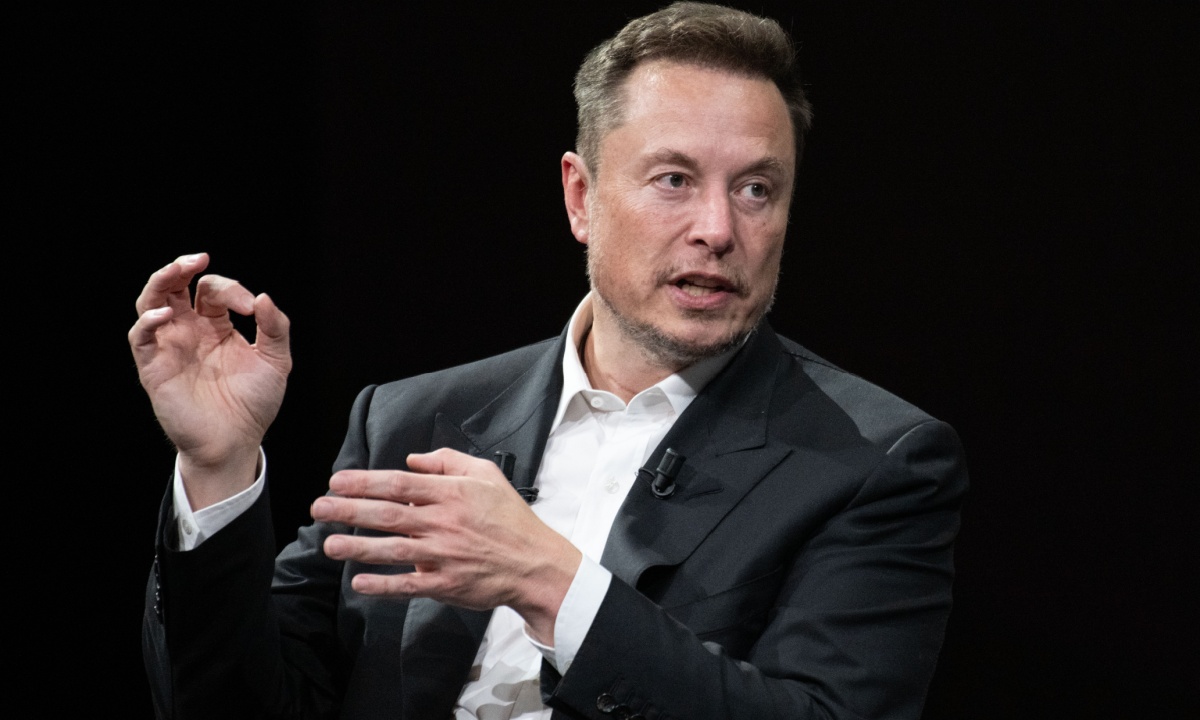
Tesla will be selling humanoid robots to the public by the end of 2027, CEO Elon Musk said Thursday (Jan. 22).
“That’s when we are confident that it’s very high reliability, very high safety, and the range of functionality is also very high—you can basically ask it to do anything you’d like,” Musk said while speaking at the World Economic Forum in Davos, Switzerland.
Tesla already has Optimus humanoid robots performing simple tasks in its factories, and the company expects those robots to be doing more complex tasks within that industrial environment by the end of this year, Musk said.
Musk had predicted in June 2024 that Tesla would have “genuinely useful humanoid robots” in low production for use in its facilities by 2025.
PYMNTS reported in November that physical artificial intelligence is emerging as the next stage of robotics and will provide a new workforce layer.
In February, PYMNTS reported that Tesla is one of several companies that are working to produce AI-powered robots that will perform general tasks such as household chores.
Advertisement: Scroll to Continue
Looking further in the future, Musk said Thursday that he predicts that at some point, robots will outnumber people.
“My prediction is, in the benign scenario of the future, that we will actually make so many robots and AI that they will actually saturate all human needs, meaning you won’t be able to even think of something to ask the robot for at a certain point,” Musk said. “There will be such an abundance of goods and services… My prediction is there will be more robots than people.”
Musk also said during Thursday’s conversation at the World Economic Forum that there might be AI that is smarter than any human by the end of the year, and no later than 2027, and that AI will be smarter than all of humanity collectively by 2030 or 2031.
To provide the power that is needed by AI, Tesla and SpaceX teams are working separately to build 100 gigawatts a year of manufactured solar power in the United States, Musk said. They expect to achieve that capacity in about three years.
For all PYMNTS AI coverage, subscribe to the daily AI Newsletter.