
When it comes to broadcasting, Matt Cooper has always been a just-the-facts kinda guy. Sure, he frequently challenges his guests and is known to fire off the odd frustrated aside, but his approach as host of The Last Word (Today FM, weekdays) has essentially been one of a disinterested mediator trying to get to the bottom of the story.
So it’s unusual to hear Cooper on Tuesday’s show, when he brings his personal experience to bear on an issue in unexpectedly animated terms.
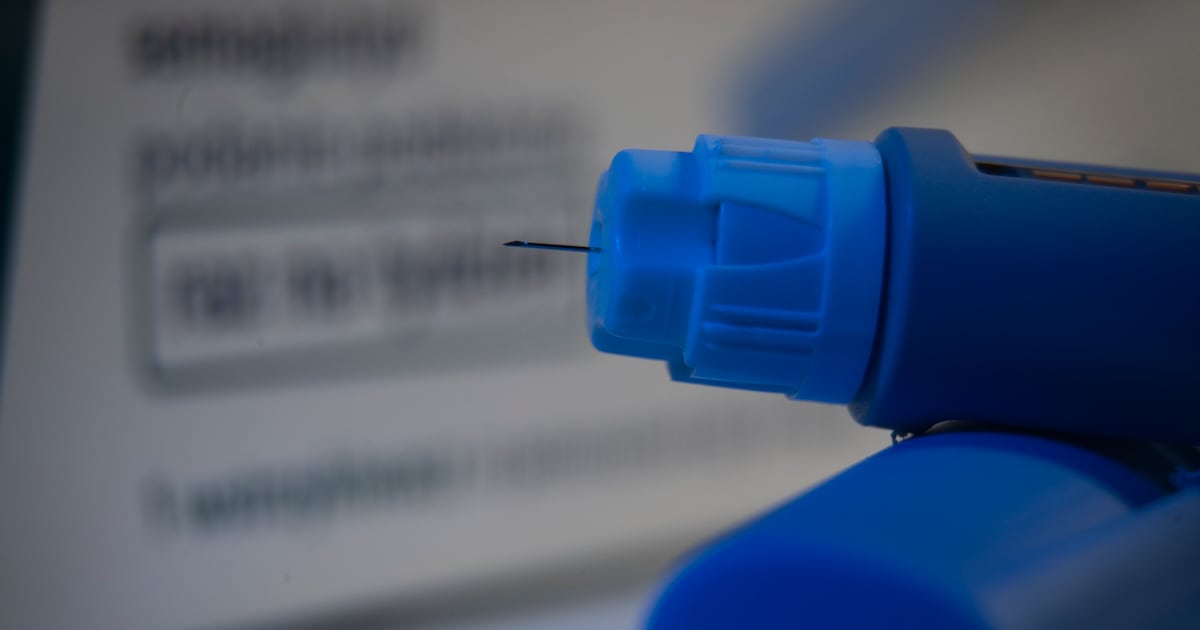
The occasion is Cooper’s interview with the journalist Aimee Donnellan about her new book on Ozempic, a drug that’s intended for treatment of type 2 diabetes but has, she drily notes, “a very important side effect”: weight loss.
Stating at the outset that he is prescribed Ozempic for his own diabetes – “I was one of the very early adopters” – Cooper is obviously engaged by his guest’s account of the drug’s development. But when Donnellan recounts how executives at Novo Nordisk, the Danish company behind Ozempic, were dismissive of the idea of an obesity drug, seeing weight problems as the result of poor lifestyle choices, the host becomes more exercised.
“That’s deeply unfair to people who struggle with their weight,” Cooper says. “The reason why I became type 2 diabetic, and the treatment that I’ve had involving this drug, is because, no matter what I tried to do, I just kept putting the weight on, and kept having that sweet tooth.”
This might not seem like much in the TMI world of online influencers revealing the minutiae of their lives in intimate detail, but, coming from a straight arrow like Cooper, it’s akin to a confessional cri de coeur.
And he’s not done. As Donnellan traces the different aspects of Ozempic use, the host chips in with illustrative examples from his own experience. On the medication’s reported effect of making users feel full, Cooper says in his case he just doesn’t have the desire to consume certain foodstuffs. “I can’t even finish a pint now,” he says, with little trace of regret.
The host is similarly open about Ozempic’s physiological ramifications, telling how he had to get his gall bladder removed in order to take the drug. “Maybe I’m oversharing,” he ventures, before sharing anyway.
Far from being self-indulgent, however, the presenter’s uncharacteristically revelatory approach adds an extra element to what is already a much more absorbing item than its potentially arid pharmaceutical subject matter might suggest.
Cooper is always an attentive presence, but his personal contributions bring an air of informality to the conversation, drawing out his guest while pulling the listener in.
Not that Cooper is likely to be relating anecdotes from his life regularly: as both a seasoned broadcaster and someone on prescription medication, he’ll know that overusing a successful formula diminishes its effectiveness.
Accordingly, he sounds suitably sober when parsing Donald Trump’s menacing yet meandering speech at Davos on Wednesday, pointing out the many factual errors while noting the US president’s occasionally “deeply sinister” tone. (He’s markedly calmer than his guest, the Danish journalist Tom Carstensen, who is audibly perplexed by Trump’s grotesque caricatures of Denmark and Greenland: “He’s doing my head in.”)
Nonetheless, a relaxed atmosphere prevails much of the time. Cooper sounds particularly chipper when covering another of the week’s big stories, “the minefield of the Beckham family relations”: the host and his guests pick over with gossipy relish the rift between the megawatt celebrity couple David and Victoria Beckham and their son Brooklyn.
True, Cooper dons his serious-journalist hat by asking why the private lives of the rich and famous command all this attention, even though he must be aware that such soap operas provide welcome distraction during these interesting times. “It kinda brings people together,” is the succinct verdict of the podcaster Fionnuala Jones.
In comfortably bringing together frothy family feuds and fractious transatlantic tensions while sharing his medical history to telling effect, Cooper underlines the easy confidence with which he handles his show.
Such an effortless air is hard to achieve, as Katie Hannon and Colm Ó Mongáin can attest: two months into their tenure as hosts of Drivetime (RTÉ Radio 1, weekdays), the pair still haven’t found their groove.
It’s not for want of trying. The two presenters bound into each show in conspicuously lively fashion, seeking to inject brio from the off. Yet for all their formidable talents as broadcasters, their on-air relationship hasn’t really clicked yet: their bantering exchanges can sound a tad overegged.
Contemplating the Beckham saga on Tuesday’s show, Ó Mongáin notes that “it’s been the talk of news channels all day”. “Sure we’re talking about it,” Hannon points out, although her reply comes across less as a zinger than a gently upbraiding rejoinder.
There’s a fine line between a finely tuned chalk-and-cheese double act and two individuals not quite on the same page. Hannon and Ó Mongáin are clearly doing their best to spark off each other, but they still seem to fall in the latter camp.
Left to their own devices, however, both anchors perform admirably. Discussing Trump’s mind-boggling text to the Norwegian prime minister tying his failure to win the Nobel Peace Prize to his covetous designs on Greenland, Hannon quizzes Greg Swenson of Republicans Overseas about his support for the US president.
“Do you ever get weary of defending that kind of carry-on?” she asks, more in pity than accusation. Her guest concedes that the text was unnecessary but adds that if he were embarrassed by this “provocative” behaviour, he wouldn’t have voted for Trump three times. Which is illustrative in its own way.
Ó Mongáin dissects the Davos speech with the former US national security advisor John Bolton, who suggests the world is “back from the brink” after the president withdraws the threat of invading Greenland.
But Bolton also believes European leaders shouldn’t break their alliance with the United States, as Trump will be (or at least should be) gone from the White House in 2029. “So effectively suck it up for three more years,” Ó Mongáin acidly comments.
Instances like this ensure that the revamped Drivetime is worth tuning into, even if the presenters are still finessing their partnership. And unlike some alliances, there’s plenty of opportunity for them to work better together.
Moment of the week
Morning Ireland (RTÉ Radio 1, weekdays) isn’t normally the go-to destination for listeners seeking a bright start to their day, but Wednesday proves a glorious exception.
By way of marking Tradfest in Dublin, the renowned musician Louise Mulcahy closes the programme by performing a stirring trio of reels on the uilleann pipes, blowing away the cobwebs and lifting the spirits in the process.
Mulcahy’s exuberant playing is so infectious that Gavin Jennings gets in the mood: “Jaysus, we should do this more often,” the presenter says.
Even just the once is joyful enough.