
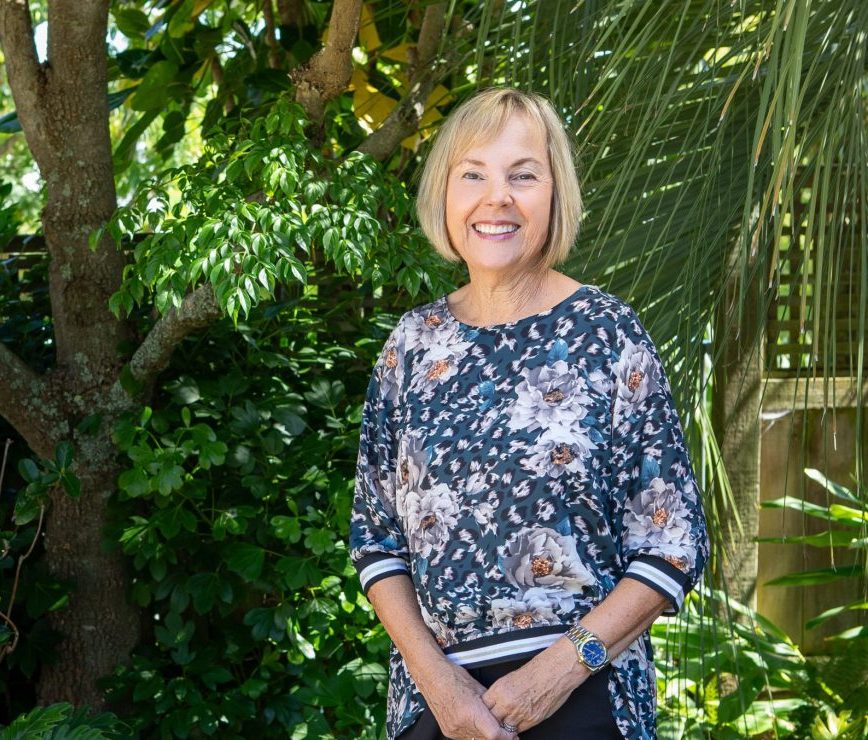
 “My key goal has been to improve nutrition care for people with kidney disease,” says Lyn Lloyd ONZM. Photos supplied
A career health professional recognised in the New Year Honours says she was “drawn to the complexity of kidney disease and the significant impact nutrition can have across all stages of the condition”.
Lyn Lloyd, of Somerville, has become an Officer of the New Zealand Order of Merit (ONZM) for services to renal nutrition.
“There is strong evidence that what people eat has a major influence on kidney health,” she told the Times.
“Nutrition therapy provided by dietitians plays a key role in slowing the progression of chronic kidney disease (CKD) and improving health outcomes and quality of life, particularly for people on dialysis and those with a kidney transplant.
“People living with kidney disease have been some of my greatest teachers. Their resilience and lived experience have shaped my approach to nutrition care.”
The Honours’ citation says Lloyd has been a pioneering leader in renal dietetics across New Zealand and Australia for more than four decades, through clinical care, education, advocacy and policy development.
“It was a big surprise,” she says, of her ONZM. “I felt very honoured. I’ve been very touched by the response from colleagues, friends, and so many others.
“This recognition reflects not just my work, but the collective efforts of the renal multidisciplinary team who are committed to improving the lives of people with kidney disease.
“Having worked for over 40 years at Te Toka Tumai Auckland (Auckland City Hospital), I’ve been incredibly fortunate to work alongside inspiring, generous, and highly skilled colleagues.
“I was encouraged to take up opportunities I felt passionate about and was supported by mentors, fellow dietitians, and colleagues in nephrology and beyond who believed in the value of nutrition.”
Lloyd says nutrition therapy is central to the prevention of recurrent kidney stones.
“Currently in New Zealand there’s little support for prevention of kidney stone recurrence.
“My key goal has been to improve nutrition care for people with kidney disease at all stages of CKD to improve their outcomes and help them live better lives.
“More recently highlighting the key role of nutrition in kidney stone prevention. This has involved education, training, research, and advocacy to ensure renal dietitians are recognised as essential members of the nephrology multidisciplinary team.”
Recently retired from Te Toka Tumai Auckland, Lloyd says she remains “engaged in renal nutrition and dietetics through mentoring, professional collaboration, and research and continue to advocate for the central role of nutrition and kidney health”.
“CKD affects around one in eight New Zealanders and is more common among Māori and Pacific peoples, yet it’s often identified late.
“Nutrition plays a vital role in prevention, early management, and slowing progression, but access to specialist nutrition therapy and education is limited.
“Renal dietitians are scarce in many parts of the country, and in some areas not available at all.
“Strengthening the nutrition workforce and recognising its role should be a key focus for our health system.
“For people with recurrent kidney stones, access to nutrition therapy is severely limited, despite strong evidence that it reduces recurrence, lowers healthcare costs, and significantly improves quality of life.”
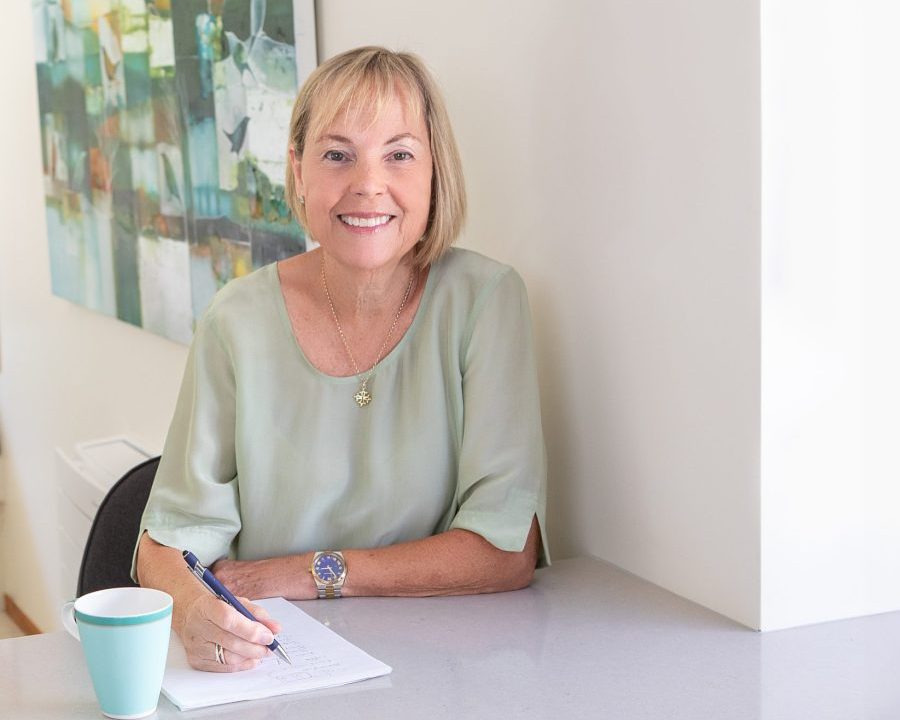 “Strengthening the nutrition workforce and recognising its role should be a key focus for our health system.”
Lloyd says she’s “most pleased with work that has led to lasting improvements in patient care”.
“Establishing high standards for renal nutrition care at Te Toka Tumai Auckland, which helped set national and international benchmarks.
“Contributing to international and national guideline development, including providing lead dietitian input into the recent CARI (Caring for Australians and New Zealanders with Kidney Impairment) kidney stone guideline and contributing to Australia-New Zealand chronic kidney disease and kidney transplant nutrition guidelines.
“Advancing the nutrition management of kidney stones, with a strong focus on preventing recurrent stones through evidence-based nutrition strategies and reduce long-term burden for people with kidney stones,” she says.
“Supporting education and workforce development through mentoring, involvement in the renal nutrition programme for dietitians in New Zealand and Australia, and the establishment and ongoing support of renal dietitian meetings within Australia and New Zealand, including through the Australia and New Zealand Society of Nephrology (ANZSN) and, more recently, as a member of the Te Whatu Ora National Renal Network Strategic Group.
“Working collaboratively to support the development and access to safe and appropriate micronutrient supplementation for people with advanced kidney disease.
“Contributing to student education in renal nutrition and nutrition counselling, supporting the development of the future dietetic workforce, and valuing the mutual learning that comes from working with students.”
Lloyd believes she’s been fortunate to have worked with “incredible people throughout my career”.
“Dietitians, nephrologists, nurses, pharmacists and others in the renal multidisciplinary team, as well as researchers, educators and policy makers across New Zealand and Australia,” she says.
“The support of the New Zealand Dietetic Association has been important, particularly through the Renal Dietitians Special Interest Group, which has provided connection, collaboration and encouragement over many years.
“Renal dietitians themselves have been a constant source of inspiration. They bring a unique skill set that combines detailed clinical knowledge, interpretation of complex biochemistry, practical problem-solving, behaviour change support, and genuine compassion for patients managing chronic conditions.
“The renal dietitians in the ANZSN have been particularly influential, along with international dietetic groups involved in guideline development and research.”
Although retired from hospital-based duties, Lloyd says she continues to contribute internationally as the NZ member of the International Nutrition Care Process Terminology Committee and the SNOMED CT Nutrition and Dietetics Group, focused on advancing nutrition terminology within healthcare systems to improve health outcomes.
“I’m also part of a National Malnutrition Action Group. While initiated by dietitians, the group brings together a multidisciplinary team to develop an evidence-based framework for malnutrition care across hospital, primary, and aged-care settings in Aotearoa.
“The focus is on best practice, national consistency, improved access to patient-centred nutrition care, and more equitable outcomes.
“New Zealand still has some way to go in this area, but it’s a passionate group of clinicians working collaboratively to drive meaningful and sustainable change.
“I also run a small private practice providing renal nutrition care to patients throughout New Zealand (www.kidneydietitian.nz).
“I value the opportunity to continue supporting people living with kidney disease, while also reflecting on a career that has been both challenging and deeply rewarding,” Lloyd says.
“I’m very pleased to have contributed to a field that makes a real difference in people’s lives.”