
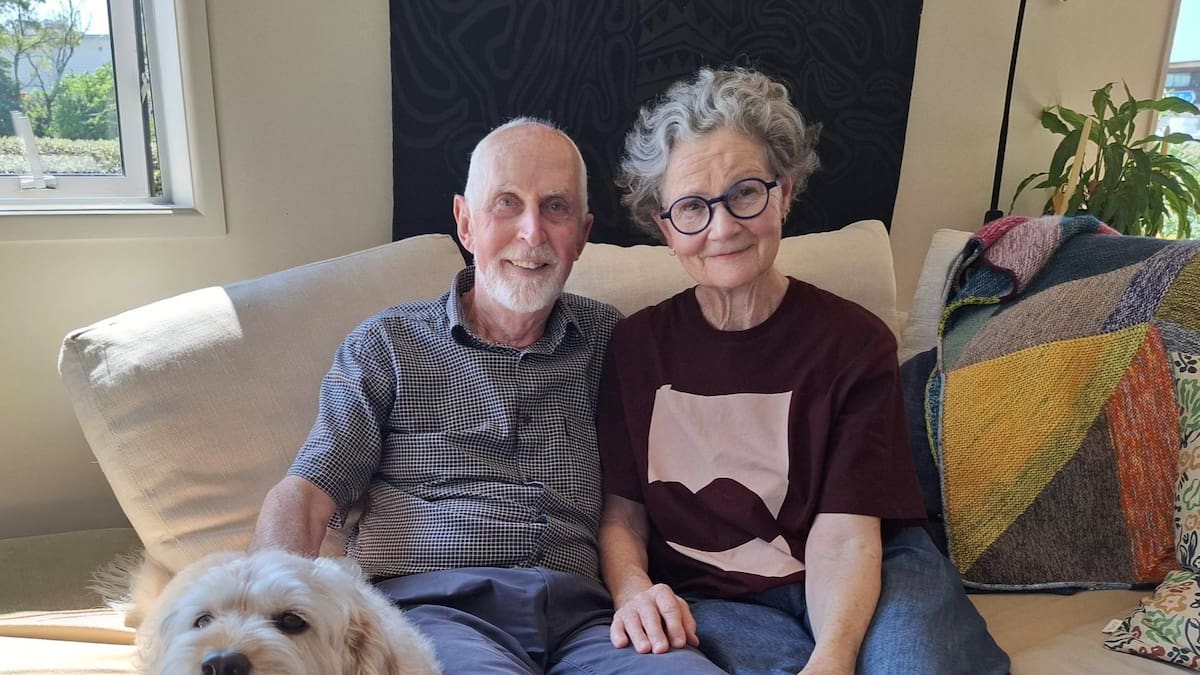
“Things were tight when I was a young mum bringing up my kids.
“But both of us are really aware how hard it is for young people to get on the property ladder now.
“It was easier to get into the property market back then.”
These days, Jenkins and Crockett make careful choices to stay within their means.
The budget savvy couple live centrally so they can walk into town, and they only have one car which halved insurance, fuel, registration and maintenance costs.
Like many older people, they’ve had to ditch their health insurance because the premiums got too expensive.
They undertake preventative health care instead, working out at the gym and going for long walks with their dog Cedric.
Crockett, a former social worker and counsellor, has cut back on alcohol and Jenkins, a former teacher who went to Northland College, doesn’t drink at all.
It’s a conscious decision to be in optimal health, which also saves them money.
The couple are thrifty in other areas too.
Retirees John and Jennifer turned their backyard into a productive vegetable patch. Photo / Jenny Ling
They transformed their back lawn into a productive vegetable garden with several raised garden beds, growing tomatoes, lettuce, beetroot, herbs and rhubarb.
When Jenkins spotted a pair of disused wrought-iron gates, she enquired, snagged them cheap, and repurposed them in the garden as grape vines.
The couple also planted numerous fruit trees including plums, lemons, lime, mandarins, feijoas and guavas.
To save on power, they chose a cost-effective woodburner over electric heating and they don’t use the clothes dryer.
And when the sofa became worn, Jenkins got the squabs recovered instead of forking out thousands of dollars for a new one.
“My parents were children during the depression; they did things that we inherently do without realising,” she said.
“I grew up learning ways to be less wasteful and more creative.”
Jenkins also sews her own clothes and shares her skills at the local sewing group.
“You didn’t buy clothes back then, you made them.
“If you wanted an outfit for the school ball or dance the only option was to make it.
“Now, if I get sick of an outfit, I can unpick it and make something else.”
As for food, Jenkins and Crockett add legumes and vegetables to meat dishes to flesh out the meals because of skyrocketing meat prices.
They’ll make a standard recipe for four people and make it last two nights.
Jennifer and John make coffee at home instead of forking out $6 per latte. Photo / Jenny Ling
The couple rarely go out for coffee, instead they use their Bialetti stove-top coffee maker at home.
According to Stats NZ figures, food prices increased by 5% in the 12 months to July 2025.
Higher prices for the grocery food group, up 5.1%, contributed the most to the annual increase, and was driven by milk, butter and cheese.
The average price for a 2 litre bottle of milk has risen 16% to $4.70, a 500g block of butter is up 42.2%, and a 1kg block of cheese has increased by 29.5% to $13.01.
Prices for meat, poultry and fish were up 7.9%, and fruit and vegetable prices are up 7.3%.
Whangārei Age Concern president Beryl Wilkinson said seniors were struggling with living costs – particularly increasing rates, rents and insurance – “the same as everyone”.
Because retirees were on fixed incomes, they were having to be more careful and often went without, she said.
“They can’t increase their income so they’re having to downsize on the amount they eat and what they choose.
“Most of us are having to avoid any of the added extras and treats you used to have.”
Whangārei Age Concern president Beryl Wilkinson said seniors were having to be a lot more careful with their budgeting.
Wilkinson suggested buying seasonal fruit and vegetables, and choosing what’s on special at the supermarket.
“It’s a matter of preparing ahead and buying when the prices are right.
“If you buy what’s in season and grow yourself some silverbeet you can eat quite well.”
Wilkinson also highlighted how generous Northlanders were at sharing food.
“There are community gardens and church gardens and generally people I know who share their extra mandarins, lemons and vegetables.
“People look after each other.
“Thinking of others when you’ve got something spare is a big aspect of keeping your costs down.”
Jenny Ling is a senior journalist at the Northern Advocate. She has a special interest in covering human interest stories, along with finance, roading, and social issues.