
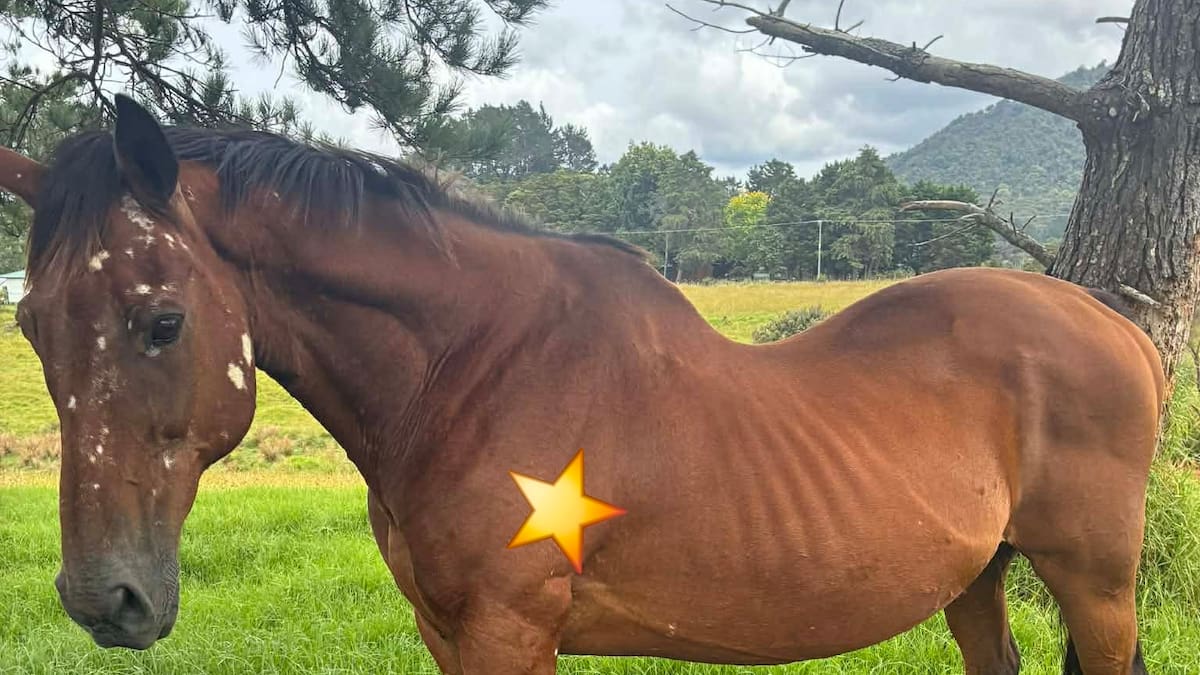
However, X-rays discovered severe spinal problems in his back, with some vertebrae fusing from years of neglect.
“It’s sad, but at least he’s not going to die alone and in pain.
“The length of time he has gone without proper care has forced his body to adapt and compensate in damaging ways.
“This has shown up in his poor conformation, abnormal muscle development, and gait issues such as dragging a leg.
“Because of this, we have made the incredibly difficult but kind decision to let him go.”
The horse had numerous white spots on his face consistent with scarring from a tight halter or “some kind of trauma”, and he was very head-shy and scared at first.
“Even after his first bath, they [the ticks] were still latched in really well,” Hayward said.
“You can’t pull them off, otherwise their teeth sink in; you have to repel them off.”
Cassa was initially going to see out his days in a loving foster home, but X-rays showed he was in a lot of pain.
He has been given the name La Cassaforte, or Cassa, which means “safe”. Hayward said he would get a “nice pamper session” this weekend before being “let go the week after”.
“We will be laying him to rest in the coming weeks, but for now we will give him the love he deserves.
“Volunteers have been given instructions to shower him with love and treats.”
It was unclear who owned Cassa, or why the seller of the house did not know about him.
“It happens often,” Hayward said.
“The amount of abandoned horses in New Zealand is next level.”
There had been five cases in South Auckland and the Waikato in the past three weeks, she said.
“There are a lot of horses like this; he’s not the only one out there.
“There needs to be a lot more recognition of it and easier ways to handle abandonments.
“Because they’re on private property, the council can’t do anything, and the SPCA generally can’t either.”
Because of the demand for equine rescue services, Rodney Animal Rescue was in the process of rebranding as a national equine welfare organisation.
To be called Equine Welfare New Zealand, it will have bases not only in Rodney, but in Taupō and Christchurch.
Hayward thanked the new owner of the property who found Cassa, saying the person “acted immediately, recognised he needed help, and reached out”.
Hayward also thanked the sponsor – a woman from the Rodney area – who paid for Cassa’s initial vet bills of about $600 and offered to pay for his other treatments.
Jenny Ling is a senior journalist at the Northern Advocate. She covers human interest stories, along with finance, roading and social issues.