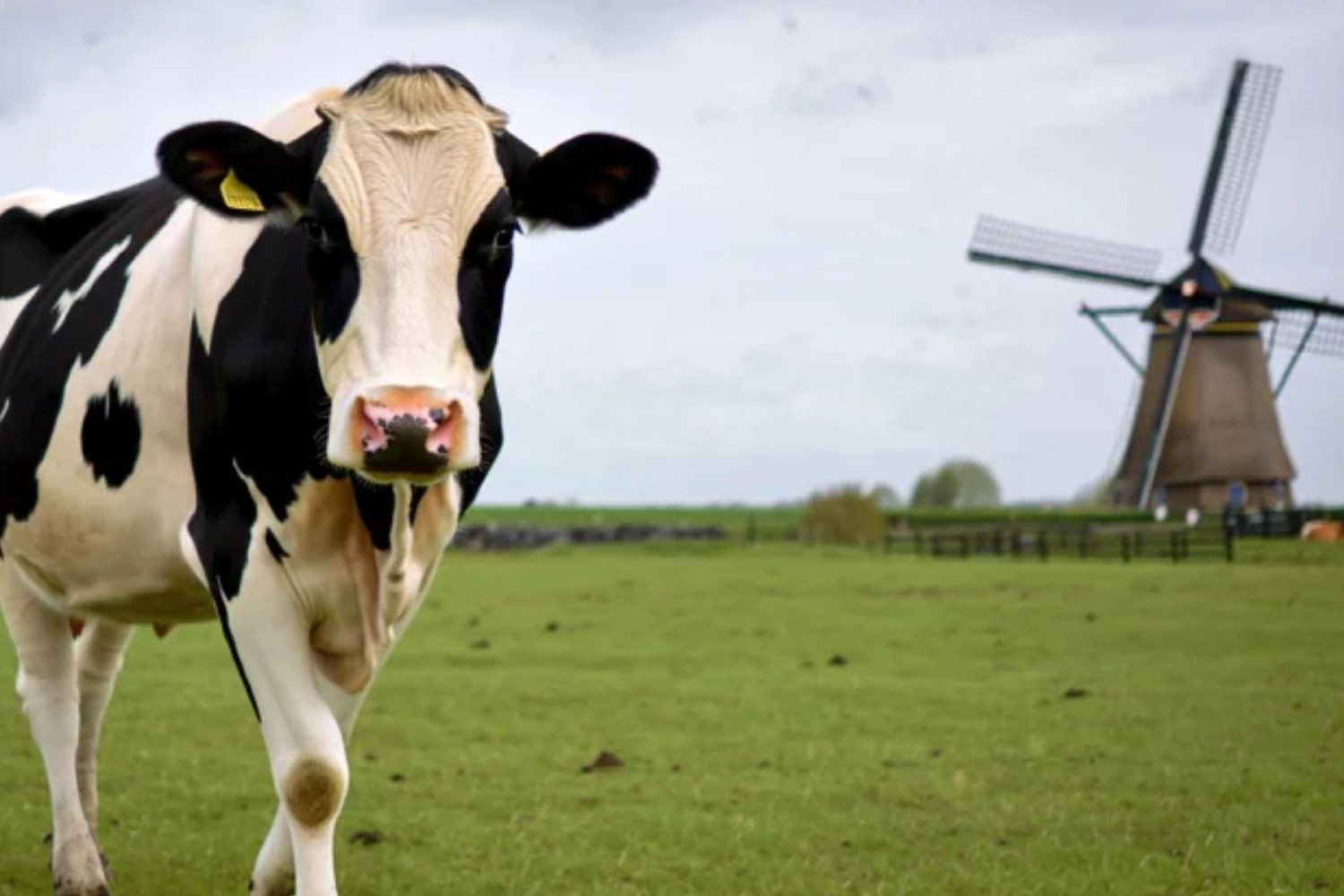
 antibodies against avian influenza have not previously been detected in dairy cattle in Europe. Image created with the help of AI (Reve.art)
Avian influenza antibodies have been detected in a dairy cow at a dairy farm in Friesland, the Netherlands, marking the first such finding in European cattle. No evidence of active viral circulation of avian influenza among the dairy cows on the farm has been found.
According to ‘Rijksoverheid’ the Dutch Ministry of Affairs, on 15 January the dairy cattle on the Friesian farm were tested with random samples, which showed that there were no sick animals present at that time. Analysis of the milk samples by Wageningen Bioveterinary Research revealed that no active virus was present. Antibodies were also tested for in the milk samples of one cow, which indicated that the cow had previously been infected with the virus.
The Netherlands Food and Consumer Product Safety Authority (NVWA) visited the farm again on 22 January and blood and milk samples were taken from all cattle present. These showed that there was no avian influenza virus on the farm.
ALSO READ an expert’s opinion: Why the poultry sector needs a global pact to fight avian influenza –
Sick cat died
The results of the antibody tests are expected this week. This will give more information on whether the animals have come into contact with the virus. Other mammals on the farm, such as dogs, cats, and horses, have not shown any symptoms. Farm employees, those present on-farm and the farm’s veterinarian are being tested by the Municipal Health Service.
The testing at this particular farm on 15 January was due to a finding that took place a few weeks prior, on 24 December 2025, where the NVWA received a report of 2 sick cats. One of these cats tested positive for avian influenza and died 2 days later. Following this report, the NVWA conducted source and contact tracing. The investigation revealed that the cat originated from a dairy farm.
First time detection in Europe
‘Rijksoverheid’, the Dutch Ministry of Affairs, reported on 23 January that on 15 January the dairy cattle on the Friesian farm were tested with random samples, which showed that there were no sick animals present at that time. Analysis of the milk samples by Wageningen Bioveterinary Research revealed that no active virus was present. Antibodies were also tested for in the milk samples of one cow, which indicated that the cow had previously been infected with the virus.
ALSO READ: Study aims to address the growing threat posed by avian influenza A viruses
Milk safety
The ministry adds that the risk of the H5N1 avian influenza virus, prevalent in Europe, spreading from animals to humans is very small. The risk of humans contracting avian influenza by eating chicken, eggs, or beef, or through dairy products, is also very small. Eggs, meat, and milk meet strict requirements. However, it is important not to consume raw dairy products from a cow infected with avian influenza.
The avian influenza situation in the Netherlands remains a concern and is being closely monitored. All stakeholders have been asked to remain alert to any potential warning signs.
Join 31,000+ subscribers Subscribe to our newsletter to stay updated about all the need-to-know content in the poultry sector, three times a week.
“*” indicates required fields