
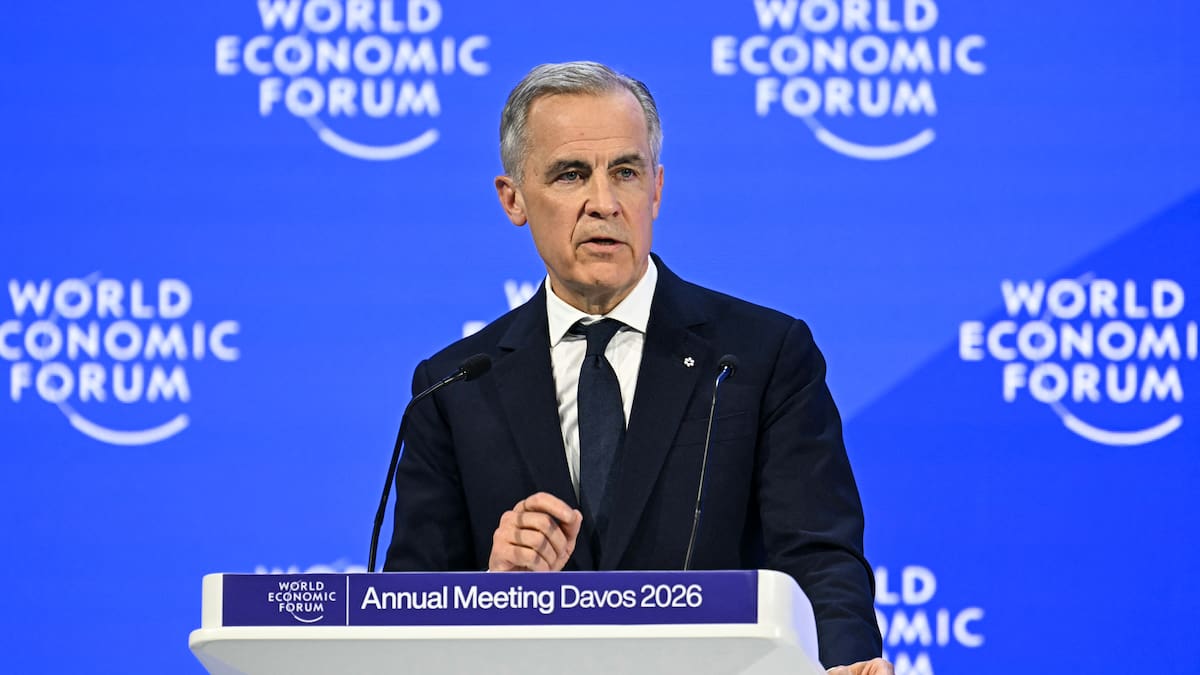
“But I submit to you… that other countries… aren’t powerless. They have the power to build a new order that integrates our values, like respect for human rights, sustainable development, solidarity, sovereignty and the territorial integrity of states.”
For Carney and Canada, these are not empty words. Canada has direct experience of unconstrained great power politics. The President of the United States, Donald Trump has demeaned, threatened to invade, and started a trade war with Canada – all because his economy is bigger and his military stronger.
In the face of this new reality, Canada found diplomacy had little value, so it headed in a new direction.
It opened economic, social and cultural relationships with many other countries, diversified its trading partnerships, participated in new trading blocs, rapidly introduced a raft of new policies designed to create a stronger and more resilient domestic economy and joined with other nations to address shared problems like climate change – all in the space of a year.
US President Donald Trump speaks during the World Economic Forum at Davos. / AFP
This is not what NZ is doing. We are fiddling while the world ruptures.
Rather than confronting the new ‘brutal reality’ we are hiding from it (there is no mention of a NZ speaker at Davos).
Invisibility appears to be our strategy (note our decision not to join 157 other countries in recognising the state of Palestine and the rebuke of the Reserve Bank Governor for signing a letter in support of an independent US Federal Reserve) so as not to offend anyone or draw attention to ourselves.
At home, it is business as usual. It is election year, so politics is local.
It may be thought that, given NZ’s small size, it is wise for us to keep our heads down. There are many countries, bigger than NZ, who are trying to do the same thing. Others are trying to appease and flatter great powers hoping to remain in their good books.
No one should be suggesting we wilfully antagonise any of the great powers, but, as Carney points out, none of the above strategies have worked so far. In fact, they invite aggression because they come across as weakness.
Reserve Bank Governor Anna Breman after she signed an international letter of support for central bank independence. Photo / Getty
The alternative, as Carney describes it, is to be honest about the way the world now is rather than how it should be. In this world, small and middle-sized nations must work together to find a pathway that ensures they can remain meaningfully sovereign, not subservient.
Not doing this carries huge risks. But domination by one or other of the great powers is a recipe for a low wage, low productivity, high inequality future. Why? Because if the great power sets rules to suit itself, as the saying goes, the weak take what they must – tariffs included.
This is not a future NZ has contemplated for itself. Ever since the days of Labour Prime Minister Peter Fraser, we have been a proudly independent nation. If we want to stay that way we need to act now.
Carney is suggesting a way forward that we could adapt and amend for our own purposes. This is a modern-day nation building exercise.
We had a place in the old order, we now need to find a new place among the many middle and small sized nations of the world, armed with plans to diversify our trading partners and build a stronger more resilient economy. A programme of change like this will also give us the opportunity to explore new ways of addressing the many other issues we face.
But if we are to head down this path our response to the rupture in the world order must be on the election agenda. As voters, we need to know what a new Government intends to do to assure our future in this new world. Our prosperity and our existence as a liberal democratic country depends on their answer.
The emerging new world order represents a threat to the future of NZ (and all other countries, even the strongest), but it is also an opportunity.
As Carney said: “The old order is not coming back. We should not mourn it. Nostalgia is not a strategy. But from the fracture, we can build something better, stronger, and more just”.
Canada is doing just that.
The opportunity is there for us to be part of that better future if we are honest and prepared to act – now.
Catch up on the debates that dominated the week by signing up to our Opinion newsletter – a weekly round-up of our best commentary.