
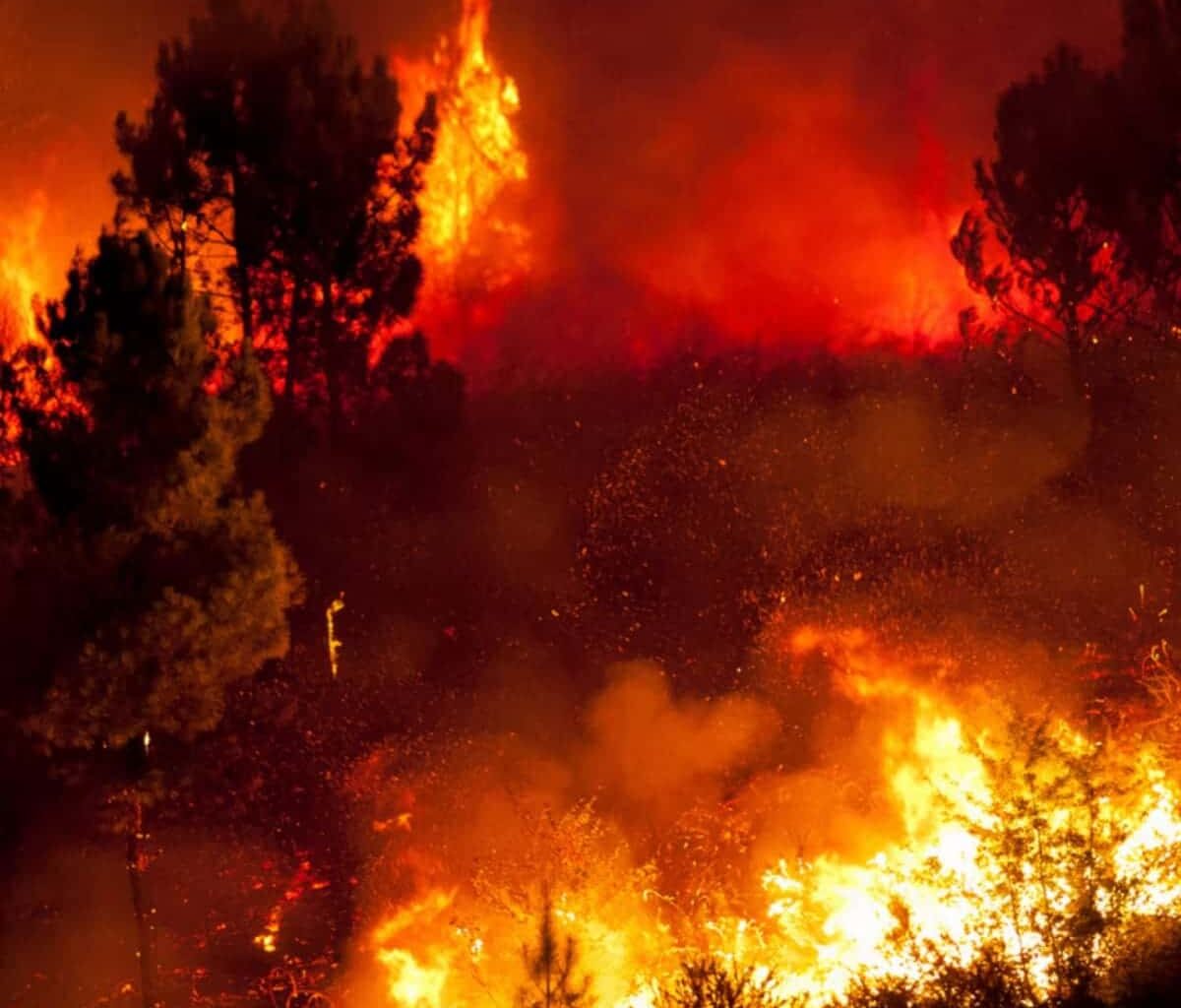
In just a few decades, we might no longer recognise the landscapes we call home. Climate change is quietly reshaping not only our environment but also the way we live. And if you’re curious to know what your region’s weather could feel like in the future—or even want to take a “trip to tomorrow” this summer—researchers have built an app that lets you fast-forward to the year 2080.
Home is more than just an address. It’s where we find our loved ones, familiar surroundings, and a climate that feels right. But as the planet warms, that comfort zone is shifting. A team from the University of Maryland is offering a glimpse into what’s coming over the next fifty years—and it’s a future that may feel both familiar and foreign. Will we still feel at home in the places we know best?
What our climate could look like in 2080
“By 2080, cities in the Northern Hemisphere will feel much more like cities in the South,” explains Professor Matthew Fitzpatrick. “Everything is drifting toward the equator. And the closer you get, the harder it is to find a good climate match for places like Central America, southern Florida, or North Africa. There’s simply no spot on Earth today that mirrors what these regions will become.”
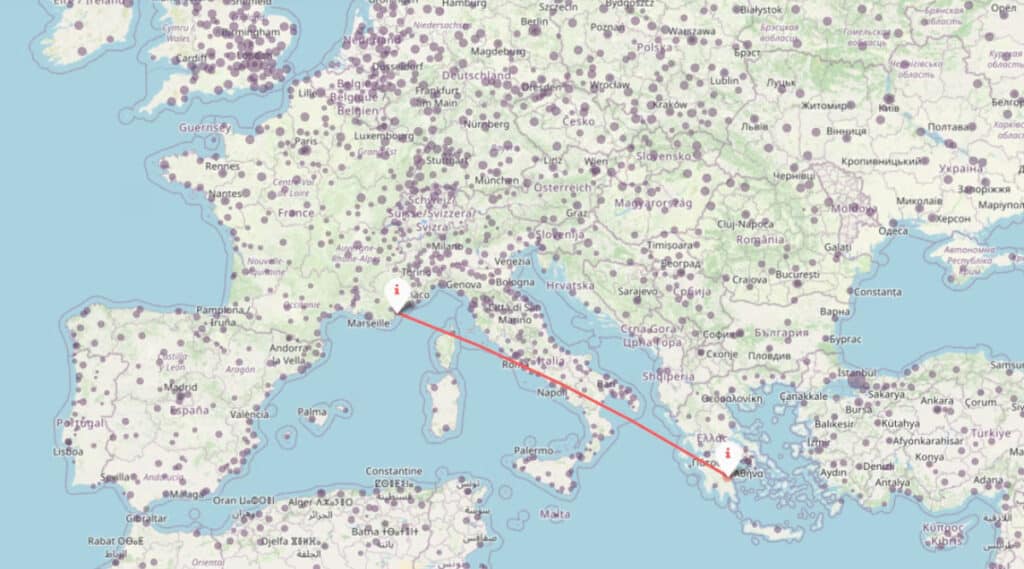
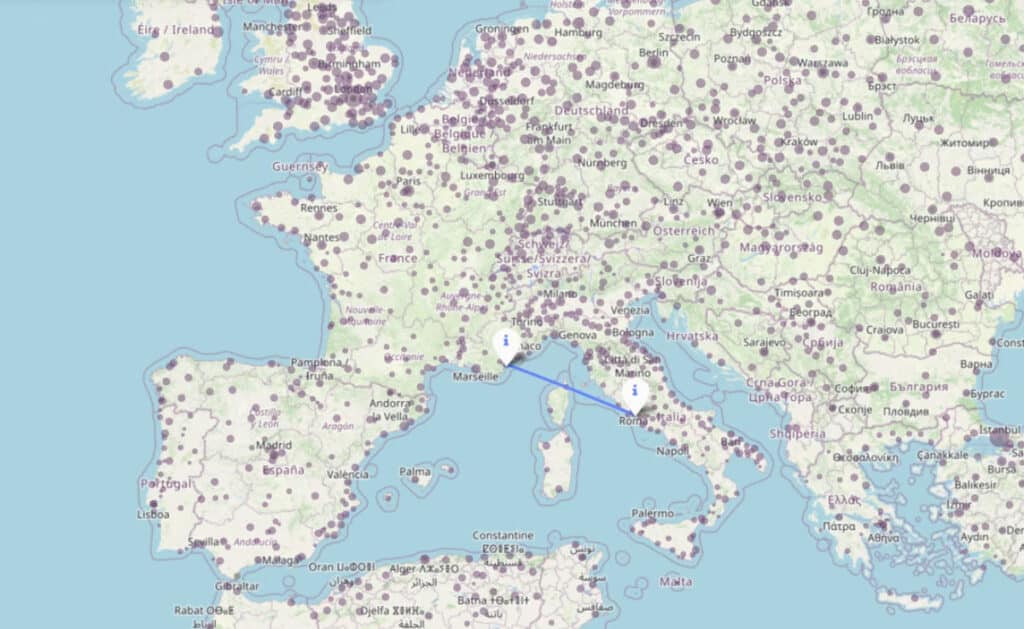
Near Saint-Raphaël—where Futura is headquartered—the climate will become that of Castel di Leva (Italy) in a 1.5°C global warming scenario (top image). This includes a local warming of 2.4°C and a 0.5% increase in humidity. In a high-emissions scenario (bottom image), Fréjus’s climate will become that of Astros (Greece), with a temperature 6.5°C higher and a drought 17.9% more severe than today. © Future Urban Climates, University of Maryland
To make that vision a little more concrete, Maryland ecologists created an interactive app that pairs the future climate of a given city with the current climate of another. Since the outcome depends on how much greenhouse gas we continue to emit, the tool lets users test several possible scenarios—from the best case to the most extreme.
Keeping the Paris Agreement changes everything
The contrast between those futures is striking. In a high-emission world—where global temperatures climb about 5 °C—Bordeaux’s climate could resemble today’s weather in Rignano Garganico, a small town in Italy’s Apulia region. That would mean local temperatures up by roughly 5.3 °C and a dryness increase of more than 20 %.
But if we manage to stay within the goals of the Paris Agreement, the story changes dramatically. Bordeaux in 2080 would feel more like the Spanish city of Bredan today—just 1.5 °C warmer and only 5 % drier than now. A future where summer heat is noticeable but still bearable.
This simple comparison drives home one thing: the choices we make today—our emissions, our energy use, and our global cooperation—will shape not only the planet’s future but also what “home” means for generations to come.

Nathalie Mayer
Journalist
Born in Lorraine on a freezing winter night, storytelling has always inspired me, first through my grandmother’s tales and later Stephen King’s imagination. A physicist turned science communicator, I’ve collaborated with institutions like CEA, Total, Engie, and Futura. Today, I focus on unraveling Earth’s complex environmental and energy challenges, blending science with storytelling to illuminate solutions.