
Main points
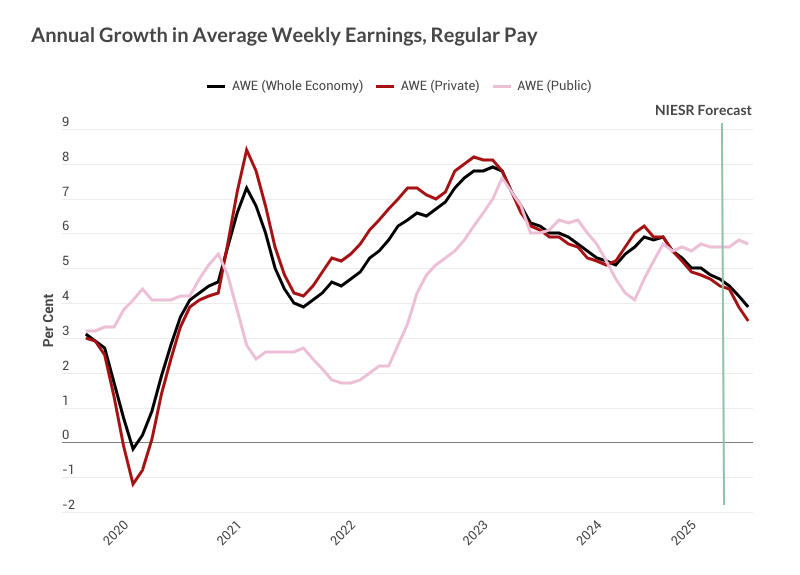
Growth in regular average weekly earnings is gradually slowing, recording 4.8 per cent in July 2025, and 4.7 per cent if we include bonuses.
Unemployment has reached a four-year high, recording 4.7 per cent amidst a gradual cooling of the labour market.
A decline in inactivity is also supporting an increase in labour supply.
Hiring activity is rapidly slowing, with vacancies down by 5.8 per cent (or 44 thousand) on the quarter to July.
Given these trends, we expect wage growth to continue falling, and to approach 4 per cent by year-end.
Workers continue to improve their living standards, although at a slower pace given the uptick in inflation, with annual growth in real regular pay at 0.7 per cent.
“Annual regular wage growth recorded 4.8% in the three months to July 2025 and 4.7% if we include bonuses, according to today’s ONS figures.
Unemployment has reached 4.7%, its highest level in four years, and hiring momentum is rapidly slowing, with the number of jobseekers more than double the available vacancies. This suggests that wage growth will likely continue to fall, approaching 4% by year-end, according to our forecast.
A moderation in pay growth would keep the door open for further interest rate cuts by the Bank of England, after a prolonged period of elevated wage pressures.
On the fiscal front, rising unemployment will likely deter the Chancellor from further raising taxes on businesses in the next budget to avoid weighing on growth”.
Monica George Michail,
Associate Economist, NIESR