
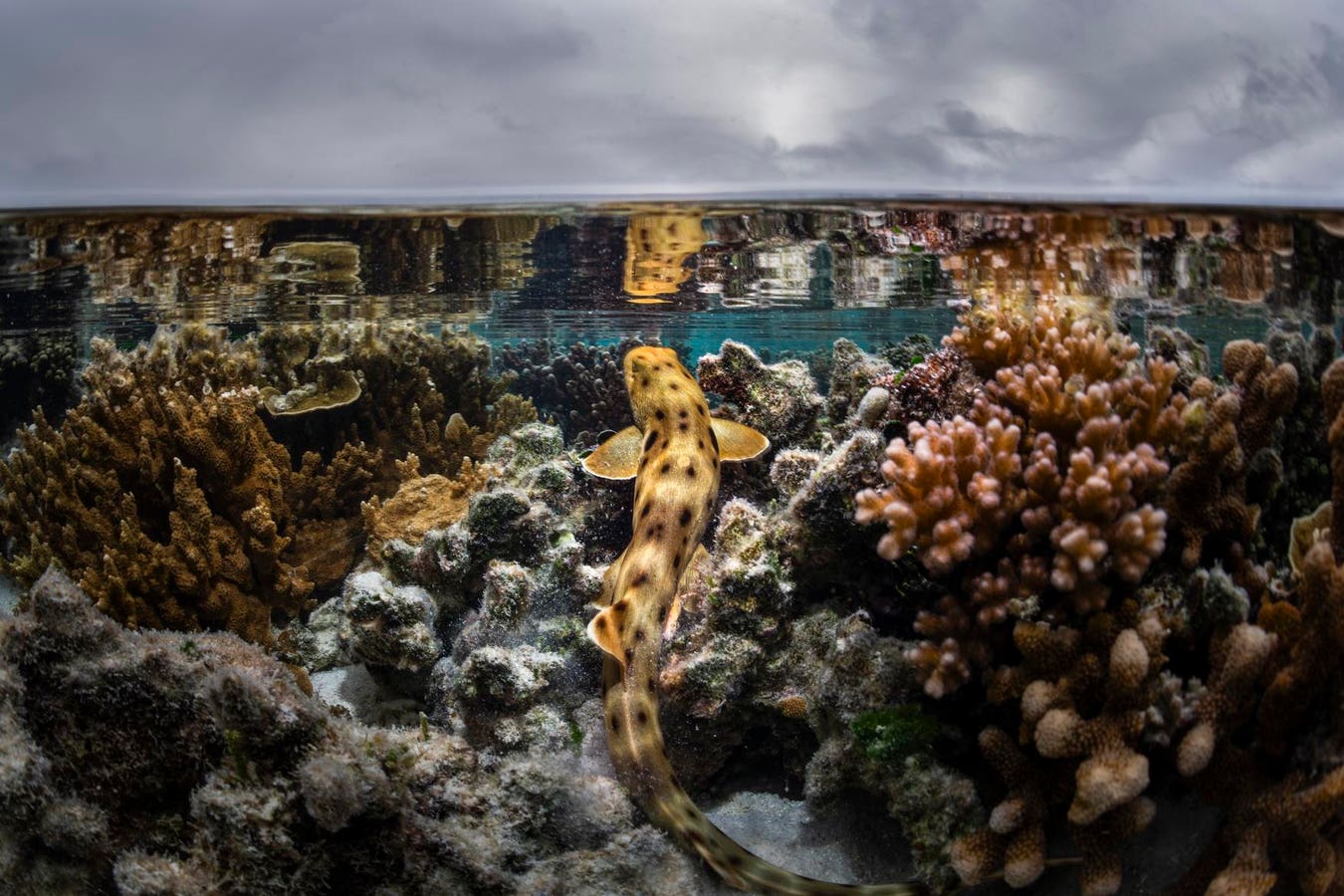
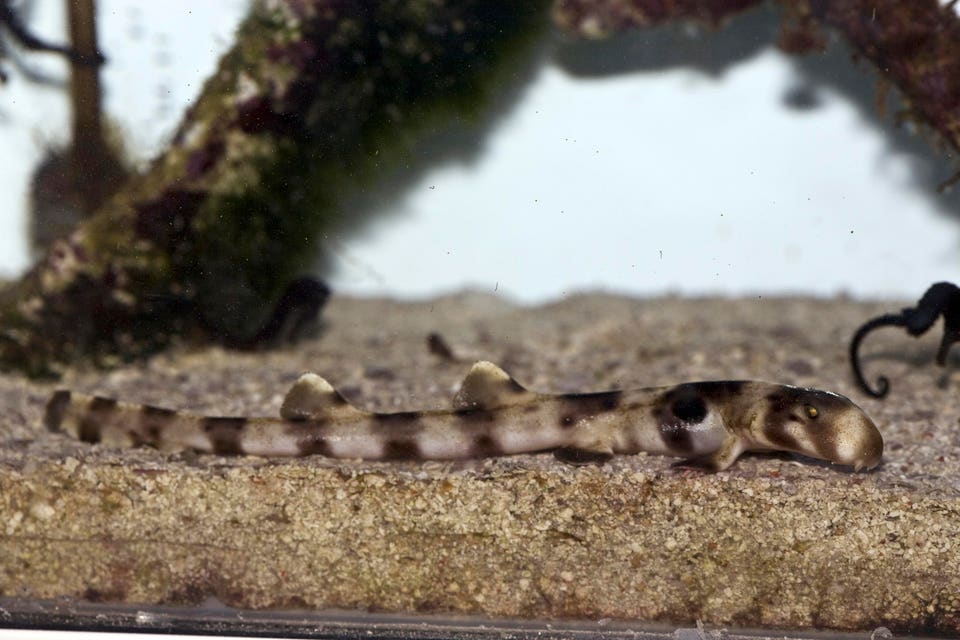
Epaulette shark (Hemiscyllium ocellatum), a shark made famous thanks to their ability to “walk.”
Universal Images Group via Getty Images
Reproduction is often framed as biology’s ultimate energy drain. (As someone who was recently pregnant, I can say it definitely took it out of me!) For many animals, making offspring means eating more, moving less and/or diverting energy away from growth and survival. In sharks and their relatives, this assumption has been especially strong because they tend to mature late, reproduce slowly and invest heavily in each offspring, so the idea that reproduction must come with a major energetic price tag has gone largely unquestioned.
Until now.
A new study from James Cook University’s shark physiology research team, led by Professor Dr. Jodie Rummer and published in Biology Open, has done something no one had managed before: directly measured the metabolic cost of egg laying in sharks. Their subject was a Great Barrier local known as the epaulette shark (Hemiscyllium ocellatum), a small carpet shark that was made famous years ago for its ability to “walk” across reef flats using its fins. The species even starred in a documentary with David Attenborough, making the predator an unlikely poster child for Queensland waters. Yet despite their fame, there is a lot we still don’t know about them. What we do know: epaulette sharks are oviparous (they lay eggs rather than giving birth to live young) and each female typically produces two egg cases every three weeks, with peak egg laying in (Austral) spring and early summer. The researchers focused on five female epaulette sharks housed in large temperature-controlled tanks at JCU’s Marine and Aquaculture Research Facility in Townsville, tracking them before, during and after egg case formation, monitoring oxygen uptake as a proxy for metabolic rate. Simply put, the more oxygen an animal uses, the more energy it is burning.
What they found was unexpected, even to the scientists themselves. “We expected that when sharks make this complex egg, their energy use would shoot up,” Rummer explained in a University press release. “But there was no uptick in energy use, it was completely flat.” That runs counter to decades of assumptions about Chondrichthyan fishes, the group that includes sharks, rays, skates and chimaeras. Reproduction in these animals has long been considered a slow, energetically demanding process, especially compared with most bony fishes, yet until this study, no one had directly measured how much energy a shark actually uses while producing eggs. Alongside metabolism, the team also measured reproductive hormones and blood parameters linked to oxygen transport. Lead author Dr. Carolyn Wheeler, a recent JCU PhD graduate, described the results as surprisingly consistent. Hormone levels showed to be largely stable across the reproductive cycle, aside from a brief testosterone peak early on. Blood metrics like hematocrit and hemoglobin concentration also showed no meaningful change. “Everything was remarkably stable,” Wheeler said. “So this research challenges our fundamental assumptions about chondrichthyan fishes.”
What other “obvious truths” about marine life might dissolve under closer scrutiny? And how might those revelations reshape the way we think about conservation in a rapidly changing world?
getty
Why would a shark’s metabolism stay flat during a process that seems, intuitively, expensive? One explanation may lie in how epaulette sharks manage their energy over time. In the wild, these sharks reproduce seasonally, likely relying on stored energy in their livers to fuel egg production. In captivity, where temperature and food availability were kept constant, the sharks may have shifted to what biologists call an “income breeding strategy,” where they use energy from regular feeding to support continuous reproduction. That means that instead of dramatic peaks and troughs in energy use, everything stays on an even keel. Another factor to consider is scale. The organ responsible for forming the egg case, called the oviducal gland, may have a high metabolic demand, but it is small compared to the rest of the shark’s body. That means any extra energy used there could be effectively lost in the noise when measuring whole-animal metabolism; in other words, important work may be happening, just not at a scale large enough to move the metabolic needle.
The implications of these findings extend beyond one small shark species. Much of our concern about climate change and reproduction is rooted in the idea that reproduction is one of the first processes to fail under stress. When food is scarce or temperatures rise, animals are expected to choose survival over making offspring. But what if some species have evolved ways to buffer reproduction against environmental change? “This work challenges the narrative that when things go wrong, such as warming oceans, reproduction will be the first thing to go,” Rummer said. “Epaulette sharks appear very resilient, but it’s important to determine just how resilient to warming oceans these species are.” That caveat matters, Rummer pointed out. These experiments were done under controlled conditions, not during the seasonal temperature swings sharks experience on the reef. Future studies that mimic natural warming and cooling cycles may reveal hidden costs that only emerge under certain conditions.
Healthy sharks are tightly linked to healthy reefs. If some species can continue reproducing even under challenging conditions, that resilience could buy ecosystems valuable time. But resilience is not invincibility. Understanding where the limits lie is crucial, especially as oceans continue to warm. So, how many of our assumptions about shark biology are built on inference rather than direct measurement? More research is bound to show us! One thing is for sure: sharks still have plenty to teach us, even about processes we thought we understood. What other “obvious truths” about marine life might dissolve under closer scrutiny? And how might those revelations reshape the way we think about conservation in a rapidly changing world?