
The two major players have cited declining sheep numbers and less wool being available to justify having two auction centres.
They have also cited benefits in running one location where buyers gather and compete.
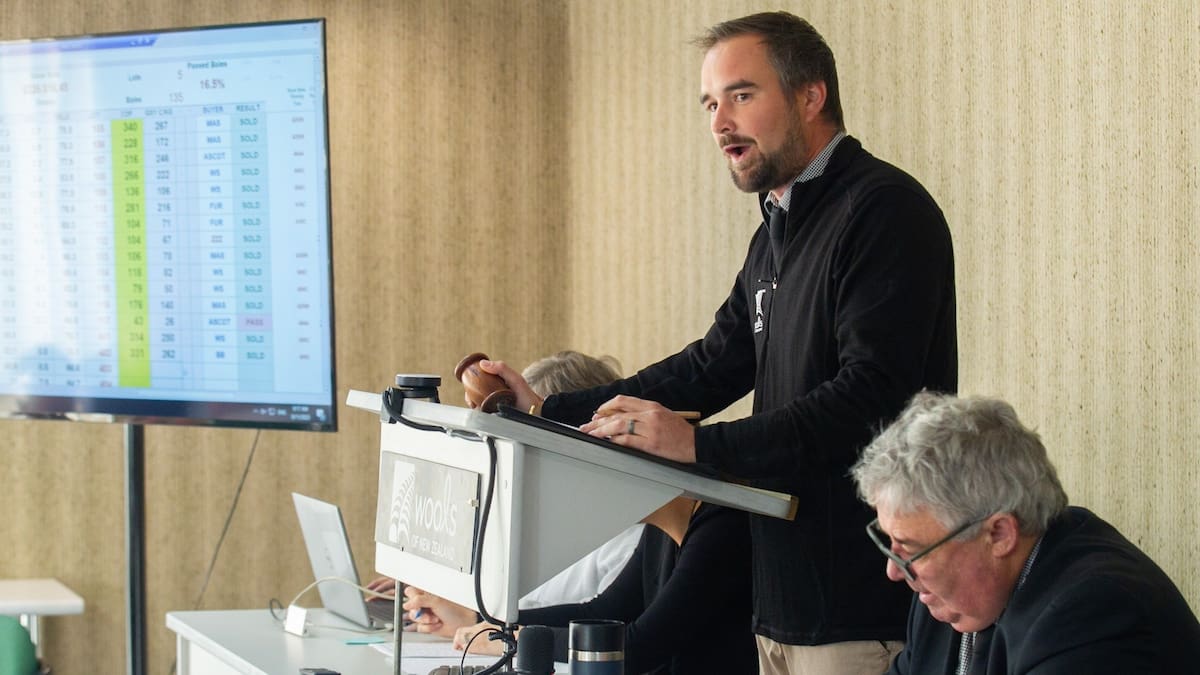
Currently, there are about 52 wool auctions per year shared between both centres, all of which will now be shifted to Christchurch.
It was decided Christchurch was a better fit as it has easier access for overseas exporters wanting to attend auctions and the South Island has more merino wool, which has higher prices than strong wool.
The number of sheep in New Zealand has been declining for decades. Photo / NZME
Smaller brokers who currently attend the Napier auction centre could, theoretically, continue auctions in the city.
However, one of those brokers, Napier’s Kells Wool, says that is “very unlikely” as there will be far less wool to offer buyers.
Kells Wool owner Richard Kells said the change would not have a huge impact on his business, as he would send samples of wool to the Christchurch auctions.
Wool has been sold in Hawke’s Bay since the 1850s. Williams & Kettle (now PGG Wrightson) has been involved in Napier wool auctions since the late 1800s.
End of an era
PGG Wrightson Wool general manager Rachel Shearer said it was “not a decision that has been made lightly”, noting the history of wool auctions in Napier.
“I am grossly aware and hugely respectful for the people that have come before us.
“Wool was the backbone of New Zealand farming and such an important part of our economy.
“This decision hasn’t been taken lightly, but likewise nostalgia isn’t a strategy when you are faced with global change.
“We are responding to what we think will make us a sustainable and resilient support mechanism for the wool industry.”
Shearer said there had been a downward trend in the number of shearable sheep both in New Zealand and globally, making two auction centres unsustainable.
During the 1990s, in the North Island alone, there were wool auction centres in Wellington, Auckland, Napier and Whanganui.
PGG Wrightson’s large wool store on Pandora Rd will remain open, and it is not closing or selling any property in Hawke’s Bay.
“An important thing to note is that all the actual physical wool in the North Island ends up here at our wool store in Napier and will continue to do so,” Shearer said.
“It gets processed in Napier, it goes to the wool scourers in Napier or it goes straight to the ships out of Napier Port.
“So the whole infrastructure around the wool bales and the processing of wool doesn’t change.”
She said samples of wool would simply be sent to Christchurch for the auctions.
Wools of NZ chief executive John McWhirter said the production of wool in New Zealand had been declining since the 1970s, and “it just doesn’t make any sense to continue with running multiple options” in terms of auction centres.
Wools of NZ has an office in Ahuriri, which will remain open.
McWhirter said the change did not stop other brokers from doing what they thought best. That could include continuing a Napier auction centre.
He said about 90% of New Zealand wool was sold to overseas buyers and exported.
What do buyers think?
Council of New Zealand Wool Exporters president Nathan Watt said different exporters (buyers) had different opinions.
“I think there is probably at least half the exporters that would be supporting having a centre in the North Island rather than the South, because they are based in the North Island,” he said.
“I think everyone is in agreement that having one centre probably makes sense, it is just which centre it is.”
Watt said, generally speaking, “most exporters are in support of the consolidation”.
“There is probably not enough supply to justify two centres.”
There are multiple methods to sell wool.
Just under half of New Zealand’s wool is sold through the open-cry wool auctions in Napier and Christchurch.
Other methods include direct contracts, or selling wool through an online system.
Waipukurau-based wool broker Wright Wool, for example, which was recently bought by WoolWorks New Zealand, sells wool via an online system (as opposed to the auction centre).
Wool prices hit 10-year high
WoolWorks NZ owns all three wool scourers (wool cleaning) plants in New Zealand, including two near Napier, at Awatoto and Clive.
WoolWorks NZ president Nigel Hales said the changes would not have an impact on those plants.
Promisingly, he said wool prices were at a 10-year high.
In mid-2023, clean wool was priced around $2.25 per kg. It is now $4.75 per kg.
“What that means is that if you annualise that, that is about $300 million or more going back into the farmers’ pockets [across New Zealand].”