
Humans are usually only too happy to help – even complete strangers, and even to our own inconvenience. Chimpanzees aren’t. Chimps rarely tolerate the presence of strangers, let alone go out of their way for them.
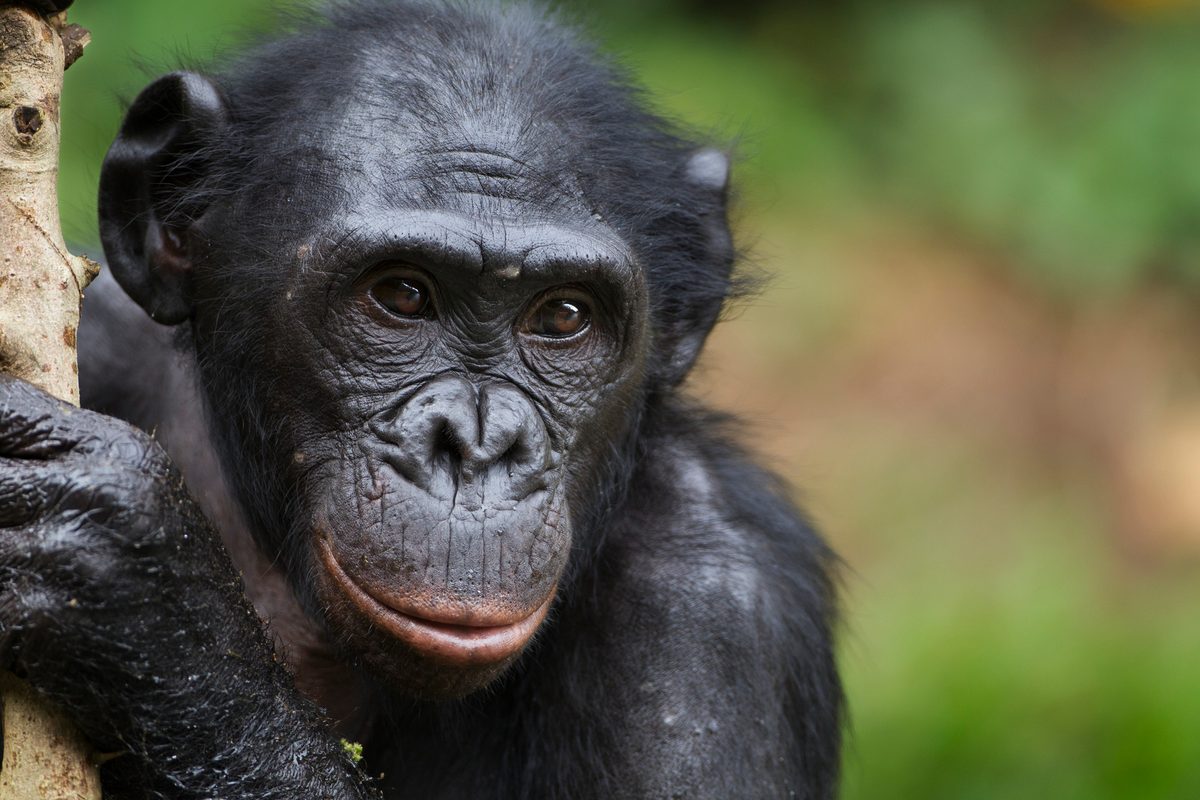
But their closest cousins, bonobos, are more like us, according to scientists. Experiments conducted at Lola ya Bonobo sanctuary in the Democratic Republic of the Congo show that bonobos are willing to put themselves out to help strangers gain access to food even though they get none of it for themselves.
The researchers hung a piece of fruit from a rope in one room that could only be released from an adjacent room, separated by a fence. Bonobos in the second room would make considerable efforts to release the food for an unfamiliar individual in the first room.
“They gave up playing-time, walked across the room, climbed up, held their body with one arm and reached through narrow mesh to help with the other arm,” says Jingzhi Tan of Duke University, USA. “In return they had no immediate selfish benefits.”
Such “prosocial” behaviour sits well with the image of bonobos as peace-loving egalitarians. Chimps are far less socially spirited. Tan says that they behave so aggressively to strangers that it’s not even possible to perform these experiments on them.
Bonobos seem to play a longer game, which involves making a good first impression. “All relationships start between two strangers,” says Tan. “But you may meet them again, and this individual could become your future friend or ally. You want to be nice to someone who’s going to be important for you.
“Human cooperative behaviour is still much more flexible, more risky, more complicated and at a larger scale,” Tan told BBC Wildlife. “But we have more similarities with our great ape cousins than we previously thought, in terms of our prosocial predispositions.”
Main image: Getty