
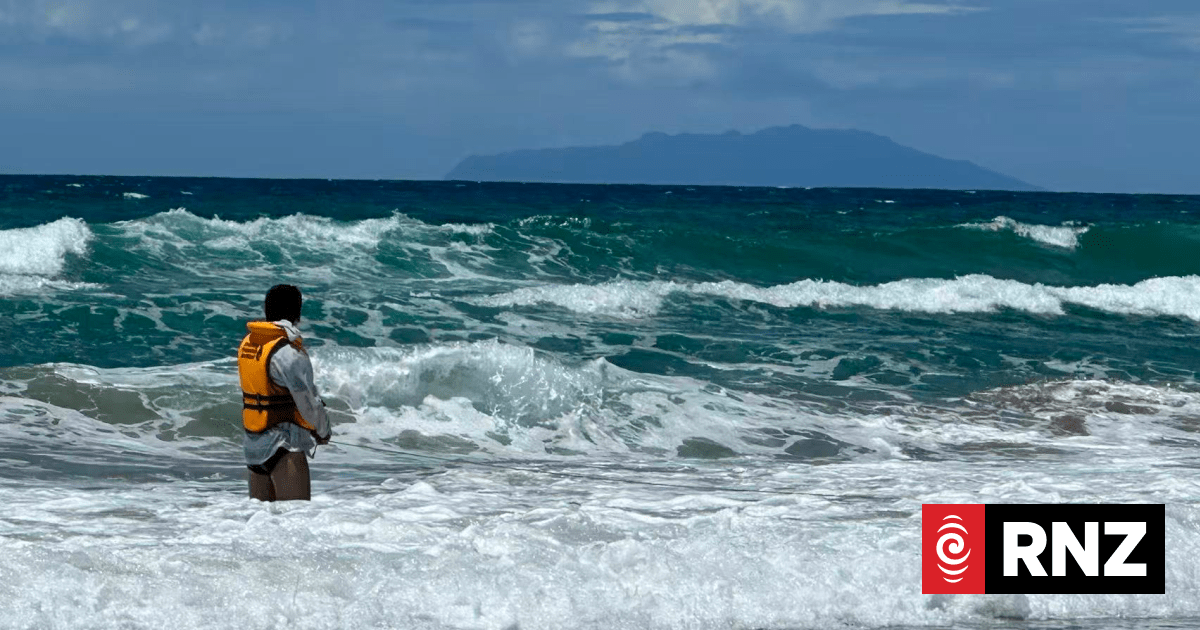
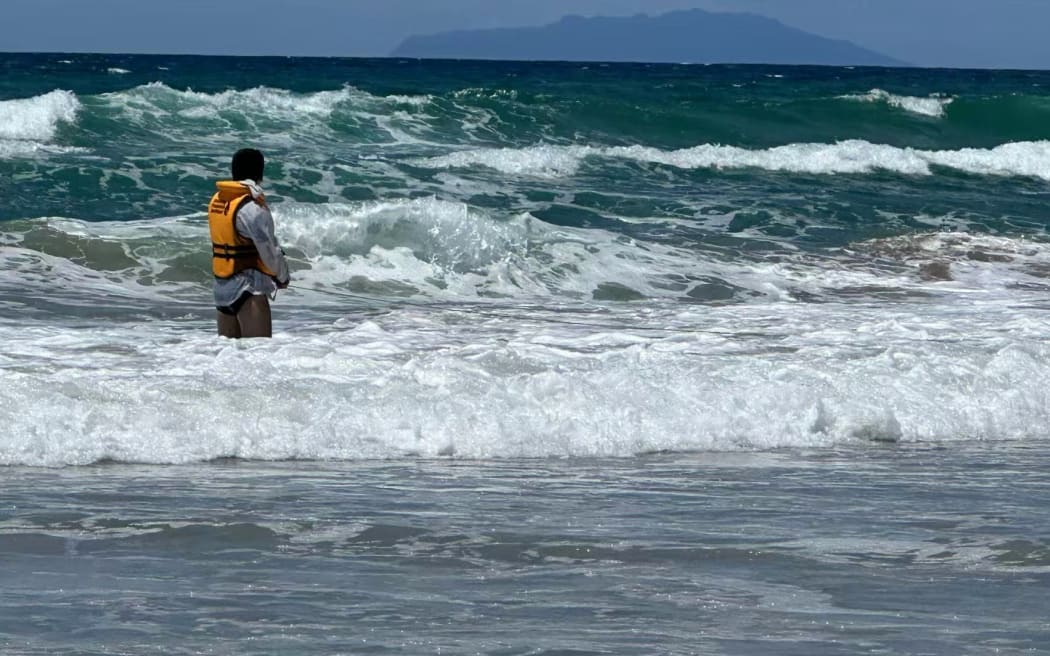
New Zealand waves are often rougher than waves Asian migrants are used to.
Photo: RNZ / Duoya Lu
Drowning Prevention Auckland is reminding households to stay vigilant near stretches of water for the remainder of summer.
Asian individuals who weren’t familiar with New Zealand’s “volatile” conditions were advised to take extra care, the organisation said.
Drowning Prevention Auckland recently took members of the city’s Chinese community to Uretiti Beach in Northland to experience open-water conditions, focusing on basic lifesaving skills and what to do when someone finds themselves in trouble in the water.
Nicola Keen-Biggelaar, chief executive of Drowning Prevention Auckland, said Uretiti Beach was deceptively dangerous, describing it as an exposed east-coast break with powerful currents and sudden drop-offs.
The area had been the site of multiple drownings, she said.
From 2011 to 2020, five of the six crab and shellfish gathering fatalities on the beach involved people of Asian descent.
Keen-Biggelaar said Asian, Māori and Pacific peoples were overrepresented in drowning fatalities nationally.
In Auckland, she said, Asian and Pacific peoples were especially overrepresented.
“In the five years to 2024, 29 percent of the Auckland drowning fatalities have been Asian, 14 percent for all of New Zealand,” she said.
“In 2024, 12 drowning fatalities were Asian, with seven of these being in Auckland.”

Nicola Keen-Biggelaar, chief executive of Drowning Prevention Auckland, says Asian individuals are overrepresented in Auckland drowning statistics.
Photo: Supplied
Madison Chang, ethnic communities engagement manager at Drowning Prevention Auckland, said the most common mistake people make was underestimating the risk or overestimating their ability in different environments.
Chang said Asian individuals often failed to be prepared properly for the activity, citing examples such as not checking weather or sea conditions, wearing inappropriate clothing or footwear, or leaving life jackets behind.
“Many members of the Asian community are relatively recent migrants who may come from countries without a strong culture of aquatic recreation,” Chang said.
“New Zealand’s coastal conditions are dynamic and can be volatile compared to the calmer waters in many parts of Asia.”
He said knowing how to float could increase a person’s chances of survival if they found themselves in trouble in the water.
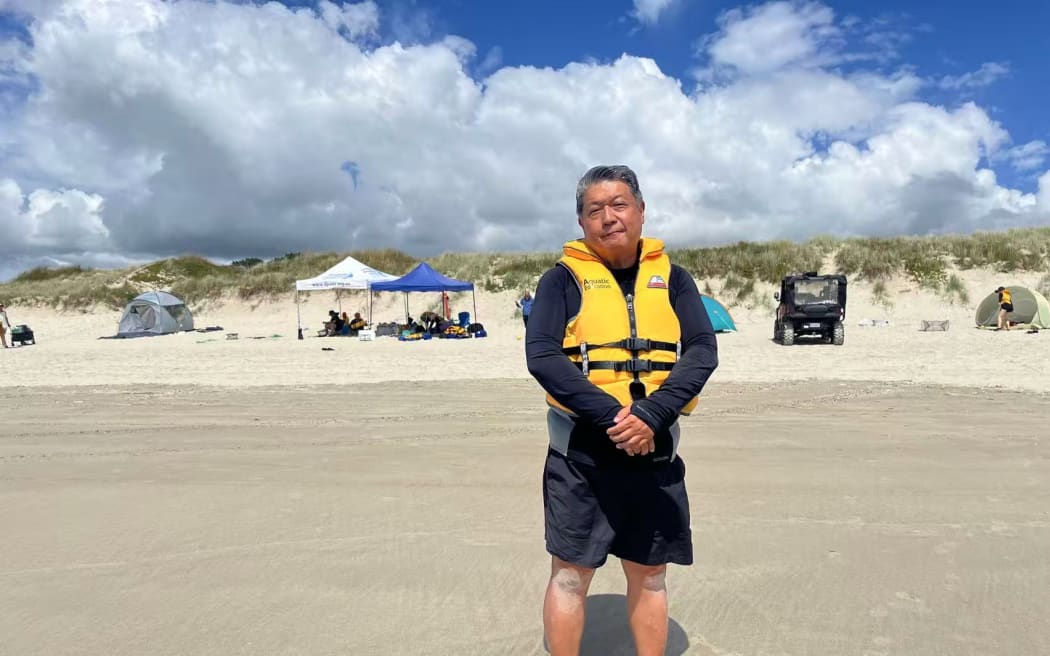
Madison Chang, ethnic communities engagement manager at Drowning Prevention Auckland, says New Zealand’s coastal conditions are dynamic.
Photo: RNZ / Duoya Lu
Trista Wang, an Australian Chinese woman living in Auckland, practised floating at Uretiti Beach with Drowning Prevention Auckland staff nearby.
She said it was an essential skill for coping with a rip current in open water.
“My first reaction would be to swim as fast as I can, straight back to shore if I got into trouble,” she said.
“But now I know that if you get caught in a rip current, the first thing you should do is float. That’s different from what I understood before, so it’s really helpful.”
Wang said it was better to practice floating in a swimming pool, as it is easy to panic in open water with waves constantly coming at you.
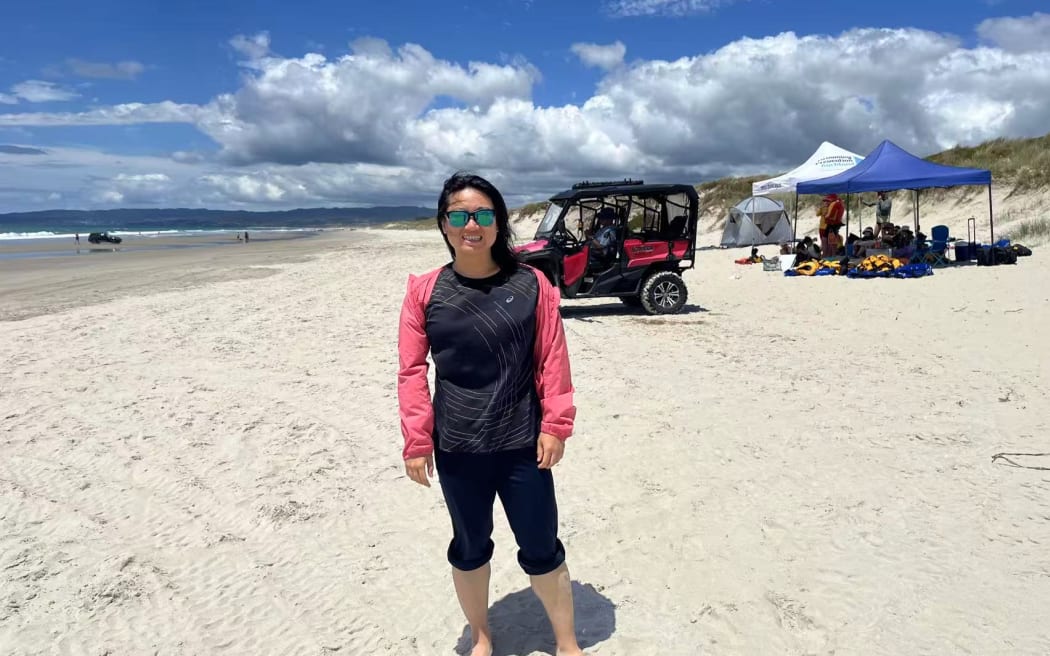
Trista Wang says floating is an essential skill for escaping a rip current in open water.
Photo: RNZ / Duoya Lu
Auckland resident Mia Zhao, who joined the workshop with her partner, said it was the first time she learned how to identify a rip current in open water.
“I’ve been to other countries, surfing and diving in different places,” she said. “When I moved to New Zealand, I could feel the water here had more waves. I’d never experienced waves this big elsewhere.
She said safety was an important consideration at the beach.
“Wearing a life jacket helps,” she said. “It’s also important to understand some basic features of New Zealand’s coastline.”
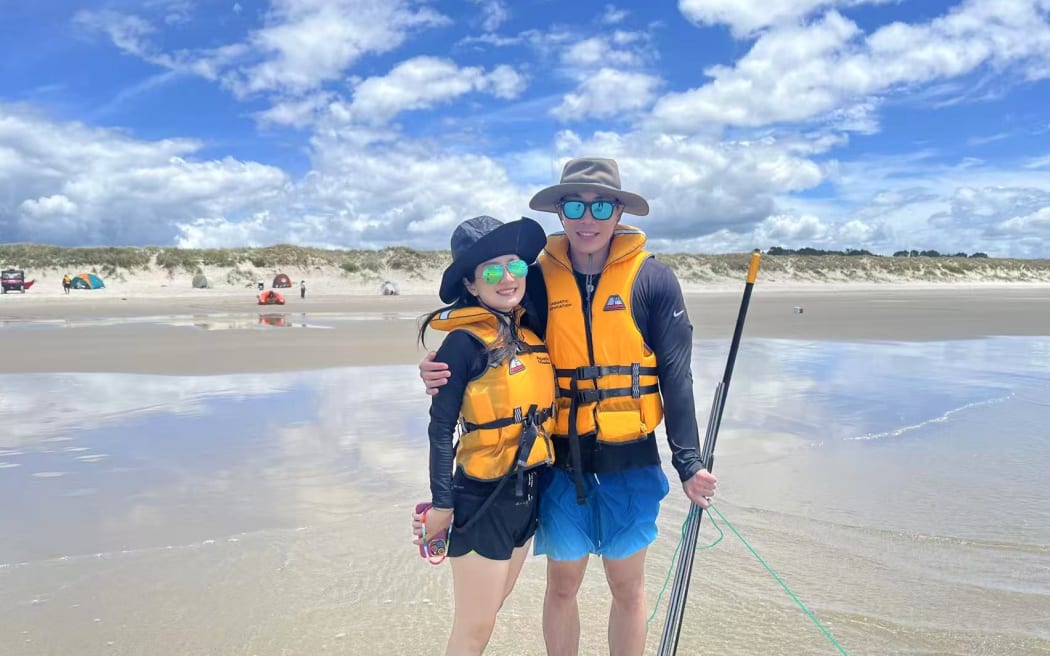
Mia Zhao (left) and her partner learn how to identify a rip current in open water during a recent workshop at Uretiti Beach.
Photo: RNZ / Duoya Lu
Jason Zhu, who attended the workshop with his family, said it was important for new migrants to learn water safety in New Zealand.
Zhu, who grew up in an inland city in China, said he was confident swimming in Asian rivers but hesitant to swim in New Zealand’s open water, where waves were sometimes much larger.
“Many Chinese people’s knowledge and understanding of the ocean is still limited,” he said.
“The water may look calm but can be very dangerous, because a rip current can carry people into deeper water.”
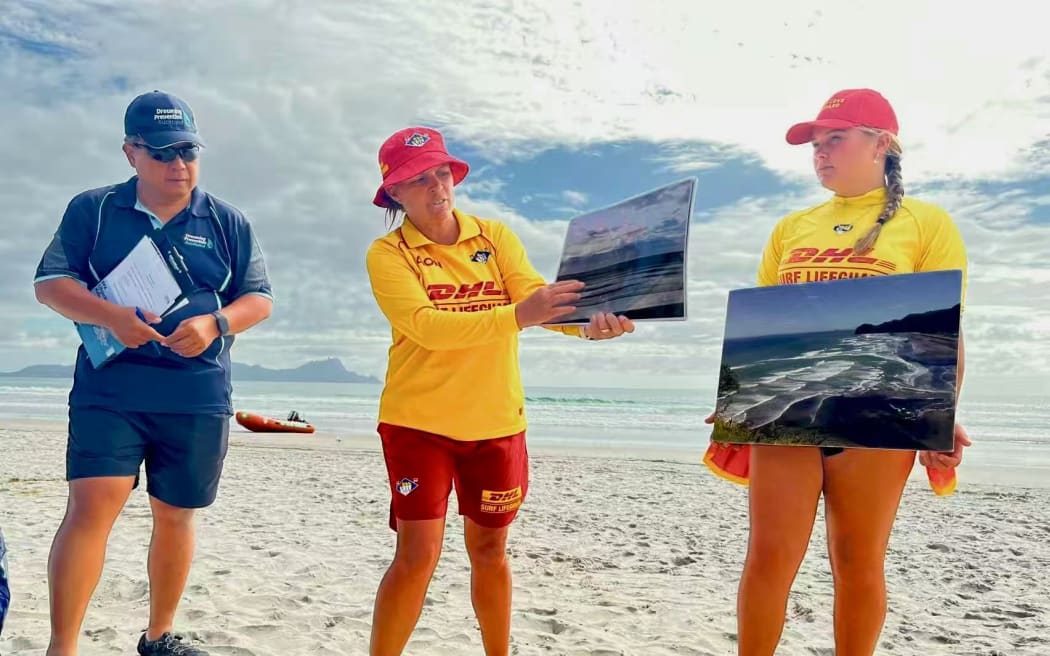
Kath Manning (middle), club captain of Waipu Cove Surf Life Saving Club, teaches workshop participants at Uretiti Beach how to identify hazards in the water.
Photo: RNZ / Duoya Lu
Kath Manning, club captain at Waipu Cove Surf Life Saving Club, worked with Drowning Prevention Auckland to teach members of the Chinese community how to identify hazards in the water.
She said the first step when arriving at a beach was to identify any rip currents.
“You want to identify the rip because it’s a narrow body of water moving out to sea,” Manning said.
“If you choose to swim there and you’re not aware of it, the rip can pull you out of your depth, causing you to panic, and that’s when people get into trouble in the water.”
Manning said if people found themselves caught in a rip, out of their depth or otherwise in trouble, they should follow the “three Rs”: relax and float, raise a hand to signal for help, then ride the rip.
“It’s really hard to swim against a rip,” she said. “So, you just ride it and let it take you. Often rips circle around anyway. … Just try not to fight it. Don’t panic.”
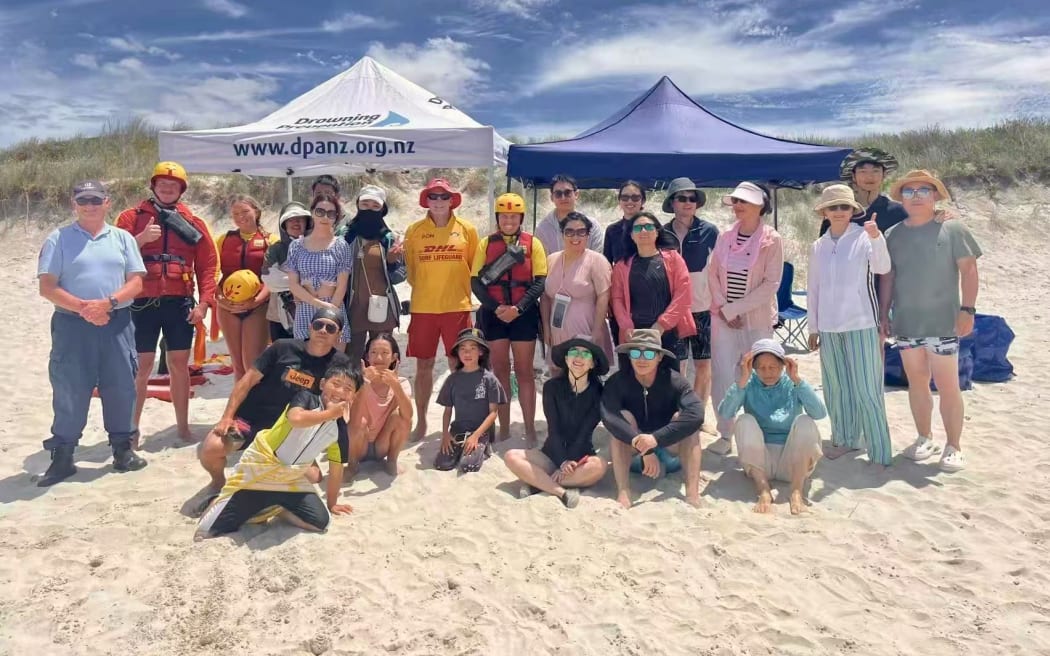
Drowning Prevention Auckland took a group of Asian residents to Uretiti Beach in Northland to gain experience in the ocean.
Photo: RNZ / Duoya Lu
Manning said choosing a safe place to swim was also important, and she recommended swimming only between the red and yellow flags at a patrolled beach.
She also urged people to watch out for small stinging jellyfish and sea lice, which could cause rashes and itching, especially in warm water.
Before heading out, Manning recommended checking the Safeswim website for patrolled beaches, patrol times and any posted hazards.
“If in doubt,” she said, “don’t go out.”