
Jan. 28, 2026Updated Jan. 29, 2026, 11:53 a.m. ET
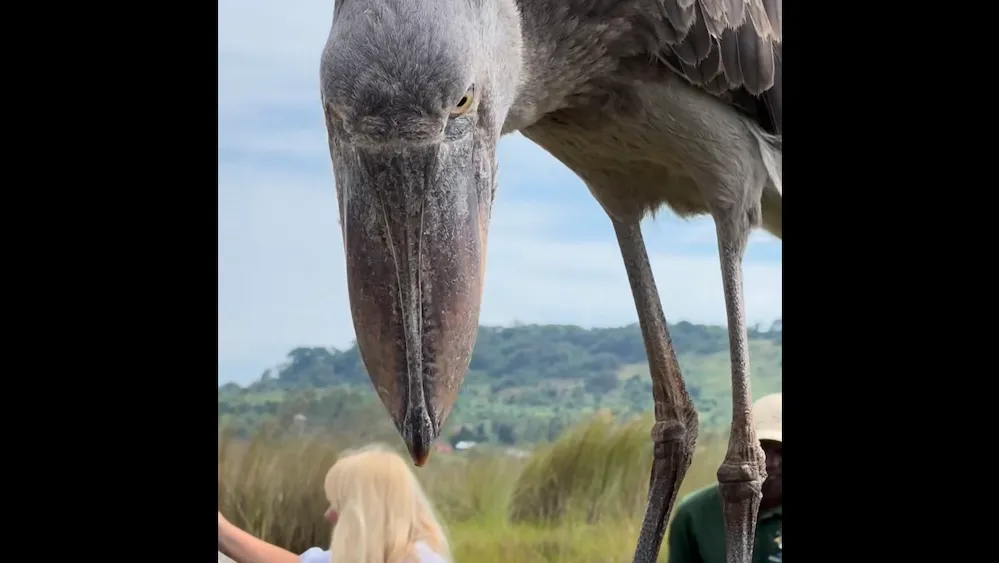
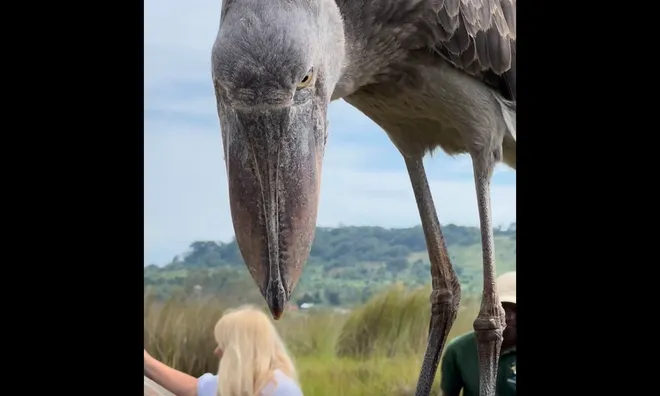
Last November, a prehistoric-looking shoebill landed on a tour boat in Mabamba Swamp on the shore of Lake Victoria in Uganda. The imagery was captured in a manner that made the shoebill, perhaps 4 feet tall, appear imposingly larger.
The massive “dinosaur bird” seemed to dwarf tourists during the extraordinary encounter.
We featured Mabamba Trips’ footage in a post that went viral. So this week I asked “Innocent the Guide” if his Instagram post and the publicity it generated has impacted regional tourism. (See post below.)
He said yes, adding: “We have been seeing many people visiting and asking about it. Recently I had group of nine people who came to see the shoebill and now most tour companies in Uganda have now started taking Mabamba Swamp as their first priority.”
Shoebills, named for the shape of their razor-sharp bills, maintain a striking presence in the dense wetlands of East-Central Africa. The towering birds might remain stationary for hours before ambushing prey with incapacitating blows.
In the air, shoebills resemble flying dinosaurs, boasting wingspans of up to 8 feet.
Unfortunately, shoebills are classified as “Vulnerable” throughout their range, with a decreasing population of perhaps fewer than 5,000 mature individuals. (Habitat loss and agriculture are major threats.)
This sad reality is partly why birders travel to Africa in the hope of seeing them, before that opportunity becomes further diminished.
RELATED: Massive ‘dinosaur bird’ stalks, devours snake in African swamp
On a positive note, appreciation for shoebills is soaring, at least at Mabamba Swamp, where shoebills are strongly protected.
From Innocent the Guide: “We have noticed that for most of the guests who visit Uganda, the shoebill must be on their bucket list, which not there before.”
The guide added: “Most tourists used to come for gorillas only, and now the shoebill is competing.”