
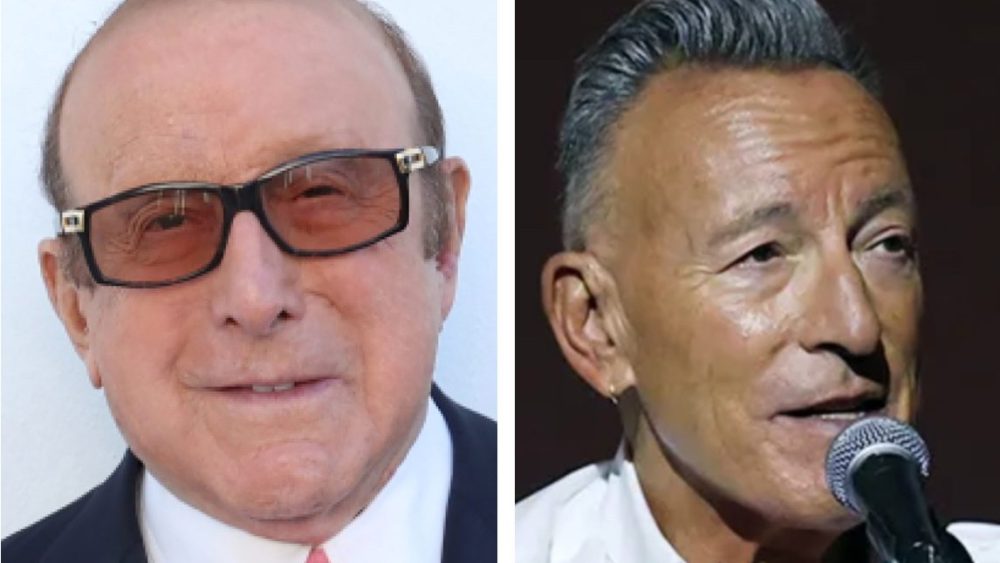
For an incredible 51 years, the hottest ticket in the music industry has been Clive Davis’ Pre-Grammy Gala, staged in partnership with the Recording Academy, that takes place the night before the Grammys. From Beyonce to Barbra, from Jane Fonda to Jay-Z to Nancy Pelosi, the show has a completely unique guest list and roster of performers that reflect both the past year and the past several decades of popular music.
While a common refrain during this year’s Grammy Week has been a sense of relief that it’s not taking place against the backdrop of Los Angeles wildfires (like last year) or a pandemic, it is taking place against an existential crisis in the country in the form of the Trump Administration’s multiple aggressive moves against democracy and the rule of law, which have come to a tragic climax in Minneapolis, which has seen violence between thugs masquerading as Federal law-enforcement officers and demonstrators, as well as many innocent people. ICE has murdered two non-violent demonstrators and incarcerated, beaten and brutalized countless thousands of others — which inspired Bruce Springsteen to release a blistering song against the administration called “Streets of Minneapolis.”
In 1972, Davis, of course, signed Springsteen to his first record deal with Columbia Records in associated with the legendary A&R executive John Hammond, so he has a unique perspective on the man and his talent. That was one of several topics Variety asked Davis about in our traditional Thursday-before-Grammys-at-the-Beverly-Hilton interview.
While Davis, a young 93 years old, demurred, as usual, from revealing what will take place at the gala on Saturday, we did hear the “KPop Demon Hunters” anthem “Golden” blasting from the Hilton’s ballroom, where rehearsals were taking place, and he allowed that a moment paying tribute to Ozzy Osbourne was possible.
What can we look forward to this weekend? What are the things you’re willing to say that’ll happen?
It will be an illustrious audience — as illustrious, as celebrated as ever before. It’s so gratifying after all these years to see the demand hold up as vigorously as it has. As far as artists’ performances, I can’t and won’t go into individual revelations, but the group of artists performing, both new and perhaps legacy, is very special. So I’m really proud of where it stands, both from the point of view of music, artistry, and audience. It’s going to be a great night.
You introduced Sharon Osbourne at the Billboard Power 100 celebration yesterday and presented her with the inaugural Clive Davis Visionary Award there. When did you first meet her?
I don’t remember where we first met, but we know each other, and I have great admiration.
Between the award and the already-announced tribute to Ozzy Osbourne at the Grammys, could we possibly expect something along those lines on Saturday?
(Smiling) It’s within the realm of possibility.
Okay, big question. Have you heard the new Bruce Springsteen song?
You know, I haven’t yet, but I have read about it. Going back to when I signed him, when I was head of Columbia, I did have the belief that he would emerge along with Bob Dylan as the poet laureates of this country. So that the fact that he’s written this song certainly fits his emergence as one of the two poet laureates of America.
In the early days, did you see the potential for him to be as politically outspoken as he’s become? Because he didn’t really do that at first.
My prominent feeling when I first signed him was not that he would turn into a political figure, but that I somehow had to distinguish him from Dylan, and that I could not help contribute to your colleagues [journalists] calling him the next Bob Dylan, or another Bob Dylan.
So I remember vividly scheduling a nationwide call of the Columbia personnel — sales, marketing, press — and I read the lyrics of each song on the album, [focusing on] the symbolism and the writing. It was so different from Dylan, so unique to Bruce, and so special that it would avoid comparisons because he was such a definitive, unique poet as he is. So I would say that was my primary goal, to make sure that the focus is on him as the next Poet Laureate of America in his own right.
I also, may I hasten to add, feel great pride when I hear Bruce talk about when he sent me the album and asked what I thought. And it’s always very touchy if you’re going back to an artist to write more, because certain artists can be very defensive or resentful. So I never know.
But I remember calling him and saying, Look, I love your music. I know why I signed you along with John Hammond. But putting my professional ears to what I have to do to break you [commercially], I need one or two more radio songs. Because without radio songs, how will the public know that you have an album or material out? So would you consider doing, let’s say, two more songs with an eye for them to be particularly commercial radio songs? And he, with great maturity, did not get defensive. He said, Look, I like the radio — and in those days, radio was it. And when he tells the story, he adds that he went to the beach, went to a particular park, and sat there and wrote two additional songs, “Which I never would have written if you did not ask me to go back.” And they were “Spirit in the Night” and “Blinded by the Light.”
Did you ask him in the way that you just described? In the 90th birthday feature on you that we published where we spoke with your executives about your career, one of them said a common practice was “the polite pass,” where you take into account that these are people’s dreams that you’re working with and you can’t stomp on them.
In my position, I could be doing that to manipulate or to [obscure] the hard news. So I was conscious, if I had not-good news. But I would not stomp on the recipient’s feelings. So I think it’s a combination of both — of delivering the truth and not obscuring it or coming off like a phoneme. But on the other hand, not doing it in a way to add to the stress of what was taking place.
On a slightly similar note, how do you lead a staff through challenging times like we’re in now?
Look, I remember [the early 2000s] when the prevailing public mood was that people should get music for free. It would be incredibly stressful to what the future music would be if there would be resentment over paying for music. And it threatened the health and future of both music companies and artists. I thought of the students in my school that I’ve endowed at New York University — “Am I picking a career that could be prosperous? Or am I going into a dying industry?” So I was very much aware of that.
But I did believe in the power of music. I did believe in the role that music plays in people’s lives. And I kept that belief so that my outlook when asked “Are we safe?” or “Are we healthy?” was to say yes. You’re in the pursuit of a profession of an art form that’s needed permanently — music is needed permanently. And I’m happy I did, because we’re healthy.
Just going back to the political climate for a moment, are there any plans to address it or ICE in the show on Saturday?
No, I have no plan for a specific political stance to be taken. I’m happy that some of the best music and albums of this year will be represented Saturday night.
And a lot of the time at these events, people say things onstage that you don’t plan for.
That’s for sure!
OK, now we’ll get to the easy questions. This year’s honorees, Monte and Avery Lipman of Republic Records. How long have you known them?
I know Monte better than I know Avery, so I’m in touch with him more — we’re social friends as well. So when I hear him reminisce that his career began in 1986, and where did it begin? Working for Arista, and he often says how much he learned from me. So I’m both gratified and proud of this incredibly talented executive. You hear people say, “Well, they’re on a hot streak.” You don’t have a hot streak if you never cool off, and they never cool off. And so when he reminisces about his career development and learning, he’s always very kind to include me as a material part of that.
Who are some new artists in the past year that have impressed you?
Olivia Dean has impressed me. “Ordinary” by Alex Warren has impressed me. In the R&B and hip-hop field, the Clipse have impressed me. On [less-new artists], I’m also very impressed with the magnitude of Taylor Swift’s success, and Kendrick Lamar’s album.
Are you still listening to the top 20 every single week?
I do. First of all, I enjoy it. Secondly, I like feeling informed, so that when I meet the new artists or we spend time together, they’re not talking to yesterday’s maven, so to speak. Just a few months ago Alicia [Keys] called and said she’d like to come to my home for the weekend in Miami. So we spent the entire weekend together, she brought her two boys with her. But it’s not just reminiscence — it’s to be able to appraise with her where music is today and where it’s going and how it’s changing and how complex career direction is.
I find Alicia brilliant. I find her well-informed and the perfect combination of what successful, influential, influencing artists should be.
Have you heard the new songs from either Harry Styles or Bruno Mars?
I have not yet, but I will. I’m so impressed by how many tickets Harry can sell for Madison Square Garden, I mean, my jaw dropped. It’s a phenomenon.
And I like Bruno — who will not be there Saturday night. But if I had my way, he’d be there, which I don’t.
He might be saving it for next year when he’s up for all the awards he’s likely to be up for.
Let’s hope so!
Is there anything you’d like to say or talk about that I haven’t asked?
Yes I do. The party is in its 51st year, and it’s more in-demand and vibrant than ever — the notes I get from people looking forward to it make me feel great, and it’s so good to hear everybody so looking forward to coming to the night of music that we share.