
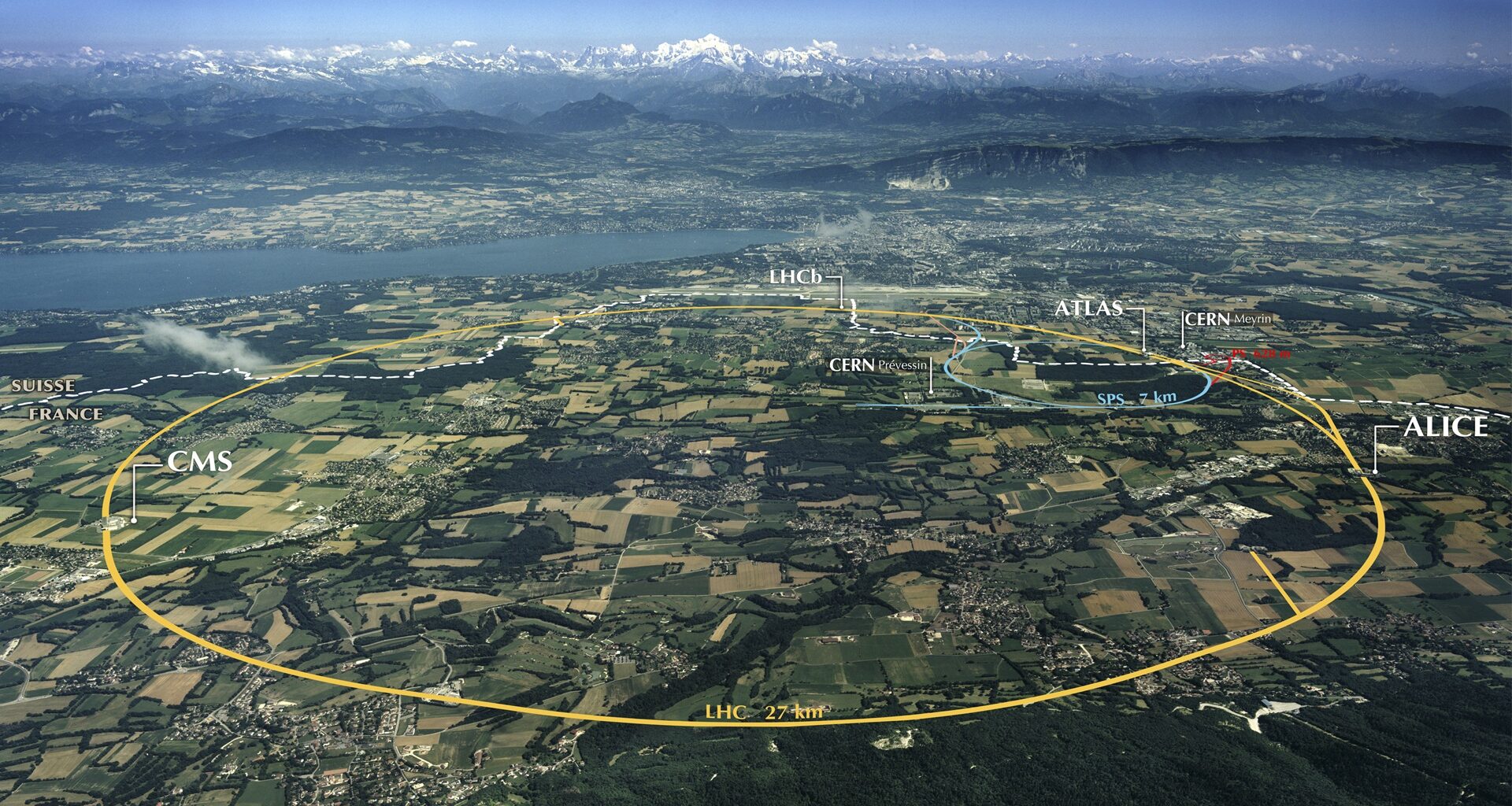
The world’s largest particle accelerator has been supplying heat to thousands of homes in France since mid-January, in an effort to reduce reliance on traditional energy sources and slash CO2 emissions.
CERN’s Large Hadron Collider (LHC), the most powerful particle accelerator on the planet, has provided heating to homes and businesses in the small French town of Ferney-Voltaire for the past two weeks.
This was made possible after the Swiss nuclear research organization activated a new heat-exchange system that captures hot water from the cooling circuits of the 16-mile (27-kilometer) accelerator.
It then feeds the recovered waste heat directly into the town’s district heating network, which was inaugurated on December 12. The network will supply the equivalent of several thousand homes and prevent the emissions of thousands of tons of carbon dioxide (CO2).
Repurposing waste heat
The launch of the system marked the first time that the Large Hadron Collider, better known for smashing protons at near-light speeds, has been tapped as a renewable thermal source.
The accelerator features eight surface points around its underground ring. Point 8, located on the French–Swiss border near the village of Prévessin-Moëns, sits about 1.6 miles (2.7 kilometers) from the town of Ferney-Voltaire. It serves as the connection point for the heat-recovery system.
The installations at Point 8, particularly the cryogenics, need to be cooled with water. As water circulates through the equipment, the equipment cools, and the water heats up.
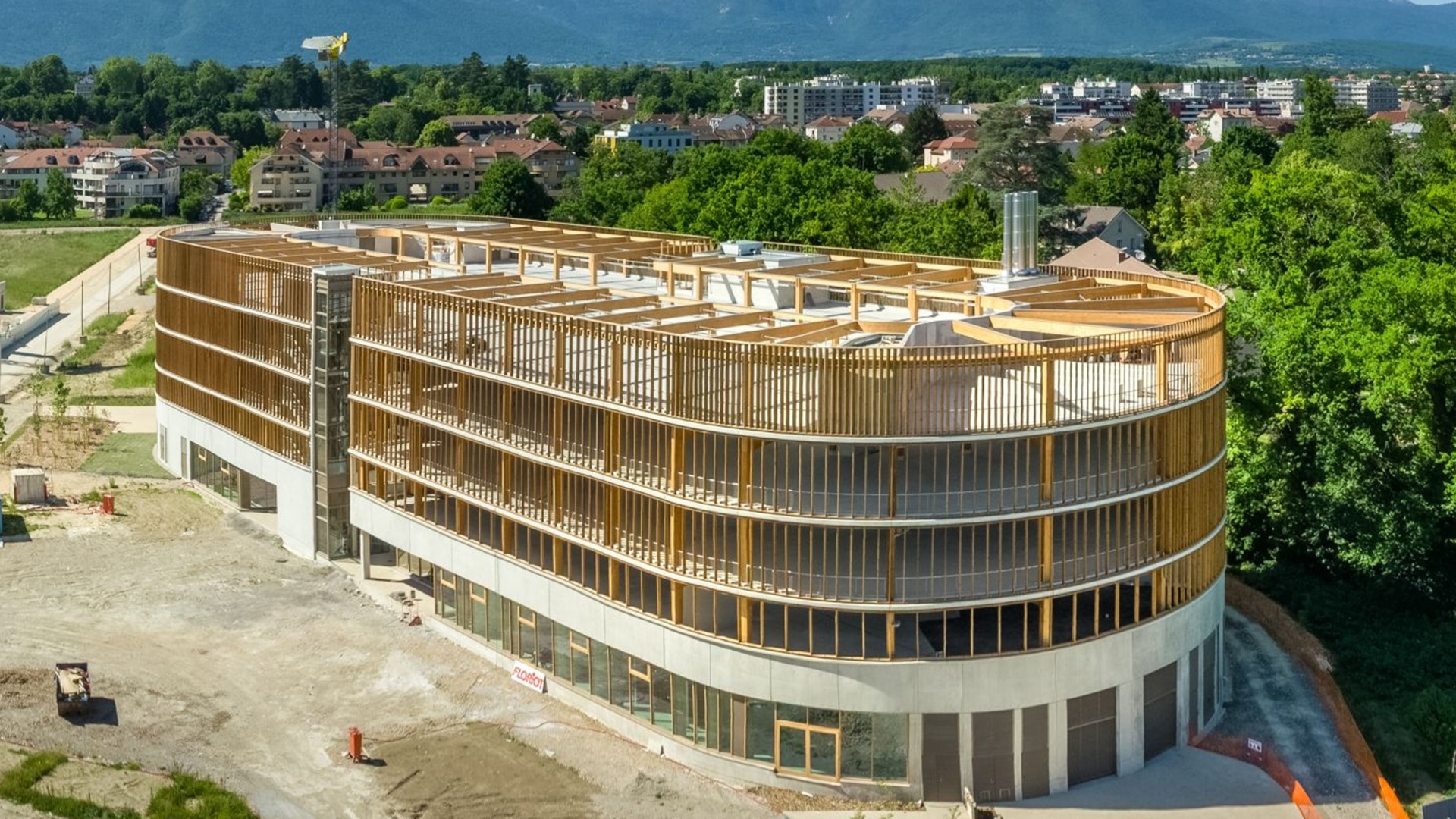 This building houses the link between CERN’s heat exchange system and the heating system for the new commercial and residential area of Ferney-Voltaire.
Credit: Nicolas Gascard/Pays de Gex Agglo
“Typically, hot water would then pass through a cooling tower, releasing heat into the atmosphere so that the cooled water could be reinjected into the equipment,” Nicolas Bellegarde, CERN’s energy coordinator, pointed out.
Under the new set-up, however, hot water first flows through two five-megawatt (MW) heat exchangers, which transfer thermal energy to Ferney-Voltaire’s district heating network.
Warming French homes
As part of the district heating network, CERN supplies heat whenever possible, as long as it does not affect its research operations. Ferney-Voltaire utilizes up to five MW from CERN. The system could potentially deliver twice that amount when the accelerators are fully running.
The timing is especially notable, as the LHC will soon enter Long Shutdown 3 (LS3) to undergo major upgrades for the upcoming High-Luminosity LHC. But despite the multi-year break in collider operations, several systems at Point 8 will continue to be cooled.
CERN will be able to supply between one and five MW to the network during LS3, with the exception of a total of five months over this multi-year period. “Driven by a commitment to environmentally responsible research, CERN has implemented many initiatives to help reduce the impact of its activities on the environment,” CERN officials said in a press release.
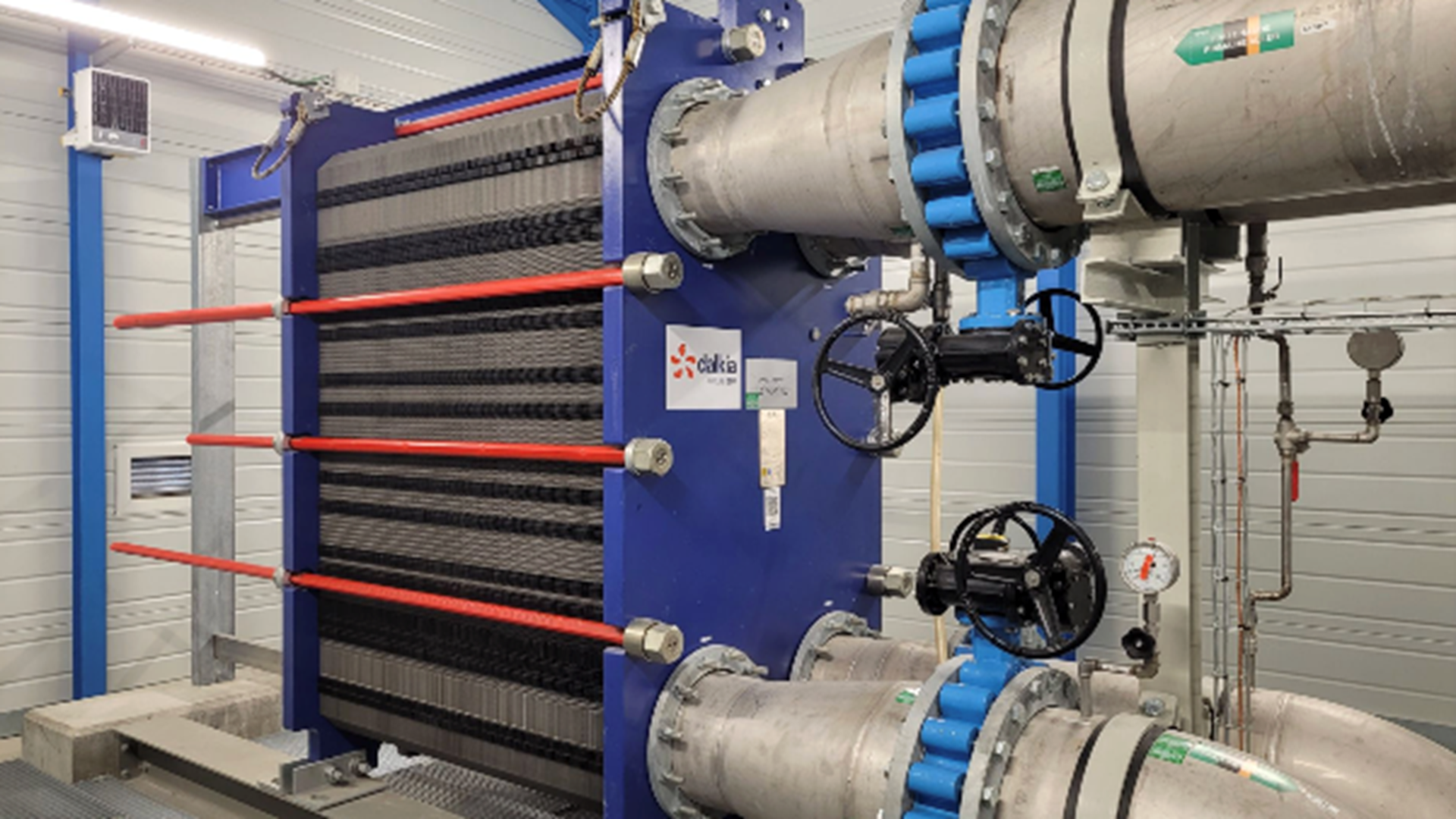 One of the two 5-MW heat exchangers at LHC Point 8.
Credit: CERN
The heat-recovery project is part of the research organization’s broader energy-efficiency strategy, aligned with ISO 50001 requirements. CERN is systematically redesigning its infrastructure to capture and reuse waste heat instead of simply discarding it.
Other projects include the Prévessin Data Centre, which is equipped with a heat-recovery system. It will heat most site buildings from winter 2026/2027. CERN is also planning to recover heat from the LHC’s Point 1 cooling towers to supply buildings at its Meyrin site.
“Together, these initiatives will save 25–30 GWh [Gigawatt-hours] per year as of 2027, marking significant progress in CERN’s responsible energy management,” CERN representatives concluded.