
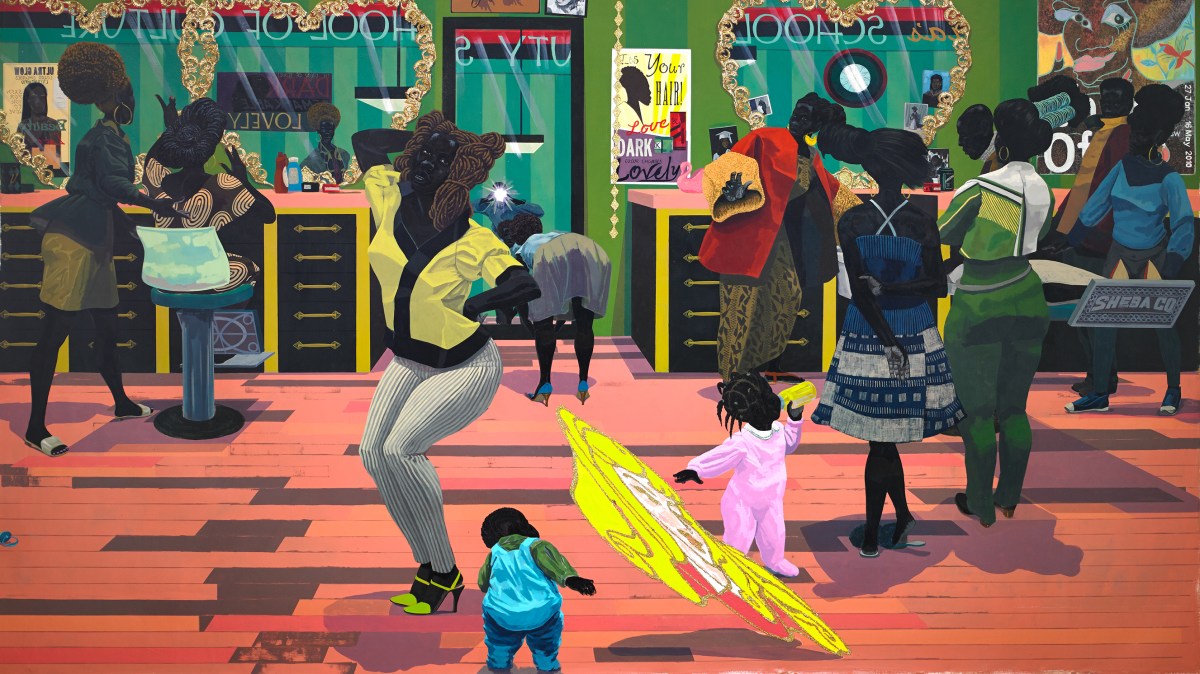
Kerry James Marshall sits at the pinnacle of American contemporary painting, and since 2018 has held the record as the most expensive living African-American artist. And yet here, he remains far from a household name.
I hope many people will see this Royal Academy show, The Histories, for the sheer nourishing pleasure of his visually and intellectually rich work, which largely builds upon, continues and subverts the genre of history painting, which the institution once considered the most noble of them all.
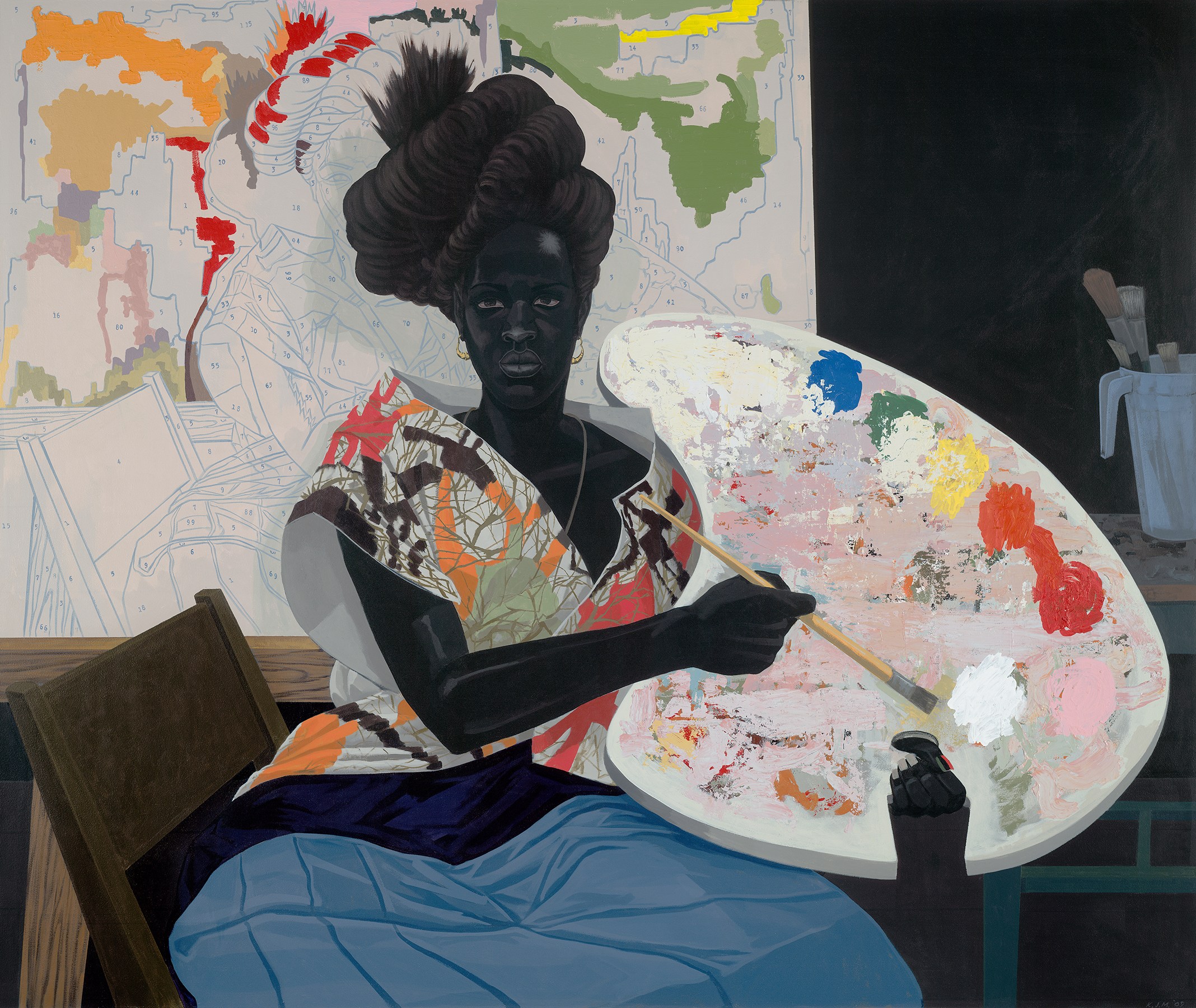
Untitled, 2009
YALE UNIVERSITY ART GALLERY © KERRY JAMES MARSHALL
Since most history painting is now just that — historic — it’s easy to forget how contemporary it was in its day; how relevant to its social and political moment; how stuffed with reference and allegory that would have spoken clearly to those viewing it fresh off the easel. This is one of the many satisfying aspects of Marshall’s practice — you could spend hours soaking up the detail in his monumental, multi-layered canvases.
Marshall is best known for confronting the dearth of black subjects in western art history. Past Times (1997) is a scene of black Americans at leisure that recalls Manet’s 1863 Le déjeuner sur l’herbe. Invisible Man (1986), on the other hand, plays with that historic omission, its black dancing figure almost impossible to see on a black background, with only the trope of the whites of his eyes and his grinning teeth visible.
• Read more art reviews, guides and interviews
But it’s far from Marshall’s only concern. This exhibition, his first in a British institution for almost 20 years and coinciding with his 70th birthday, explores his career to date through 11 distinct bodies of work that consider what it means to be black, particularly in America, with a rigorously inquiring breadth and curiosity, never hectoring nor shying away from complexity.

Untitled (Blanket Couple), 2014
KERRY JAMES MARSHALL. IMAGE COURTESY OF THE ARTIST AND DAVID ZWIRNER, LONDON
As well as those that feel celebratory, such as an imagined portrait of the enslaved painter Scipio Moorhead or De Style (1993), a tribute to the importance of the black barbershop, several works, such as the stunning Abduction of Olaudah and His Sister, 2023, or Cove, 2025 — an expansive shoreline landscape with milling figures that takes time to reveal its grim subject — tackle the complicity in the slave trade of some black Africans. In Untitled (Policeman), 2015, Marshall considers the ambiguity of the black American relationship with the police, when the police themselves are black.
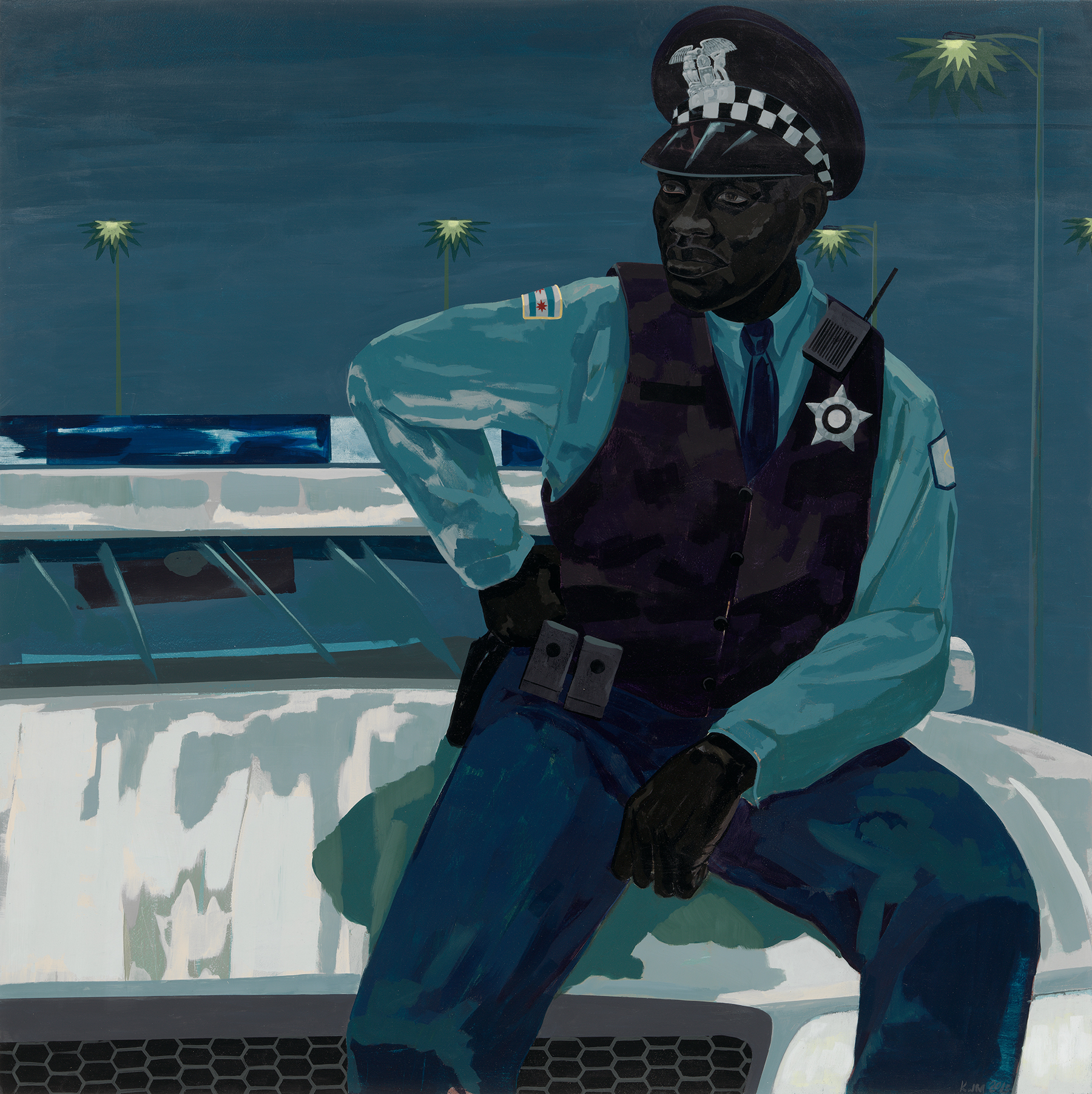
Untitled (Policeman), 2015
KERRY JAMES MARSHALL. PHOTO: THE MUSEUM OF MODERN ART, NEW YORK/SCALA, FLORENCE
This is all explored through the lens of a staggeringly deep understanding of the language of western painting, from Duccio in 13th-century Siena and later Renaissance masters such as Caravaggio or Artemisia Gentileschi, to the likes of Monet and Winslow Homer, alongside a wide-ranging knowledge of the art of Africa and its diaspora, such as Kongo’s nkisi nkondi (power figures) and Haitian Voodoo veves (drawings that invoke spirits).
★★★★★
Royal Academy, London, Sep 20 to Jan 18
Follow @timesculture to read the latest reviews