
India’s commerce minister Piyush Goyal has said the trade deal with the US will soon be “moving towards closure”, and spoke also about how the recent Free Trade Agreement with the European Union was achieved. Here are key takeaway from his interview with HT three days after the signing of the India-EU deal.
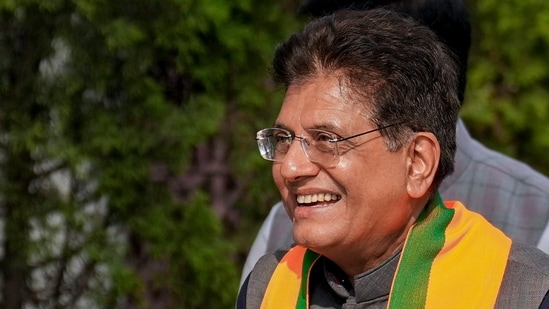
 Union minister Piyush Goyal spoke to HT on trade deals that have been signed, and those in the works. (PTI File Photo)On India-US trade negotiations: ‘Moving towards closure’
Goyal termed the prospective deal “positive” and “good deal”, but did not speak in terms of strict timelines. “We are actively engaged. We never do any deal with a deadline in mind,” he told HT. “When both sides are satisfied, the date will be announced.”
He added, though, “I don’t think there are any sticky issues left to be resolved. We can now look at moving towards closure.”
India and the US have been holding negotiations since early last year, but there was a major hiccup in August when President Donald Trump imposed a massive 50% tariff rate on India, half of that as “penalty” for buying oil from Russia despite the Ukraine war. Since then, talks have resumed in the background, while there have been some overt positive signs too from Trump.
Also read | Under threat from Trump’s US, Canada pivots to India
Deal with Canada next? ‘They are very keen’
With Canadian Prime Minister Mark Carney coming in March, Goyal was also asked about a deal with Ottawa next.
“They are very keen to speed it up. We are working with them on the terms of reference. But, we have to start from scratch,” he explained the status of now.
On whether the deals with the UK and EU could become templates, Goyal was measured in his response: “The UK one was a fantastic deal. This EU FTA is also equally good. However, very rarely can you just emulate one deal because the conditions, economy size, and interests of each country matter. Each deal stands on its own legs.”
Also read | Piyush Goyal hails ‘mother of all deals’ with EU
Steps ahead in India-EU deal: ‘They have been consistent’
Piyush Goyal also spoke about the EU deal in terms of what happens next.
He denied that the EU was more receptive over the last six months — a time when US tariffs affected the global trade order.
“They (EU) have been consistent. They have always worked towards this very sincerely and seriously, right since 2022 when we started the negotiation. I found that they had made up their mind that they have to do a deal with India,” Goyal said.
He said there was some loss of pace in 2024 because of elections first in India and then in the EU. “Their commitment was throughout, and they were sensitive to our sticky issues,” he said.
He also expressed confidence that the ratification of the deal by the EU Parliament “will happen this year, in 2026”. To underline that EU countries are onboard, Goyal cited the example of the German Chancellor recently saying that the agreement must be completed as quickly as possible to create the largest internal market in the world after China.
How Modi-led India negotiates with the world: ‘Difference between the past and today…’
Goyal was asked about learnings from the two big deals India has signed recently — with the UK and now the EU — and he described a difference in how New Delhi now works with the world.
“One of the biggest differences between the past and today is that India is a respected country. People see political stability, they see macroeconomic stability, they see decisive leadership,” he said.
He asserted that the world recognises India’s talent pool. “So, now there is a want and a desire from the other side equally to do business and engage with India,” he added.
Further, he said, India now negotiated from a position of strength. “Earlier, we would be negotiating on the current economy, which is a wrong strategy. PM Narendra Modi has changed this. Modiji has said, ‘You are negotiating the future FTA.’ The past is not material,” he said, “Today’s $4 trillion economy of India is not material. Our $30 trillion economy in 2047 is what you are negotiating. And that is what is attracting the people on the other side.”
He added, “So, now when I negotiate, I negotiate either as an equal or as the person who’s got more to offer than to receive. And therefore, we get super deals.”
Manufacturing a big focus: ‘Our quality will improve as the demand increases’
On the EU deal, Goyal was asked: To what extent is the EU deal going to boost manufacturing in India?
“Hugely,” he replied, “In most sectors, we got zero duty from day one. Out of the labour-intensive exports of $35 billion, $33.5 billion became zero duty on the first day.”
He cited figures to underline the potential: “Bangladesh exports $30 billion to the EU versus our $7 billion. Bangladesh was an LDC (Least Developed Country) with zero duty. We had MFN (Most Favoured Nation) duty and were paying up to 12% duty. Now, we are at zero. Just textile exports alone can be $40-50 billion; EU imports $253 billion.”
How would India improve quality to meet this demand, though, he was asked. “If we can export $7 billion, we can export $70 billion. Our quality will improve as the demand increases. I have been an advocate, following Prime Minister Modi, who has been talking about quality for 14 years,” Goyal said.
“We are focused on promoting manufacturing and services in a big way. We will continue to give a big push to innovation, R&D, startups (tech, agritech, biotech), and logistics. International engagements will continue with aligned partners, particularly the developed world,” he further said.