
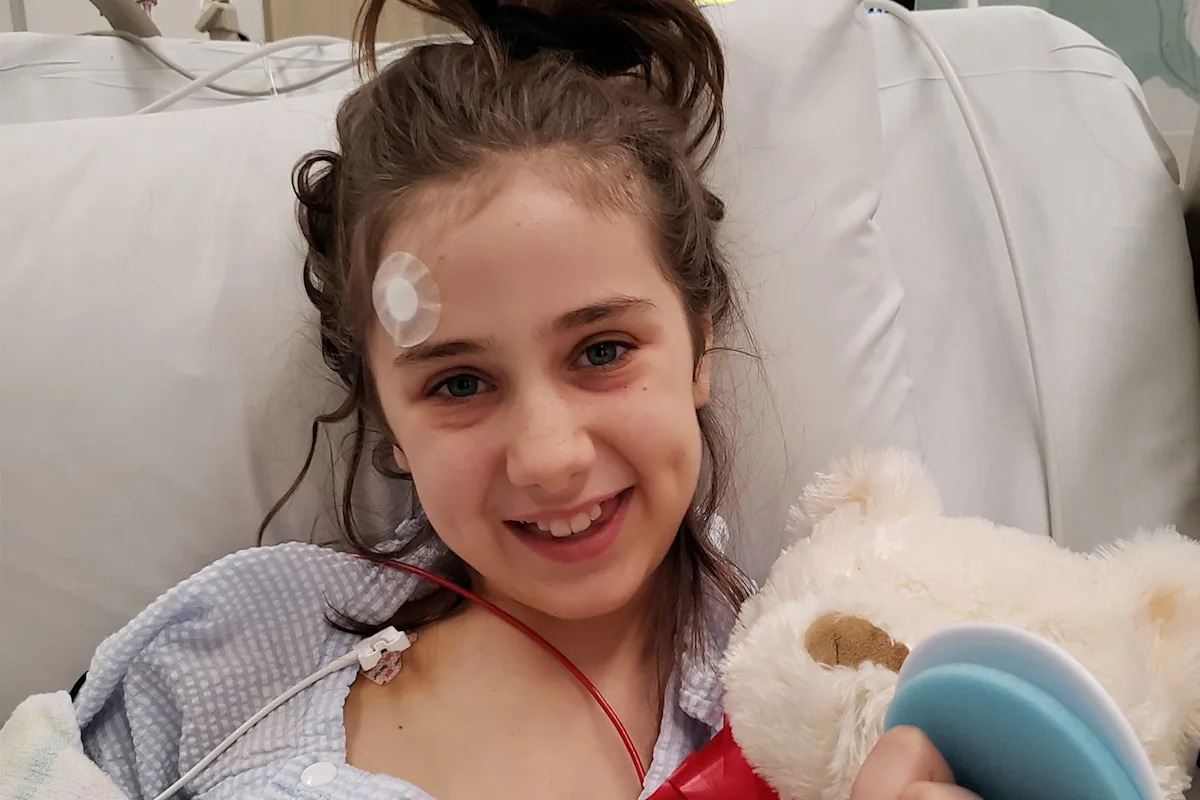
NEED TO KNOW
A family in Australia lost their 11-year-old daughter to brain cancer, and they are now attempting to spread awareness about the disease and childhood loss
Abbey Barrett was 10 years old when she was first diagnosed in 2023
She died at home in her mother’s arms about a year later
A family in Australia lost their 11-year-old daughter to brain cancer, and they are now attempting to spread awareness about both the disease — and what they wish they had known sooner about childhood terminal illness.
Abbey Barrett’s parents initially noticed something might be wrong with their daughter in the year leading up to her diagnosis.
“We noticed she was getting more tired than normal, and she was having learning difficulties at school,” her mom, Justine Barrett, 43, told PEOPLE.
“She then developed hand tremors that were dismissed by our local GP — put down to genetics because Abbey’s paternal grandmother has hand tremors. Then Abbey started having some vision issues, for example, double vision after reading a lot. It was through the optometrist that her situation escalated to an ophthalmologist and eventually an MRI,” she continued.
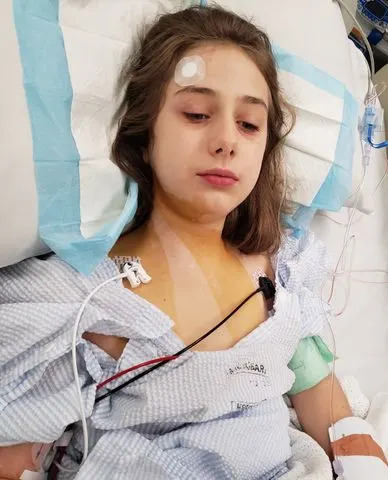 Abbey Barrett in the hospital
Courtesy of Justine Barrett
Abbey, then 10, was diagnosed with a brain tumour in June 2023. She died almost a year later in June 2024.
Justine explained that Abbey’s cancer was due to a “genetic glitch.”
“The tumor was the size of her fist, wrapped around her brain stem,” she explained. “Soon after, we found out she had Li-Fraumeni syndrome, meaning every cell in her body was missing a vital checkpoint for programming cell death if uncontrolled growth was occurring. This meant Abbey was destined to have cancer at a young age. Normally, Li Fraumeni is a genetic condition. For Abbey, it was an incredibly unlucky genetic glitch.”
Abbey had an “intense year of treatments,” which included “chemotherapies, radiotherapy and a heap of alternative and supportive therapies.”
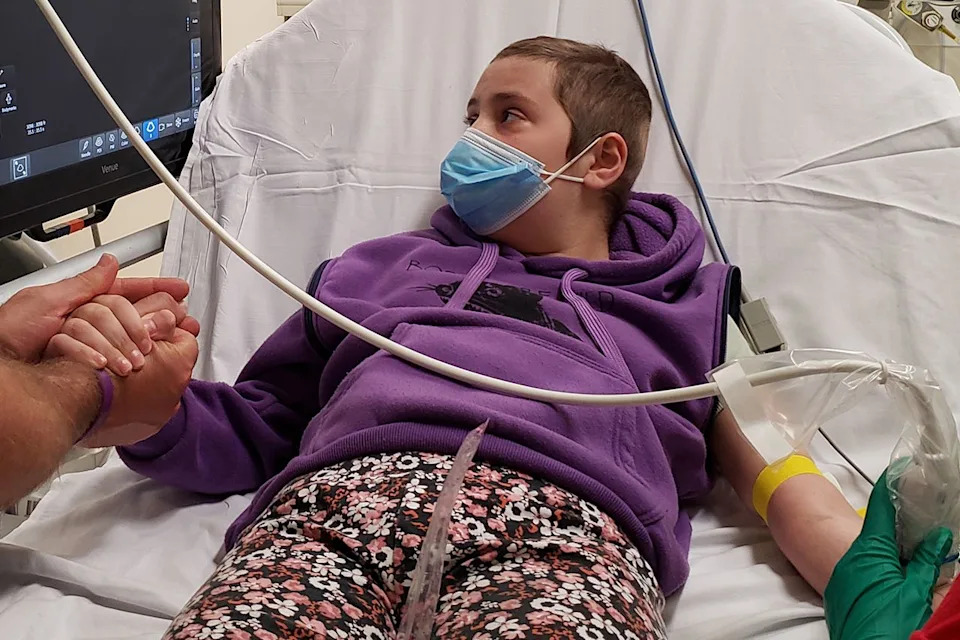 Abbey Barrett in the hospital during brain cancer treatment
Courtesy of Justine Barrett
“The radiation shrunk her down and steroids puffed her up. During that time, we almost lost her twice. It was an incredibly difficult year of treatments for Abbey. Over that time, she gradually slipped further and further away. She died at home, in my bed, in my arms, a year after her diagnosis,” Justine said.
Never miss a story — sign up for PEOPLE’s free daily newsletter to stay up-to-date on the best of what PEOPLE has to offer, from celebrity news to compelling human interest stories.
“She knew she was dying,” the mother said. “Along the way, I had to have conversations with her about what that meant. We decided that when you die, you go to a park that’s full of loaded fruit trees and puppies — the ‘dog park’ we called it. We also decided that time doesn’t exist in the dog park, and that she wouldn’t even get a chance to miss us before we were all there with her. I hope so much that is true.”
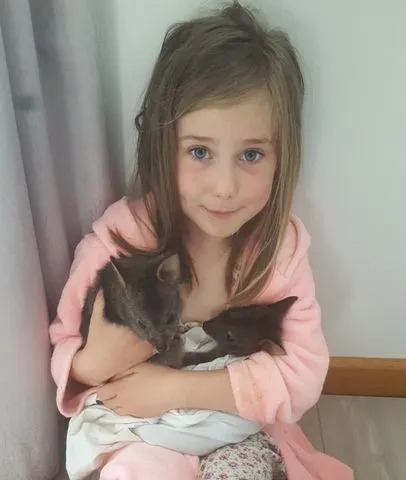 Abbey Barrett before her diagnosis
Courtesy of Justine Barrett
Justine went on to say that there are several key things she has learned following her family’s experience with losing Abbey — specifically, things she would like to see changed about the way childhood terminal illness is handled within the medical system.
“One of the challenges with child illness is that it’s an incredibly sensitive topic. And at times, we felt that medical staff avoided telling us things that were too hard. The initial conversations with oncologists told us information like Abbey had a brain tumor and had Li-Fromeni syndrome, but withheld information like the fact that she would likely die within 18 months,” she explained.
“That was something I found out via Google. Doctors always say, don’t Google it, but what choice did I have? I understand that these things are hard to talk about, everybody is different and there are many unknowns, but I think those brutal and honest conversations form part of the duty of care,” she added.
Justine also shared that most people do not realize the immense “burden of care” placed on parents and guardians in “an already terrifying situation.” She said that sometimes she and her husband were faced with the near-impossible decision of taking Abbey to the hospital in the middle of the night — where hospital staff would be sparse and Abbey would be “in terror” — or allow her to continue to sleep comfortably in her bed and hope she would be okay.
She added that she also wished she had been made aware of the concept of “death doulas” (also known as “end of life doulas”) — professionals who offer non-medical, practical support to families during end-of-life care — sooner.
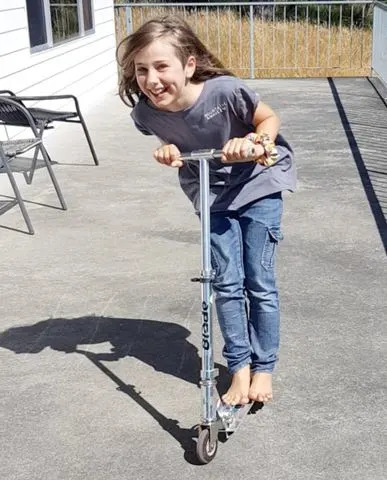 Abbey Barrett
Courtesy of Justine Barrett
“We had a great pediatric palliative care doctor hold our hands to some extent, but, naturally, the practical decisions around Abbey’s death were left to us. As though we knew what we were doing! … We were given a list of funeral homes in the area and told to give each one of them a call to find out who suited us best. I can tell you, at that point in time I did not have the capacity to do that,” she recalled.
Finally, Justine said she now believes that medically-assisted death should be available to terminally ill children.
“It seems incredibly unfair that we can put our pets and adults ‘out of their misery,’ yet children still don’t get that privilege. I understand that it’s complex, but the last 10 hours of Abbey’s life were the worst of my life. Listening to your child slowly drown in fluid building up in their lungs is a torture that I wouldn’t wish upon anyone,” she said.
Justine said that she, her husband and their surviving two daughters, ages 16 and 15, are now left facing a lifelong journey with grief.
“Losing Abbey felt like going from a world of color to a world of black and white. Everything else is still where we left it, but nothing has the same shine to it anymore. It’s harder to find joy. We are still a family of five, but we exist across two different realms, and we still feel so out of balance. I don’t think this will ever change,” she explained.
“The grief is not just for the loss of Abbey … my other girls lost their childhood the day she was diagnosed. They were a trio of sisters, the ‘silly sisters.’ That’s what they used to call themselves, but not anymore,” she said.
Justine is now on a mission to shine a light on both brain cancer and child loss so that one day others might not have to experience what she and her family did.
“Brain cancer is the disease that kills the most kids in Australia. We are failing our kids. I feel like I failed Abbey. It’s not logical, but I’m her mom. I am supposed to raise her,” she said.
“I would love to see us put some serious investment into advancing brain cancer treatments. Brain cancer is extremely difficult to treat for a number of reasons. But if we can crack that code, I think the flow on effects to other cancers would be huge,” she added.
Read the original article on People