
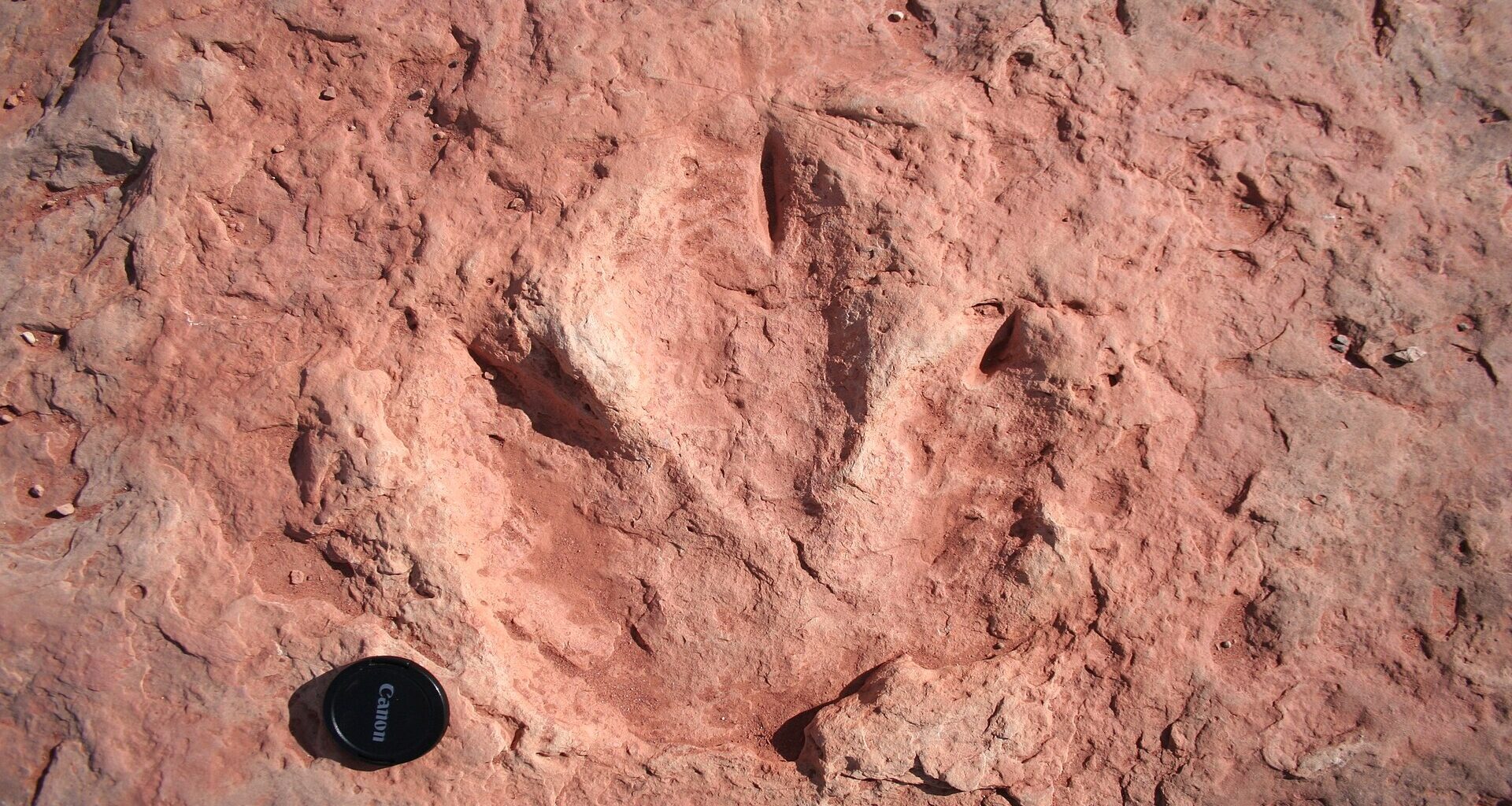
Two groundbreaking dinosaur track discoveries are changing the outdated image of the Jurassic period in South Africa; it turns out the world’s ferocious prehistoric beasts continued to roam here long after catastrophic volcanic eruptions supposedly wiped them out.
In a study recently published in the South African Journal of Science, dinosaur track hunters reported traces of dinosaurs on a remote stretch of coast in South Africa’s Western Cape, from a time they thought dinosaurs ceased to exist.
As described in The Independent, a monstrous eruption of lava approximately 182 million years ago eliminated the abundant dinosaur population that once inhabited this picturesque region. Following this event, the dinosaur fossil record in the area goes abruptly quiet—or so researchers thought.
A long, dark stretch of silence ensued for almost 50 million years.
However, that understanding changed when a team of ichnologists arrived in Knysna on the Western Cape coast, where a young boy had even discovered a theropod tooth in 2017.
Typically, these dinosaur hunters spot tracks in these coastal aeolianites, or cemented sand dunes, that are between 50,000 and 400,000 years old.
Little did they know, when team member Linda Helm spotted two dozen tracks, that the site would actually date back 132 million years, placing the animals in that supposedly absent period and effectively rewriting the history books.
Mean beasts in beautiful surroundings
Along a coastline that would have been “rugged, remote, and breathtakingly spectacular” during the prehistoric age, these beasts would have been visible across a scene of idyllic beauty, according to the study authors.
An article in The Conversation described how some dinosaurs walked on sandy, inter-tidal channel bars, while the feet of others sank into soft mud forming the bed of the channel. They even waded or wallowed in the muddy fill of abandoned channels, leaving behind “squishy structures.”
However, South Africa’s history was wrought with geological conflict as erupting volcanoes destroyed traces of preexisting dinosaurs while those beasts were still alive. Researchers previously reported that while a few survived, they were the last to populate the Karoo Basin, as noted by The Independent.
The team decided to visit a small patch of rock that formed during the early Cretaceous period, known as the Brenton Formation. Although these cliffs rise only 16 feet from the shore, the dozens of tracks left behind by unidentified dinosaurs suggest that a sizeable population may have survived the ancient “lava storm.”
The youngest dinosaur tracks in South Africa
At an estimated 132 million years old, they are the youngest known dinosaur tracks in southern Africa, and only the second recorded tracks from the South African Cretaceous, as per Phys.org.
Despite the discovery, the ichnologists could not confirm exactly which dinosaurs these footprints belonged to.
“It can be challenging at times to distinguish theropod tracks from ornithopod tracks,” they said in The Independent.
However, the fact that early Cretaceous tracks have been found in both the Brenton and Robberg Formations proves that further investigation might reveal that the monumental disaster did not extinguish these beloved and fearsome dinosaurs, at least, not yet.
The study is available in the South African Journal of Science.