

Monday, 2 February 2026, 3:34 pm
Opinion: Eugene Doyle
In early October 2020 screens started flashing at the
Freedman’s Bank Building in Washington DC, headquarters of
the Office of Foreign Asset Control (OFAC), the US
Treasury’s sanctions enforcement arm. Intelligence from New
Zealand and their own automated systems had detected a
violation of United Nations Security Council Resolution 2397
– a centrepiece of the American campaign to bring down
North Korea’s nuclear and ballistic weapons programme.
Agents scratched their heads: what was happening in New
Zealand, normally a docile, compliant, backwater? No, this
is not a Le Carré novel; it actually
happened.
Someone was transferring money to the North
Koreans, a breach of the US Treasury’s Destination Country
and Specially Designated Nationals (SDN) list. Someone was
violating US enforcement of sanctions on North Korea.
Someone was going to pay for it.
OFAC operates a
sophisticated global financial surveillance network that
monitors international wire transfers through the Society
for Worldwide Interbank Financial Telecommunication (SWIFT)
system, which processes trillions of dollars in cross-border
payments daily. Because the US dollar dominates
international finance and most transactions ultimately clear
through American banks, OFAC effectively monitors the global
financial system.
OFAC was soon in touch with the US
Embassy in Wellington, the New Zealand Security Intelligence
Service, the New Zealand Treasury and senior political
figures. Police and senior public servants in Wellington
were scrambling to get to the bottom of it. Lights stayed on
at the Ministry of Foreign Affairs and Trade, the Office of
Prime Minister and Cabinet, and the Government
Communications Security Bureau. Cyber security teams were
activated. Interdepartmental protocols were triggered. “We
thought: This was a big fucking deal,” one of New
Zealand’s top intelligence minds said (off the record). It
was North Korean. It was October. So why not call it Hunt
for Red October?
Face to face with “Red
October”
Advertisement – scroll to continue reading
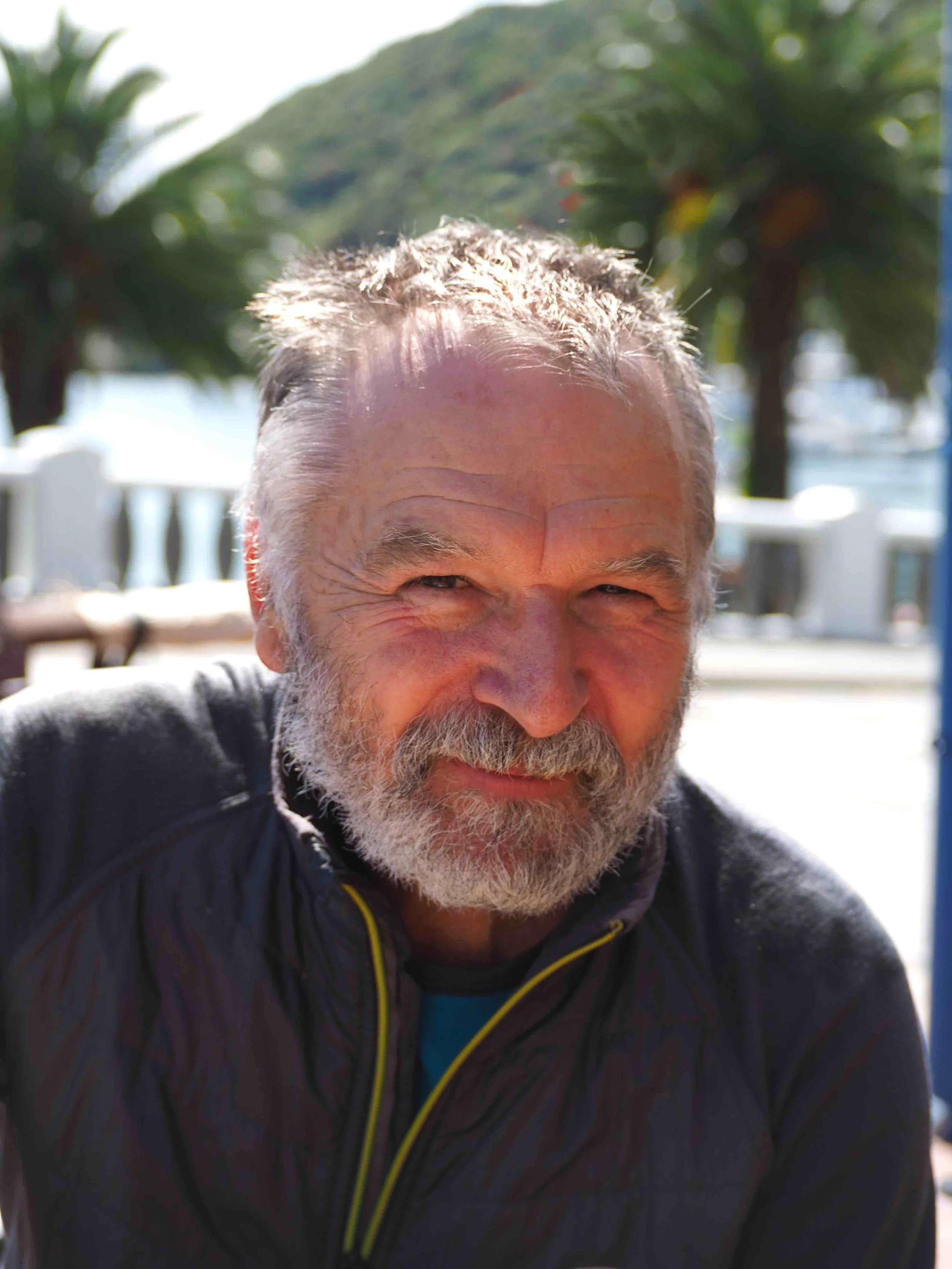
Red October was identified as Peter
Wilson, a man who had travelled to North Korea multiple
times. Within days, police and intelligence agencies
assembled a squad for a raid on his address in Highland
Park, a quiet suburb in East Auckland. Red October never saw
it coming.
19 October. Knock, knock! Peter Wilson
opened the door to the task force. “Would anyone like a
cup of tea?”
After this, the spy story goes wonky,
goes pear-shaped, splutters to an anticlimactic halt. But it
also gets genuinely interesting.
Peter Wilson was 80
years-old at the time and had helped organise funds for
Covid-19 PPE masks to be sent via Indonesia to the North
Korean Red Cross. The isolated country was being ravaged by
the disease. Some Christian ministers, Peter Wilson and
other members of the New Zealand Democratic People’s
Republic of Korea Society, had cobbled together $USD 2,000
for masks. Hundreds of thousands of dollars were wasted
“unmasking” him.
“Go ahead, make my day,
punk!”
With the raid still in progress, Peter
Wilson called his lawyer, Matt Robson. By the time he
arrived, phones, laptops and five boxes of documents had
been seized and Wilson had been threatened with prosecution
for breaches of sanctions legislation. The Honorable Matt
Robson is both Wilson’s lawyer and a former Minister of
Disarmament in the New Zealand government. In the coming
weeks he had often acrimonious exchanges with various
authorities all the way up to cabinet
ministers.
“When it came down to threats that
‘We’re going to prosecute you for these breaches of New
Zealand legislation,’ I told them, ‘Go ahead, make my
day! The New Zealand public will be interested in you
prosecuting Peter and these ministers for the heinous
‘crime’ of helping people to protect themselves against
Covid in North Korea!’ Imagine: putting a respected
agronomist, Peter Wilson, who has served the United Nations
and his own country in many parts of the world, who has
helped the poorest people in many countries, including North
Korea, imagine putting him through that?” Robson told me
this week.
The group had even put out a press release
about the donations; they weren’t hiding anything. We will
probably never know who first ‘unmasked’ the plot to
save lives in North Korea. Was it OFAC, New Zealand cyber
spies, a bank staffer or simply a knuckle dragger at the US
Embassy in Wellington who happened to read the press
release? Wilson described it all as a “sick joke” but
also one that left his partner shaken by the home invasion.
In the end the government gave up; it was all too silly and
the Crown Law Office advised them to let it go.
It
does give you a flavour, however, of the power and reach of
OFAC. UN Special Rapporteur on the Occupied Palestinian
Territories Francesca Albanese is one of many humanitarians
on the OFAC hit list, her ability to do essentials like pay
for medical procedures, travel or even buy a meal, blocked
by their long reach into the global banking system. The
raid on Wilson’s home also shows the extent to which
countries like New Zealand are willing to hurt civilians at
home and abroad in order to please the
Americans.
2026. The West continues its starvation
siege.
North Korea has drifted out of the news in
recent times but earlier this month I received an email from
the New Zealand Democratic Republic of Korea Society
(NZDPRK) – one of 65 such friendly societies around the
world. It included recent correspondence with the New
Zealand ministry of foreign affairs. The letter called the
sanctions regime against North Korea unethical and immoral
and that triggered the series of articles I have now
written.
The NZDPRK criticised the New Zealand
government for sending RNZAF Poseidon P-8A maritime patrol
aircraft and HMNZS Aotearoa to the East China and Yellow
Seas to enforce a siege whose only
tangible outcome has been to kill civilians. Eleven
Western governments have been doing the same since the
resolution was converted into a brutal starvation siege at
the end of 2017. My article “Blunderfest”
details the strategic incompetence of the current
approach.
Intrigued by the letter, I interviewed
Peter, who is the Secretary of the NZDPRK Society. My first
question was: how on earth did you get involved with North
Korea?
He had been an agricultural specialist who was
sent to North Korea with the International Fund for
Agricultural Development (IFAD). In various capacities he
has visited the North eight times.
IFAD is a
specialised agency of the United Nations that works to
address poverty and hunger in rural areas of developing
countries. Peter went there, not to support their
government, but to help people get enough food to survive.
Commendable. In the process he came to realise the damage
countries like ours are doing in pursuit of strategically
flawed goals and he had the moral courage to do something
about it.
We’ve been here before
We’ve
been here many times before. On the death of hundreds of
thousands of Iraqi children as a result of US sanctions and
blockades, Secretary of State Madeleine Albright infamously
sighed: “This is a very hard choice but we think the price
is worth it.”
Israel trots out the same style of
arguments (Hamas are killers) in justifying their
incineration of tens of thousands of men, women and children
in Gaza. From Hiroshima to Yemen, passing by Vietnam,
Cambodia, Guatemala, Libya and many others, the West has
made civilians pay the butcher’s bill for the ‘sins’
of their rulers.
In respect to North Korea and the
West’s pressure campaign, the Russians have challenged the
legality of their actions:
“Acting in circumvention
of the UN Security Council, these “enthusiasts” have
taken the liberty to monitor compliance with the UNSC
sanctions against the Democratic People’s Republic of
Korea (DPRK).”
“The Russian Federation is
seriously concerned about the continuing aggravation in
Northeast Asia as the result of irresponsible actions by the
United States and its allies. There is no doubt that the
policy of mounting sanctions pressure is misguided, useless
and inhuman, and should be replaced with peaceful diplomacy
based on mutual respect,” Foreign Ministry Spokeswoman Maria
Zakharova said in 2024. Once again I ask: Why are we
ceding the moral high ground to the Russians and Chinese on
this issue?
Madness is repeating the same
mistakes
Madness is repeating the same mistakes and
expecting different outcomes. Isn’t it time we accepted
that the West has lost all rights to be the Sheriff and
Judge of the World? Isn’t it time to stop the Wars without
Strategy, this endless brutalization? Isn’t it time for
the countries of the Western world to seek a better
path?
Eugene Doyle is a writer based in
Wellington. He has written extensively on European
geopolitics, Middle East, and peace and security issues in
the Asia Pacific region. He hosts the public policy platform
solidarity.co.nz.
Contributor
Eugene Doyle is a writer based in Wellington, New Zealand. He has written extensively on the Middle East, as well as peace and security issues in the Asia Pacific region.