

Venkat Raman
Auckland, February 3, 2026
In a significant departure from tradition, Union Finance Minister Nirmala Sitharaman presented the Union Budget for 2026-2027 at a Special Sunday Session on February 1, 2206.
This marked the first such financial blueprint to be delivered from the newly designated Kartavya Bhavan, symbolising a shift in the administrative heart of the nation.
This Ninth Budget under her stewardship was framed not merely as an annual accounting exercise but as a strategic roadmap for the nation’s journey towards becoming a developed economy by 2047.
Ms Sitharaman opened her address by acknowledging the stability of the economic trajectory over the last 12 years, noting a growth rate of around 7% despite a volatile external environment.
The Budget, described as unique for being driven by the power of youth, sought to balance the government’s ambition for high-tech industrial leadership with the necessity of social inclusion.

The Tripartite Framework
The structure of this Budget was notably thematic, built upon three central pillars or duties.
The first focused on accelerating and sustaining economic growth through productivity and resilience. The second aimed to fulfil the people’s aspirations by building their capacity. The third was aligned with the vision of progress for all, ensuring that resources and opportunities reach every family and region.
This tripartite framework differed from previous years by more explicitly linking fiscal allocations to specific moral and national duties, moving beyond the traditional sector-by-sector approach to a more holistic vision of a resilient and self-sufficient nation.
This thematic approach allowed the government to present a unified strategy that addresses both immediate economic needs and long-term structural goals.
One of the primary highlights of this Budget was the aggressive push for manufacturing in frontier sectors.
Ms Sitharaman proposed a new scheme for Biotechnology with an outlay equivalent to approximately $2 billion over the next five years. This initiative is designed to establish the nation as a global hub for biologics and biosimilars, which is particularly relevant as the national disease burden shifts towards non-communicable conditions like cancer and diabetes.
Similarly, the national semiconductor mission has been expanded into a second version, with its outlay increased to approximately $8 billion. This funding is intended to fortify supply chains and develop domestic intellectual property in chip design, signalling a clear intent to move up the value chain from basic assembly to high-end technology and research.

The importance of Infrastructure
Infrastructure remains the backbone of this administration’s economic strategy.
The Budget proposed a significant increase in public capital expenditure, raising the allocation to approximately $240 billion for the upcoming financial year.
A standout feature of the infrastructure plan is the development of seven high-speed rail corridors, intended to act as growth connectors between major urban hubs. These corridors will link vital economic centres, facilitating faster movement of goods and people.
The government has turned its attention to smaller cities, proposing the creation of city economic regions. This involves a challenge-based funding model where $1 billion will be allocated per region over five years to enhance modern infrastructure and basic amenities.
For the micro, small, and medium enterprises sector, which remains a vital engine for employment, the Minister introduced a comprehensive support system.
A new growth fund was proposed to create future champions by providing equity support, with an initial corpus of $2 billion. To address the perennial issue of liquidity, the Budget proposes to mandate a digital platform for all purchases from small businesses by central public sector enterprises. Additionally, the government plans to develop a cadre of corporate assistants in smaller towns to help small businesses navigate complex compliance requirements at an affordable cost.
These measures are designed to reduce the regulatory burden on entrepreneurs and encourage the formalisation of the economy.
The Social and Agricultural Reforms
The social sector and agricultural reforms also received substantial attention.
The introduction of a multilingual artificial intelligence tool is designed to provide farmers with customised advisory support and integrate agricultural portals to reduce farming risks.
In the health sector, the Budget addressed the critical gap in mental healthcare by announcing the establishment of a second national institute of mental health in the northern part of the country.
Education and sports were not left behind, with the launch of a dedicated sports mission aimed at transforming the sector through talent pathways and sports science integration over the next decade. These social initiatives reflect a commitment to human capital development as a prerequisite for sustained economic growth.
On the fiscal front, Ms Sitharaman demonstrated a continued commitment to prudence.
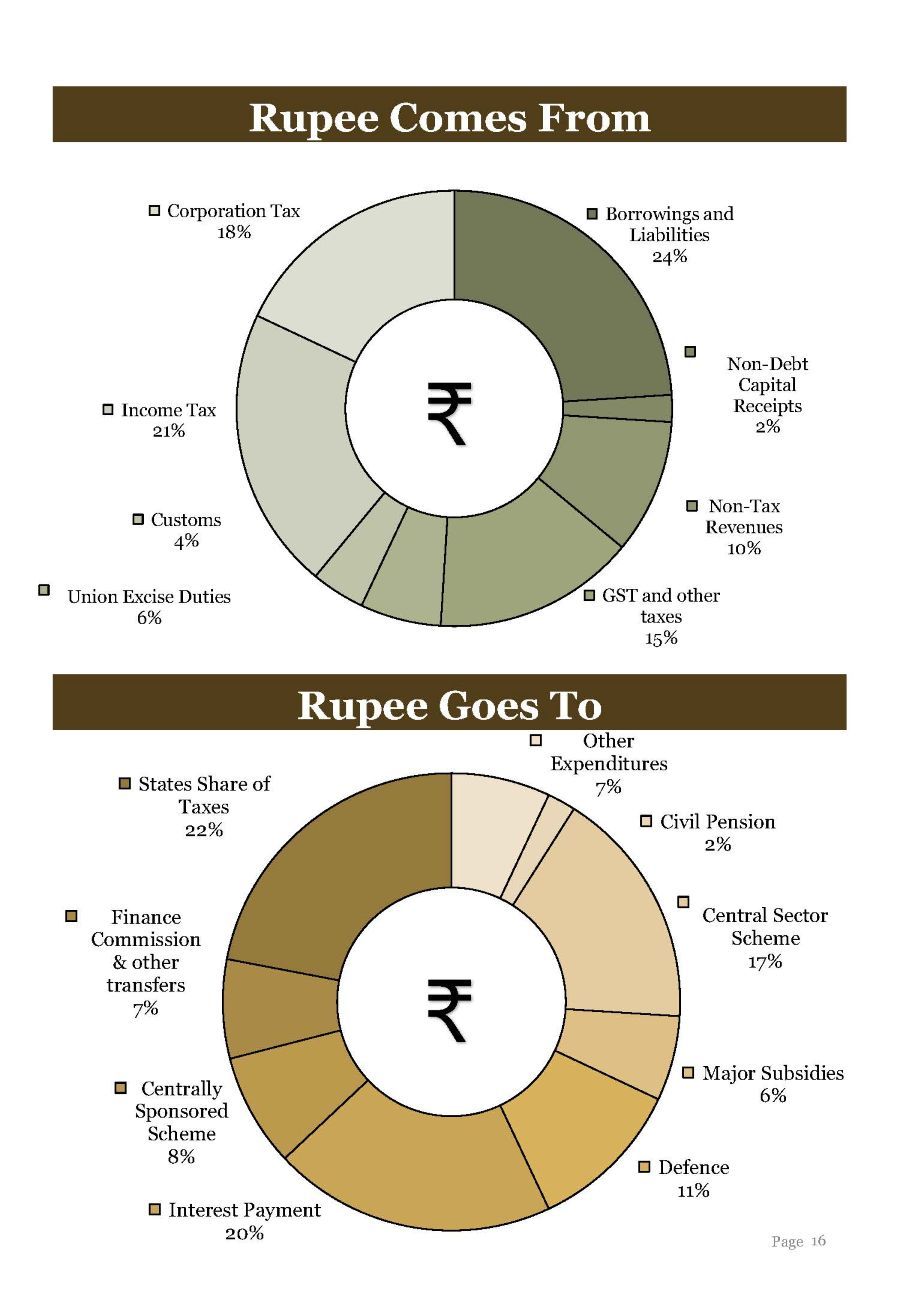
The government accepted the recommendation to retain the vertical share of tax devolution to states at 41%. The fiscal deficit for the upcoming year is estimated at four point 3% of the Gross Domestic Product, down from four point 4% in the previous year.
This trajectory aims to reach a Debt-to-GDP ratio of approximately fifty % by the early part of the next decade, which Ms Sitharaman noted would free up resources for priority sector lending.
This focus on fiscal discipline is intended to maintain macroeconomic stability and attract foreign investment by demonstrating a responsible approach to public finance.
The Tax Proposals
The tax proposals introduced a complete overhaul of the direct tax system.
Ms Sitharaman announced that a New Income Tax Act will come into effect from April 1, 2026.
This revised code is intended to simplify rules and redesign forms so that ordinary citizens can comply without professional assistance.
In a move to reduce litigation, a one-time six-month foreign asset disclosure scheme was introduced for small taxpayers to declare overseas assets below a certain size with immunity from prosecution. Several technical defaults that previously led to prosecution have been decriminalised or converted into simple fees to enhance the ease of doing business.
These reforms represent a significant step towards a more transparent and taxpayer-friendly administrative regime.
Stock Markets Volatile
However, the stock markets reacted with sharp volatility to the fine print of the Budget.
While indices initially rose in anticipation, the main market index plummeted by over one thousand eight hundred points, and the broader index fell significantly by the close of the session. This negative reaction was largely attributed to the hike in the securities transaction tax on futures and options trades. The Minister proposed raising this tax on futures to zero point zero five % and on options premiums to zero point fifteen %. Investors viewed this as a measure to curb excessive retail participation in the derivatives segment, which, combined with the absence of capital gains tax relief, led to aggressive selling across brokerage and heavyweight stocks.
Despite the market’s immediate nervousness, the Budget’s broader emphasis was on long-term structural strength.
For instance, the tax holiday provided until 2027 for foreign companies offering global cloud services from domestic data centres is a clear bid to capture the global digital economy. Similarly, the reduction of the basic customs duty on seventeen cancer drugs and rare diseases provides direct relief to patients, reflecting the inclusive side of the developmental agenda.
The government is betting on a productivity-led growth model that prioritises manufacturing and exports as the true drivers of a developed nation.
In summary, the Union Budget for the upcoming financial year represents a calculated trade-off between immediate market sentiment and long-term industrial muscle.
By focusing on frontier technologies, massive infrastructure spending, and a simplified tax regime, the government is laying the groundwork for the next phase of economic transformation.
While the financial community may have been spooked by the increased costs of trading, the administration appears steadfast in its belief that fiscal discipline and high-tech manufacturing are the paths to prosperity.
As the Nation transitions to the new tax act and begins the rollout of its ambitious rail and semiconductor projects, the impact of these policies on ground-level employment and regional development will be the true measure of its success in the years to come.