
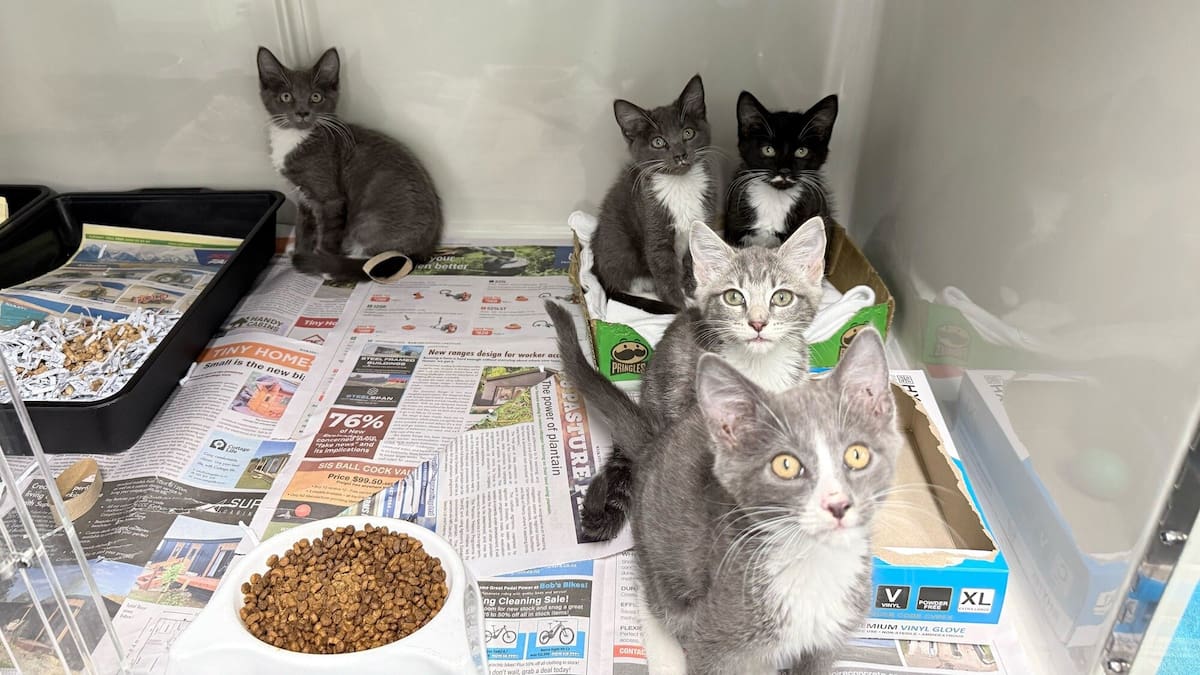
In one recent case, an adult cat and her five kittens were dumped at the centre, in a cage, and staff were left with no other choice but to take them in.
Hamilton Centre manager Kyla Robb, with the mother cat who was dumped in a cage with her five kittens. Photo / Malisha Kumar
They were told that the felines were asked to be dropped off to the SPCA by a member of the public on behalf of their owners, who moved overseas.
The kittens were about 5 weeks old and “fairly healthy”.
But the centre was “so full”, and Robb had no idea where to put them.
Luckily, a few cats were adopted the same day, and the feline-family of five were able to stick together.
“But if we hadn’t had those adoptions, I really don’t know what we would have done,” she said.
Being at full capacity is a constant dilemma at the centre, because while SPCA’s duty is to care for sick, injured, and stray animals, they’re often left dealing with unwanted pets who already have homes.
Although animals can sometimes be transferred elsewhere, most SPCA centres nationwide are also jam-packed.
“The assumption is that because we’re SPCA, we deal with everything. We don’t deal with everything, even when it comes to cats,” she said.
“We can only deal with the sick, injured, and stray animals.”
Robb emphasised that people need to call ahead before turning up with unwanted animals.
She said there were alternative options the SPCA helped with, such as other rescue agencies, advice, sometimes temporary support during hard times, and food.
“There are other things we can do to keep animals happy and safe out in the community without bringing them into the centre,” she said.
SPCA head of animal care operations Selina Francisco. Photo / Supplied
SPCA head of animal care operations Selina Francisco echoed the message, asking the public to contact their nearest SPCA centre first before taking an animal anywhere.
“This allows our teams to gather pertinent information from you about the animal(s), so we can make the best plan to manage their care and needs,“ she said.
Francisco said all SPCA centres nationwide were at “very high capacity” during kitten season, and stressed the importance of responsible pet ownership, including desexing and vaccinating.
The SPCA worked with its entire network nationwide, including volunteer fosterers and local councils, to find the best possible outcome for animals in need.
“We need to manage incoming animals very carefully, to ensure the health and safety of the animals, staff, as well as volunteers looking after them.”
Robb said the SPCA was “reliant” on fostering and adoptions as the “number one way to make space”, but they needed to actually have space to begin with.
“We really struggle with playing Tetris … just trying to squeeze everyone and then move everyone around to make it [fit] the best we can,” she said.
She asks that the public call first, “don’t be angry at us, don’t be abusing us, and don’t drag cats around the countryside”.
“Just because there’s a cat, doesn’t mean SPCA can take it, fix it, and solve the issue. We’re quite limited with our resources.”
Foster parents were vital for the organisation at this time of year, and if anyone wanted to apply, they could head to the SPCA website.
Malisha Kumar is a multimedia journalist based in Hamilton. She joined the Waikato Herald in 2023 after working for Radio 1XX in Whakatāne.