
Last week, prosecutors announced that Herrera was under investigation over the case, which has haunted his hometown for over two decades.
AFP visited the victims’ families at the modest farmhouses where Diuviseldo Torres, Gonzalo Guerrero, and brothers Victor Manuel and Jose del Carmen Rodriguez were last seen, about 75km from Bogota.
They recalled a pick-up truck descending the steep road leading to the houses on the night of their disappearances.
Men claiming to be from Colombia’s former intelligence agency DAS then took the men away at gunpoint, claiming they were wanted for robbery.
The remains of Torres and Victor Manuel Rodriguez were found at a ranch in Fusagasuga in 2008 but only identified last year.
The other two men were never found.
Their killers, who confessed as part of a plea bargain, said they dismembered the bodies of the victims.
“I still can’t believe that people with so much power and money would do that,” a horrified Otilia Torres, the 64-year-old sister of Diuviseldo, told AFP.
Hermencia Vega, mother of Diuviseldo Torres, a victim of forced disappearance, stands next to pictures of him at Fusagasuga. Photo / Raul Arboleda, AFP
Herrera has denied any involvement in the men’s abductions, insisting the investigation is an attempt to tarnish his name.
He initially granted AFP’s request for an interview but pulled out at the last minute.
He and his brother Rafael are due to appear in court in Bogota on Friday local time for questioning.
If charged and convicted of forced disappearances, they face between 26 and 45 years in prison.
‘Little gardener’
The cyclist is affectionately known in Colombia as the “little gardener of Fusagasuga” after his humble beginnings, riding to landscaping jobs in the mountains.
His wins at several major Colombian and European events in the 1980s – notably the 1987 Tour of Spain – made him a national hero by the time he retired in 1995 to run a farm he bought near his birthplace.
Two years before the disappearances of the Fusagasuga four, he had himself been a victim of Colombia’s multi-headed war between communist guerrillas, right-wing paramilitaries, drug traffickers and the security forces.
The cyclist, who owns several hotels and farms, was kidnapped for several hours by Farc rebels but quickly released amid suspicion he paid his captors a large sum of money.
At least 135,000 people are estimated to have disappeared during six decades of armed conflict in Colombia, which subsided dramatically after Farc, the country’s biggest rebel group, agreed to lay down arms in 2016.
Paramilitary groups killed thousands of people accused of collaborating with guerrillas or committing minor offenses.
Mismatched battle
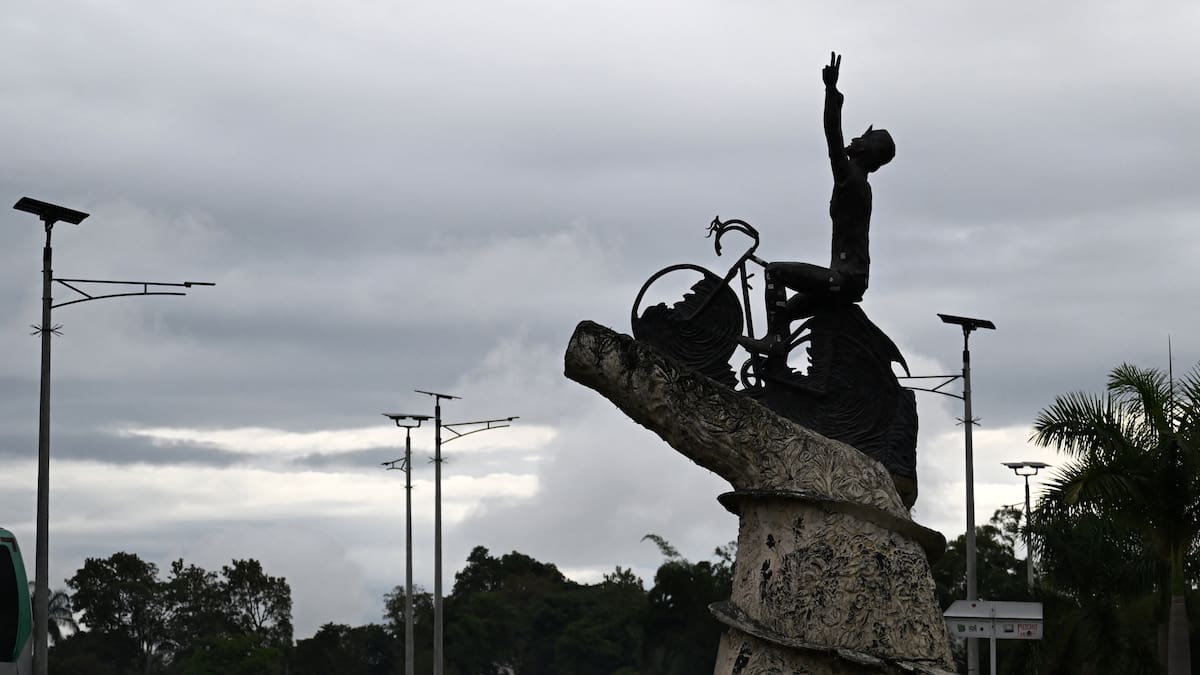
During a recent demonstration in Fusagasuaga over the farmers’ killings, a group of people threw red paint on a statue honouring Herrera.
But most of the townspeople interviewed by AFP stood by their champion, saying they believed the allegations against him were “lies”.
Stella Prada, Gonzalo Guerrero’s partner, who was pregnant with their only child when he was taken away, said she was sad to learn of Herrera’s alleged involvement in the case, “because he’s not a stranger, he’s our neighbour.”
She is preparing herself for what she fears will be a David-versus-Goliath legal battle against the sports star.
Torres’ mother, Hermencia Vega, said she hoped for years her son would “come back alive”.
Recovering his remains last year brought some comfort but did not end her suffering.
“You never forget your children,” she said.
-Agence France-Presse