
First published on 
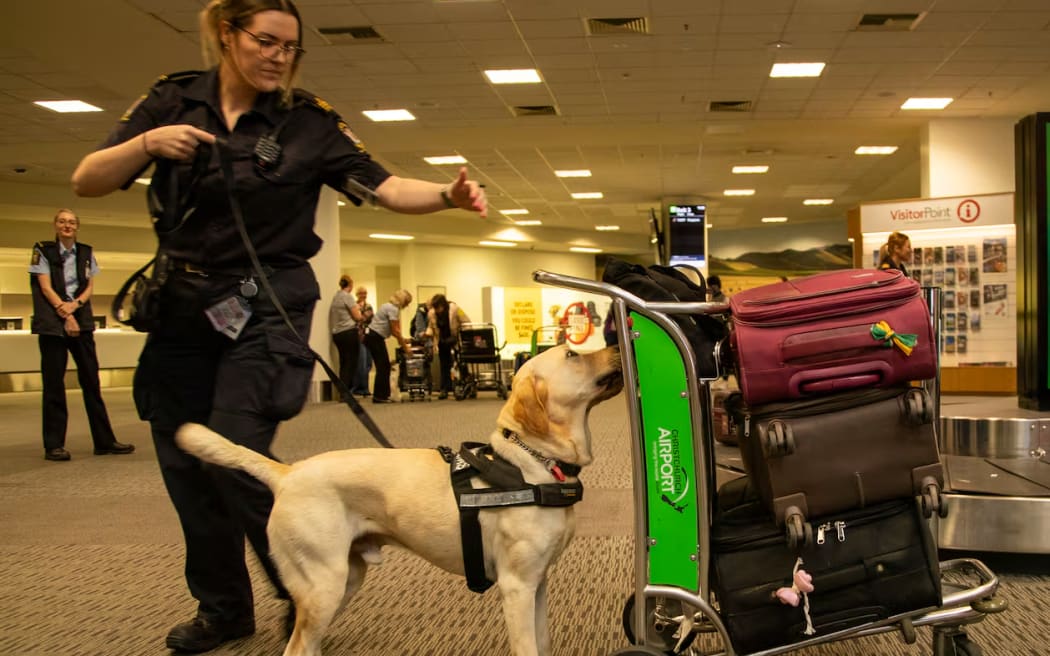
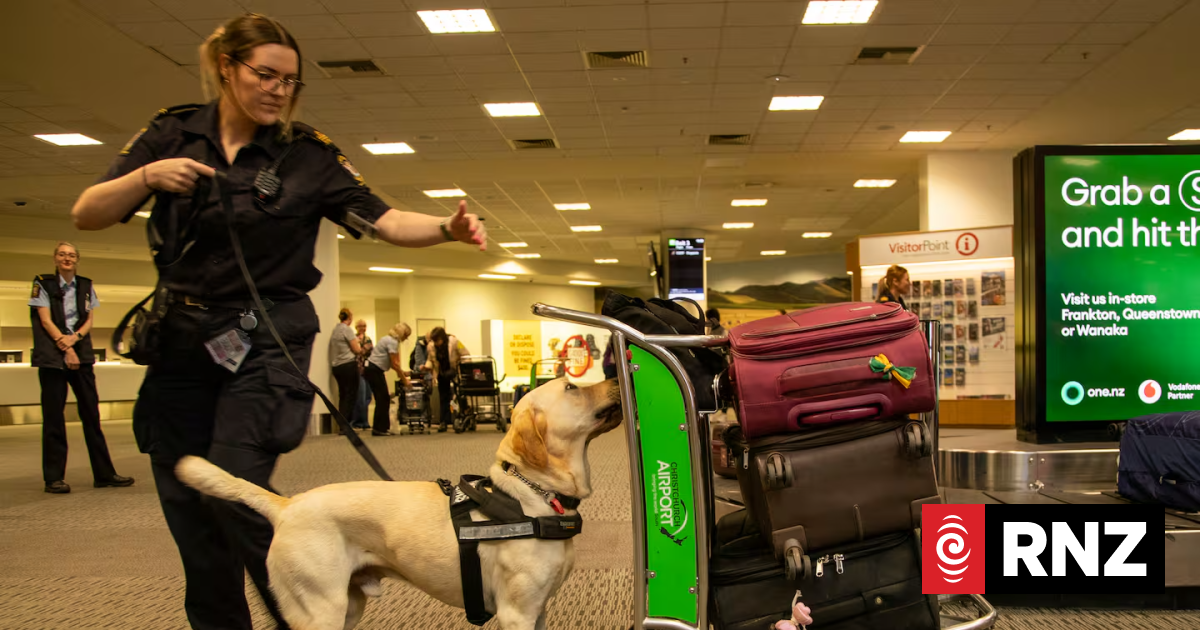
Customs officer and dog handler Hannah is on duty to meet the Singapore flight.
Photo: Open Justice / Joseph Johnson
Customs officers surround a luggage carousel, as the first morning flight of Christchurch-bound passengers arrives from Singapore.
Some officers are on the move, while others stand and observe, in a scene similar to the TV show Border Patrol.
We’ve been led through a series of security doors to get a bird’s-eye view of the 100 or so staff who protect the South Island city’s borders.
While staff are on a first-name basis with partnering agencies at the airport, such as police and the Ministry for Primary Industries, most don’t want to share their full names with us.
It’s understandable – they take their jobs seriously and have genuine concerns for their privacy, given the nature of their work.
We observe officers not only stopping, questioning and talking to travellers, but also being stopped by travellers with a multitude of questions.
Supervising officer Karyn is the first to greet us. She is wary of us at first, but soon opens up, saying she has had two stints in the service.
She said the risk posed by passengers selected for further assessment was again narrowed down by officers who ask the passengers a series of questions, resulting in a smaller number being referred for a luggage search.
Physical risk assessment of a passenger on arrival can involve questioning by a Customs officer, use of detector dogs, an X-ray and searches.
In the 2024/25 year, 6.8 million international travellers arrived in New Zealand. Of this, 132,943 (approximately 2 percent) were selected for further risk assessment.
Following a further risk assessment process, 10,662 travellers were actually subjected to baggage searches.
Karyn joined Customs straight out of school in Christchurch in 1978, before taking a break to have children in 1987 and returning in 2003.
She joked that she was too short to join the police.
Beyond Border Patrol
She put aside the perception of Customs made popular by reality television shows.
“There is a whole lot of work aside from inspections. There are other areas, investigations, intelligence, trade, service and delivery – all these things have to be cleared.”
Karyn said a stack of administration supported that, as everything had to be accounted for.
The administrative aspect was reflected in the service’s recently released national 2024/25 annual report.
It’s a massive operation, with $285m in funding through the Crown, border-processing levies and goods fees. There is also a stack of revenue, with $17.8 billion collected on behalf of the Crown.
Most of the operating expenditure is for risk assessment, clearing and processing passengers and goods, as they cross the border, and the collection of Crown tax revenue.
It is quantified by the 9.3 tonnes of illicit drugs that are prevented from reaching communities through seizures at our border and by overseas partners.
Also included are 31.8m import transactions and four million export transactions, with 98.1 percent of goods risk assessed and cleared within five minutes.
Just over 8 percent of risk-based baggage searches of passengers and crew resulted in the identification of prohibited or restricted items, or items requiring duty payments.
Customs processed 13.4m arriving and departing passengers. There is also the interception of nine tonnes of illicit tobacco, representing $17.7m in foregone revenue and the response to 973 reports of cross-border online child exploitation offending resulted in 18 arrests.
A worldwide operation
Karyn said the variety of work and people make the difference.
Alongside her colleagues, she said there were several thousand others working at Christchurch Airport.
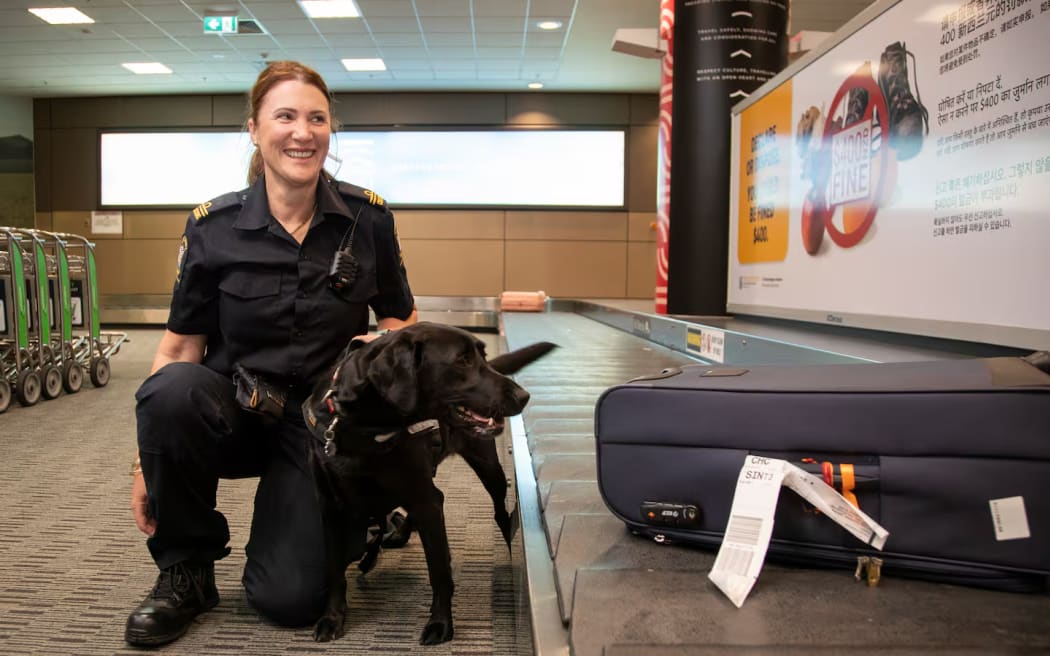
Customs officer and dog handler Megan at Christchurch Airport.
Photo: Open Justice / Joseph Johnson
The airport operation had 60 staff with a total of 120 employed across the city, she said. It’s an enforcement agency and, with that, comes rank.
Karyn said it took years to move through the ranks and staff shifted between departments.
Staff were mindful that discretion was a key part of the job, she said.
A lot of the intel work was led by overseas liaison officers in cities including London, Bangkok and Beijing.
“Quite often, a lot of it is stopped before it comes here.”
The annual report said transnational, serious and organised crime groups posed a significant threat through escalating attempts to smuggle large amounts of illicit drugs, weapons and other prohibited goods.
In North America alone, $1182.9m in potential harm to New Zealand was avoided by overseas illicit drug interceptions.
The report said New Zealand’s high prices and demand for drugs, particularly methamphetamine and cocaine, made us an attractive target for the groups.
Notable seizures during the year included 150kg of cocaine in duffel bags in a container on a ship arriving from Jamaica.
There was also 130kg of cocaine found packed in duffel bags in a shipping container from Italy, via Panama, that was loaded with machinery. Then there was 100kg of methamphetamine found in suitcases inside a container of fertiliser from Peru.
The largest seizure of the year was 450kg of methamphetamine hidden inside steel beams imported from the US in September 2024.
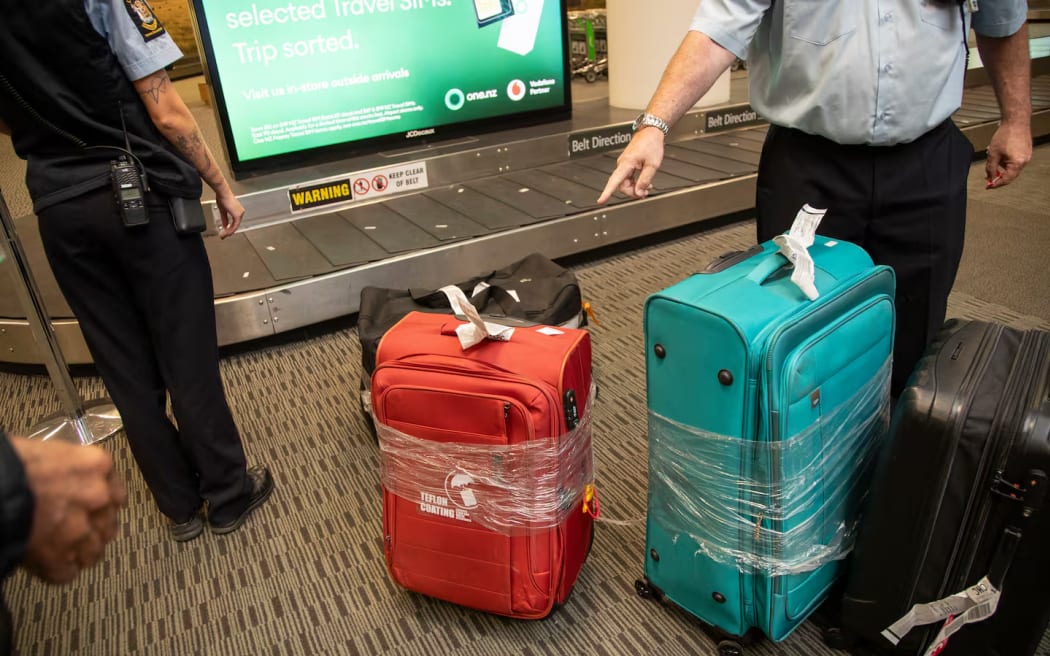
New Zealand Customs officers check luggage at Christchurch Airport.
Photo: Open Justice / Joseph Johnson
New Zealand ‘a target’
The report said New Zealand had seen a sustained escalation in the volume of illicit drugs seized at the border in recent years.
Wastewater testing by PHF Science and reporting by the National Drug Intelligence Bureau indicated a considerable growth in methamphetamine use in the community between July and October 2024, with this being largely sustained throughout 2024/25. It also showed a rise in the use of cocaine.
Increased production of cocaine in South America had led to a surplus supply, and attempts to increase trade with new and existing markets.
The report said organised crime groups are targeting New Zealand’s supply chains to transport their products.
“They insert people in key roles at ports and airports, or compromise people already in those roles, who can bypass security measures and divert goods before they reach Customs screening areas.”
In late November, police laid nearly 200 criminal charges against gang associates, who were allegedly facilitators in a criminal syndicate smuggling illicit drugs aboard international flights.
Twenty search warrants were carried out across the Auckland region by the National Organised Crime Group and Customs, with eight associates from the Brotherhood 28 MC arrested. Among those arrested was the gang’s president.
Additional data given to NZME showed Customs seized about two tonnes of methamphetamine and 700kg of cocaine between January and October 2025.
Offshore partners also seized approximately one tonne of methamphetamine and 300kg of cocaine that was destined for our shores in the same time period.
“We are trying to identify the high risk,” Karyn said.
Busy season approaching
The pressure was on with the looming summer season, she said.
“Summer is going to be busier. People need to be aware that they are not the only ones travelling.”
For Christchurch Airport, that meant increased numbers to and from Asia, Australia and Antarctica. There could be charter flights, delegations and even bands arriving with tonnes of gear.
“All that stuff has to be cleared,” Karyn said. “You might get charters with seasonal workers – it takes time to process them.”
With travellers, officers questioned a lot, made risk assessments, looked at their luggage, travel history and who they might be travelling with, she said.
“Until you talk to people, you don’t know. We have ongoing training in questioning people.”
We meet Rob, who is a technical specialist in detector dog training. He said the dogs, all labradors, were home-kennelled.
They worked and lived alongside officers.
Five dog handlers operate in the South Island, deployed on a risk-based system.
“We look at the latest seizures, how it is being found, we are looking at the opportunities. We move around – the airport is just the tip of the iceberg.”
Also a long-time staffer, Rob said people found out very quickly if the job was for them.
There was shift work and officers had to prove themselves, as they rose through the ranks.
“You have to pass requirements to get your stripes.”
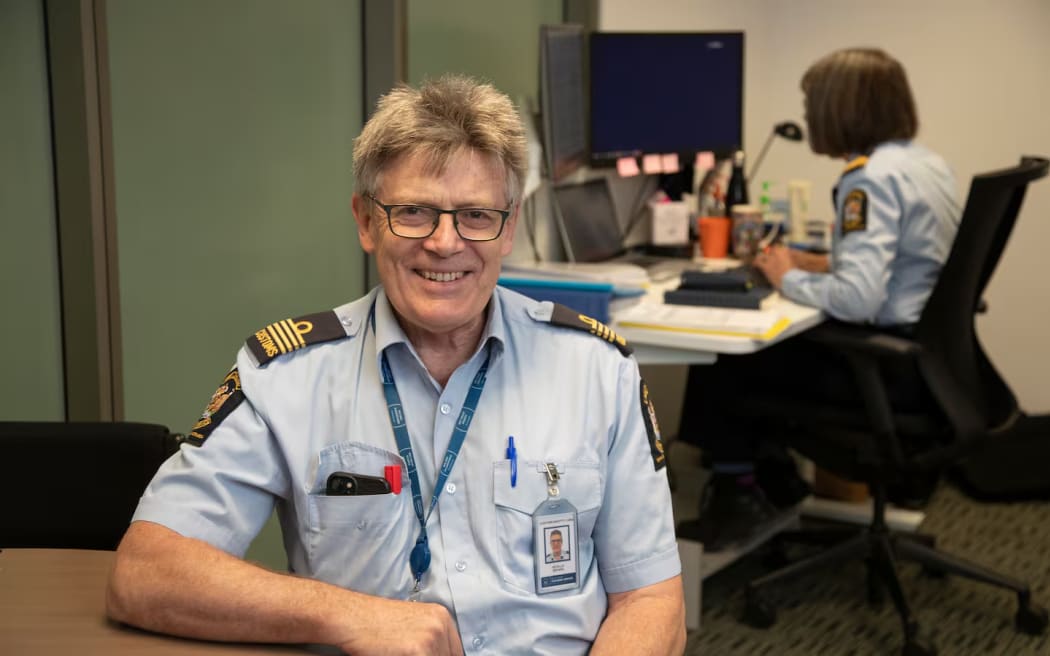
Customs officer Neville Brown at Christchurch Airport.
Photo: Open Justice / Joseph Johnson
Half a century of service
Long-serving officer Neville Brown enters the conversation. He joined the Christchurch operation in 1975, when Customs was based at the old government building in Cathedral Square.
“There was no team at the airport, there weren’t as many flights. The guys would jump in a van and go to the airport when a plane was arriving.”
Brown said he started out looking at shipping documents and talking to licensed importers.
He was involved with sales tax and again talking to people, mainly jewellers in towns across the South Island.
He moved into investigations, looking at fraud and tax evasion.
He was based out of Lyttelton for a while, where he rummaged ships.
From there, he went to work at the airport, where he recalled catching one of the Asia operatives.
Brown said the man had a bank deposit slip made out to a person of interest in the syndicate. A body search revealed a hidden package of heroin.
“There’s no heroin anymore, it’s now meth and cocaine by the kilos.”
At 70, he had no immediate plans to retire.
“There’s a variety, investigations, inspections and patrols.”
‘Everything is risk-rated’
Emma, the chief officer from the Lyttelton team, arrives to give us a ride to see the port operations.
She said they looked at “anything and everything”.
The Christchurch port team also looked after Timaru.
She said technology had played a huge part in change, as a lot of reporting was now done via cellphones.
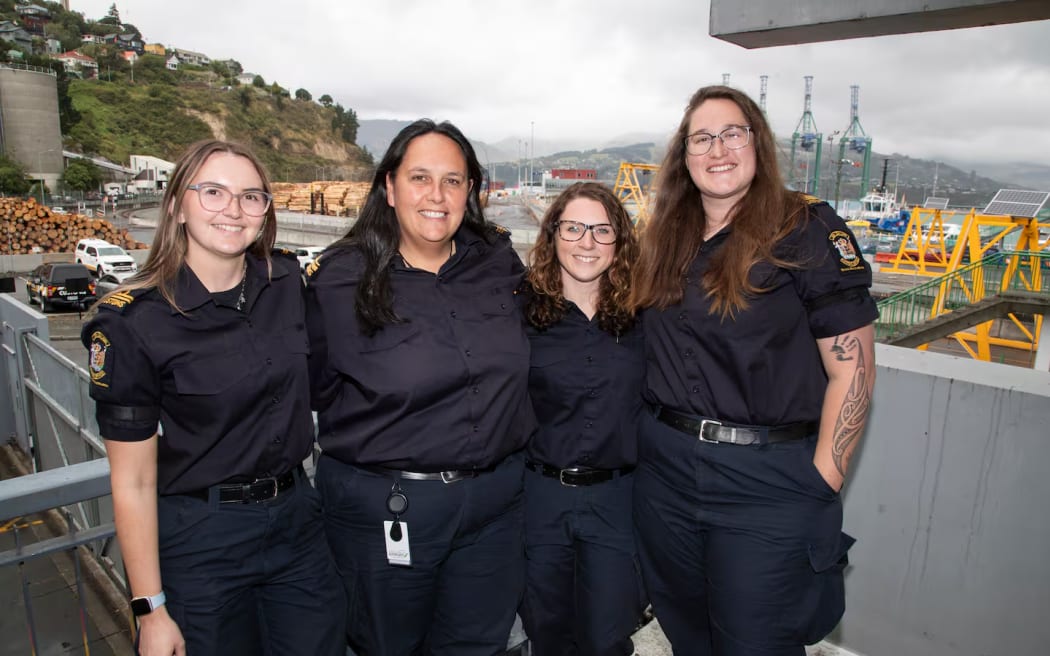
Customs officers Sarah (from left), chief Customs officer Emma, senior Customs officer Jess and senior Customs officer Georgia are based at Lyttelton.
Photo: Open Justice / Joseph Johnson
The risk has also changed, she said.
“The world has changed so much, the cost of living and drugs – crime is huge.”
Everything was risk-rated, Emma said.
“Shipping changes on a daily basis.”
The Lyttelton operation was staffed by 11 officers.
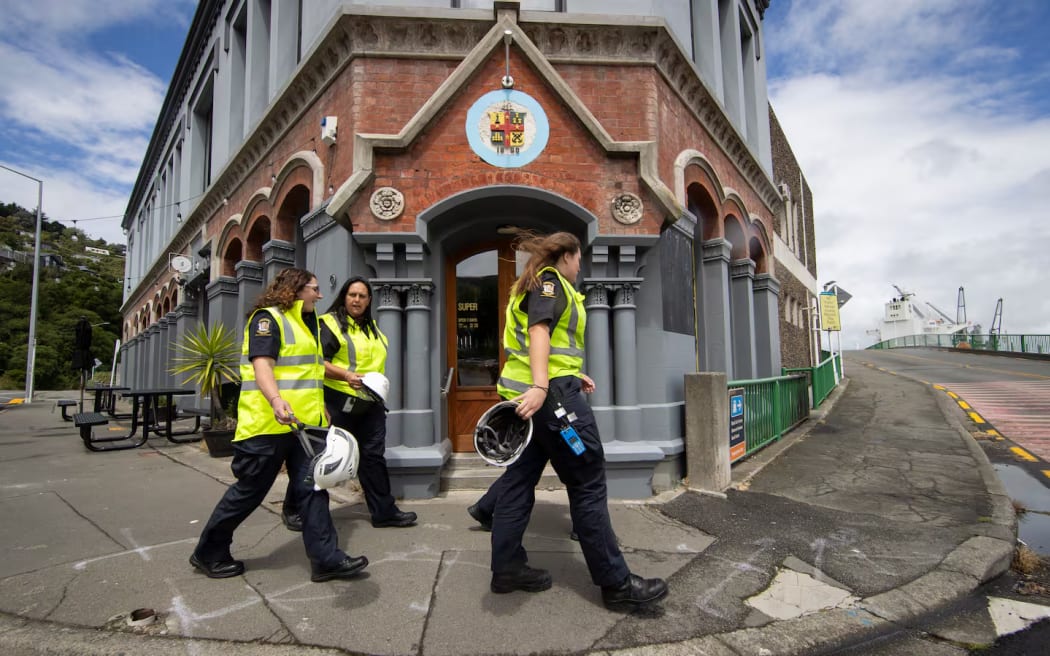
The Lyttelton Customs team are tight-knit and visible in the seaside community.
Photo: Open Justice / Joseph Johnson
She said it was important for her staff to be visible in the seaside community.
“We are reliant on the community. Somebody might have seen something and thought, ‘This isn’t right’.”
All Customs staffers we speak to have a common denominator.
They say they are proud to protect our borders.
* This story originally appeared in the New Zealand Herald.