
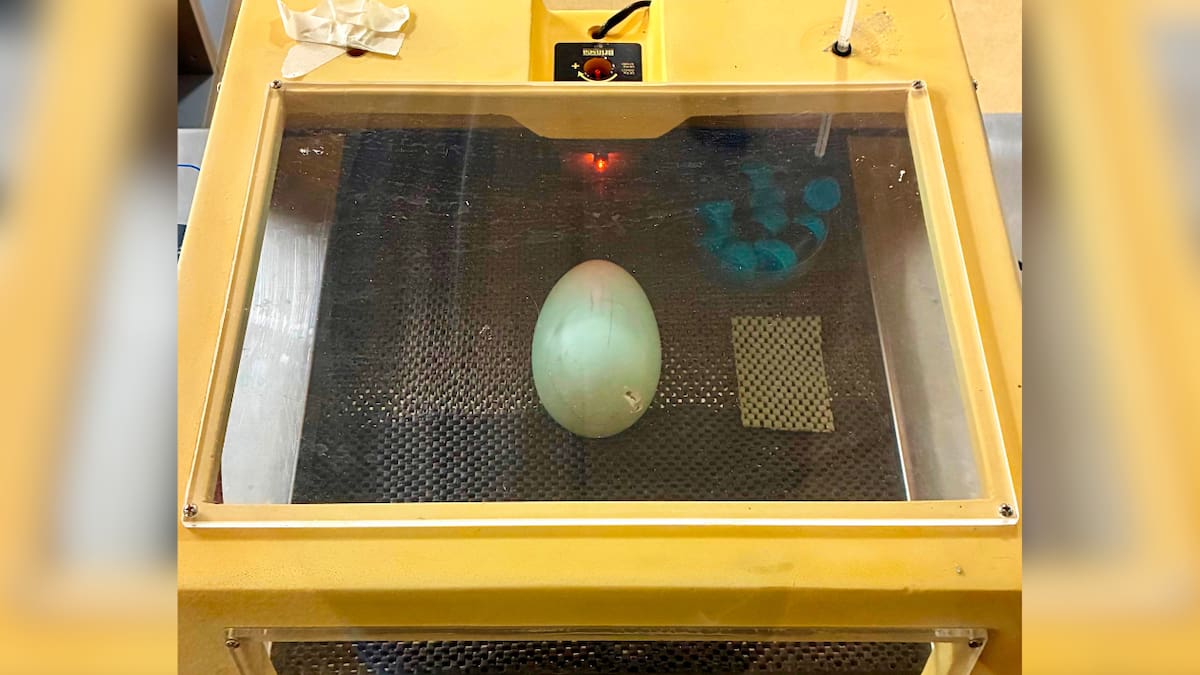
The lovely young woman at the front desk of the Pūkaha National Wildlife Centre gave us the breaking news: a kiwi egg was about to hatch. A sizeable crack had appeared in the incubated egg the day before, she said, which meant that after some two months of waiting, the
big day was almost here.
In mere hours, indeed perhaps on the very Saturday morning we had chosen to visit Pūkaha, the egg’s small occupant would finish the job and emerge, maybe even as we looked on, she said.
Could we be that lucky? And if we were, would we be able to cope with such a momentous event? There is, after all, only so much excitement Michele and I can handle when we go on one of our rare outings.
Even the thought of seeing a kiwi hatchling arrive was almost too much excitement to bear. But how could we not want to see such a precious event?
First established in 1962, Pūkaha, about 30 minutes’ drive north of Lush Places, is situated at the edge of almost 1000ha of protected bush. It is not just for visiting. It is a captive breeding facility for several species of endangered native birds.
We had been to Pūkaka only once before, with our late, dear friend Jim, who was an enthusiastic birder and hands-on supporter of both Tiritiri Matangi island sanctuary near Auckland and Pūkorokoro Miranda Shorebird Centre on the Firth of Thames.
Since our last visit, Pūkaha, a registered charity, had itself gone on the endangered list. Last year, its board announced it was heavily in debt and about to go down the gurgler as creditors circled. Fortunately, the Tararua and Masterton councils, Department of Conservation, the community and others rallied to save it.
On this fine Saturday, with a new kiwi on the way, it seemed unimaginable that such a special place might have gone the way of the huia.
To get to the kiwi house, we had first to wend our way along the centre’s well-tended tracks through native bush which is alive with birds, including, our map promised us, kākā, kākāriki, kererū, kōkako and korimako, as well as tūī and pīwakawaka.
We were not to be disappointed, because we took our time. So many visitors we encountered marched quickly past aviaries, making too much noise, seemingly assuming the birds, like a bunch of Instagram influencers, would be waiting to show off.
We walked slowly and quietly and – this is my secret tip – used my phone to play the calls of the birds we were hoping to see. In the space of half an hour, three boisterous kākā swooped over our heads, a couple of stout kererū inspected us from a rimu and we were the subject of considerable interest for several kākāriki. No kōkako appeared, but for a few minutes we stood transfixed as two saddlebacks, or tīeke, gave us a good talking to.
Is there anything quite as magical for a New Zealander as a close encounter with a rare native bird? It’s like meeting a movie star.
After we’d inspected a giant wētā that is truly giant – it is 5m long and made of steel, and appeared at the Burning Man festival in California – we arrived, with our fingers crossed, at the kiwi house.
After a lucky five minutes watching a four-month-old kiwi named “Chilli” digging about in one of the house’s two darkened enclosures, we went for a nosy out the back to find the incubator.
There was the egg and there was the crack, but there was little sign the great event was imminent. How long should we wait? Should we make a sign to stick to the lab window saying “Welcome!”?
After long minutes, we decided under the circumstances (rumbling stomachs) that lunch at the centre’s Kākā Cafe was the best option – and it was.
It was in the early hours of the following morning that the hatchling finally emerged, with “beautiful big bright eyes, perfect wiggly toes and a beak ready to start exploring,” Pūkaha announced on social media.
For reasons I can’t explain, we, too, felt like proud parents.
SaveShare this article
Reminder, this is a Premium article and requires a subscription to read.
Copy LinkEmailFacebookTwitter/XLinkedInReddit