
“It’s difficult to overstate how big the task has been for the crews on the ground,” Bishop said.
He said it’s “encouraging news” for one lane to reopen, but there are still “important things” for locals to keep in mind.
“While geotechnical investigations have confirmed that the road is safe, it’s still an active worksite, people should only travel if they must and be prepared for the road to close at short notice if weather conditions or risk assessments change.”
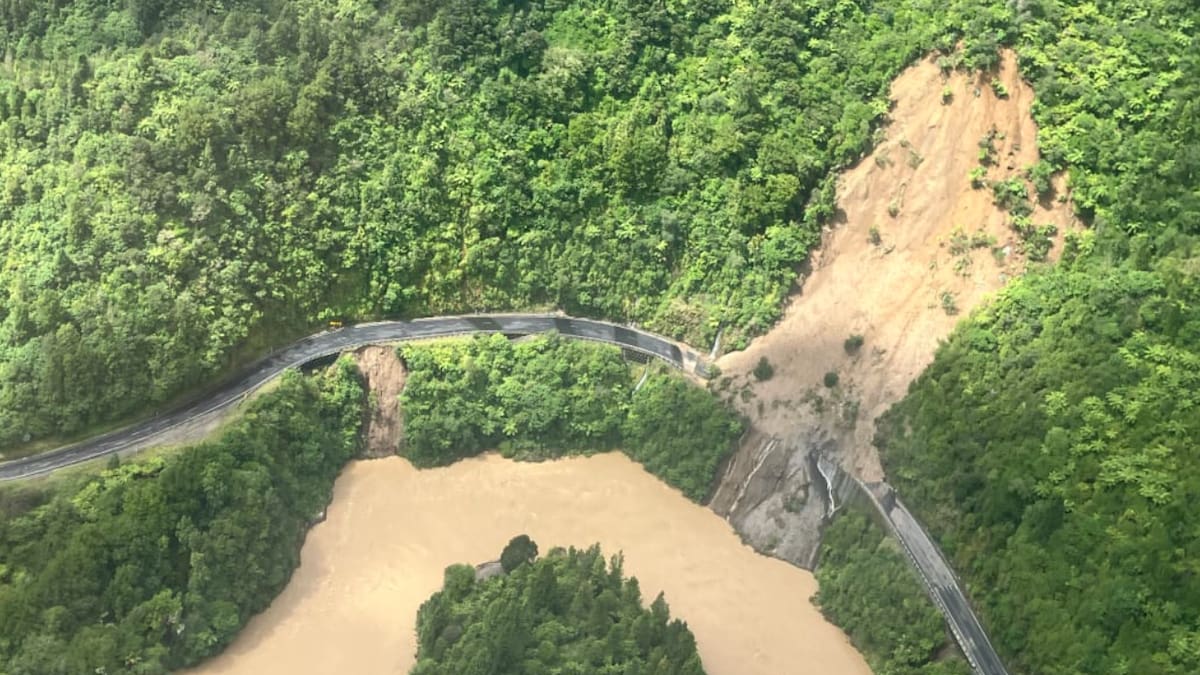
There have been multiple slips along State Highway 2 through the Waioweka Gorge. Photo / NZ Transport Agency Waka Kotahi
Bishop said restoring access is important, but doing it safely is critical.
It’s a “vulnerable route” which NZTA is actively monitoring for further slip movement.
“Crews will remain working on the other side of the road, clearing the remaining debris, improving drainage and opening culverts to reduce the risk of further issues.”
Bishop said he expects this stretch of SH2 to remain a worksite for some time.
“People should travel with extreme care and be mindful of workers on the road. Give them a friendly wave as you travel through.”
A major slip on the Ōpōtiki side of the Waioweka Gorge following heavy rain in January 2026. Photo / NZ Transport Agency Waka Kotahi
Motorists planning to join the convoy are advised to allow plenty of extra time to get to their departure point and convoys will leave “promptly on schedule”.
Across the 37km stretch of the gorge, convoys will operate in a single direction, three times daily for each direction. Pilot vehicles will control the convoy speed.
The Gisborne start point at the Historic Tauranga Bridge departs promptly at the following times:
7.00am, 11.00am and 5.00pm
The Ōpōtiki-bound start point is in Matawai at Te Wera Road intersection.
Departing promptly at the following times:
9.00am, 1.00pm, and 7.00pm