
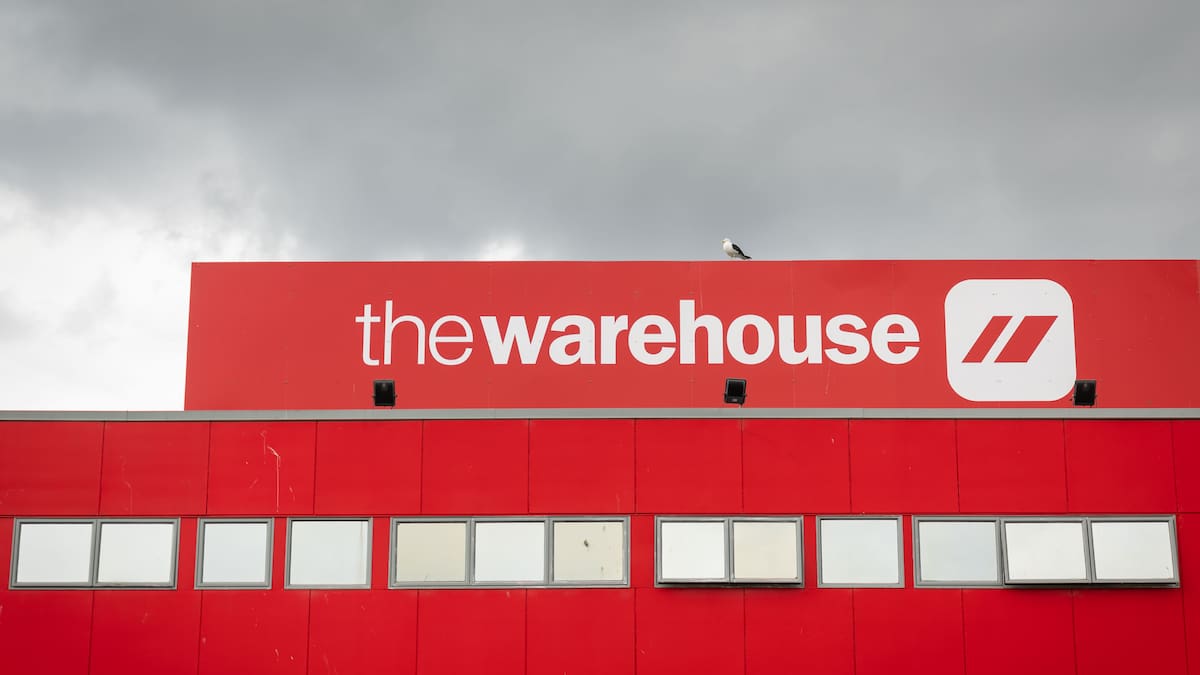
“The Warehouse needs a big revival and to do that we’ll need to make some big calls,” Coulter said.
“As a well-known value retailer who wants to keep prices low and invest in stores, we need to figure out what will really resonate with the 1.5 million Kiwis who already shop with us each week and for the rest of New Zealand.”
The Warehouse Group’s chief marketing officer Frankie Coutler is resetting the company’s advertising strategy.
Coulter has more than 25 years’ experience in the industry, working for well-known brands including Kellogg’s, Durex, Boots and Wattie’s.
Before his move to The Warehouse Group, Coulter was a critical figure in turning around the marketing at Goodman Fielder, home to brands including Vogel’s, Meadow Fresh, Kaló, Freya’s, Nature’s Fresh, Fortune Rice and Edmonds.
His work at Goodman Fielder helped him win the top honours at The Marketing Awards in 2024.
As Coulter explained, The Warehouse is one of the top 15 companies in the country for marketing spend, but whether it is getting value for money needs to be addressed.
“I approach money like it’s my money. I don’t like spending money unless I understand the value I’m getting for that money. I do that in my personal life, and I translate that into business.
“I’m switching it off so that I can understand where we are spending the money, because we’re in an environment as a business right now where we’re in survival mode. We need to grow for the future, but I don’t know where to go for the future until I understand what’s working and what doesn’t.”
Coulter said a “fair chunk” of the company’s current spend was going towards Google Advertising, but couldn’t elaborate as to how the group was currently splitting its investments across advertising.
He said he would rather see that spend go towards connection with the store’s local communities, rather than on Google.
As to how why his reset was needed, Coulter said it bluntly, “This business has lost its way, and forgotten who it is”.
“What’s really important, regardless of whether you’re marketing products or retail experiences, is your customer. Your customer is number one. Coming to this organisation, the first thing I need to understand and then to make sure we’re aligned to is what does our customer want.
“We are in every region in New Zealand, and we need to make sure our offer in those stores is locally relevant. Our teams in our stores are my number one resource for information about how we’re going to transform this business, because they are at the frontline.”
Coulter said this didn’t mean the company wouldn’t utilise TV, billboards, Google or other methods to advertise in future, but that the balance needed to be understood.
The Warehouse is set to bring back it’s former Kiwi mascot, which was phased out during the company’s rebrand back in 2005.
Part of that localisation is returning to what worked for the company in the past, and understanding what can be done to connect with the local community.
Coulter plans to bring back the company’s Kiwi mascot, which was phased out during the company’s rebrand in 2005.
He also plans to bring back kid-sized trolleys that previously existed in stores nationwide.
While those changes may not be as expensive as other “fancy marketing things”, they connected with customers in the past and would work again, he predicted.
Noel Leeming and Warehouse Stationery won’t be part of the advertising pause according to Coulter, with his priority firmly set on fixing the Red Sheds.
Coutler also confirmed the company would review its partnership with advertising agency TBWA and others that it works with as part of the pause.
“My long-term vision is that we support local businesses. We are a local business, and we want to work with local partners that have Kiwi ideas and Kiwi humour.
“Now it doesn’t mean to say I’m only going to work with local teams. I need the best skills for the job, but my preference for sure would be local.”
The Warehouse Group chief executive Mark Stirton is up for the challenge of turning around the fortunes of New Zealand’s largest retailer.
The decision comes after the group announced it would be cutting 270 roles from its head office, with many roles and administrative functions set to be outsourced overseas.
The Warehouse Group chief executive Mark Stirton said the company’s cost base was not sustainable for a value retailer.
“As one of New Zealand’s largest retail employers we must make these tough choices for our 10,000 team members and their families across the country and return the group to sustainable profitability,” Stirton said.
“Together with the non-labour cost reduction initiatives under way across the group, these changes will help strengthen profitability and allow us to deliver better value for our customers over the long term.”
The leaner head office structure forms one part of the cost reset programme signalled by the business in November 2025.
The aim of the programme is to reduce the group’s cost of doing business (codb) to below 31% of sales.
The Warehouse Group is set to provide a broader update on its cost reset programme as part of its 2026 half year result on March 27, 2026.
Tom Raynel is a multimedia business journalist for the Herald, covering small business, retail and tourism.
Stay ahead with the latest market moves, corporate updates, and economic insights by subscribing to our Business newsletter – your essential weekly round-up of all the business news you need.