
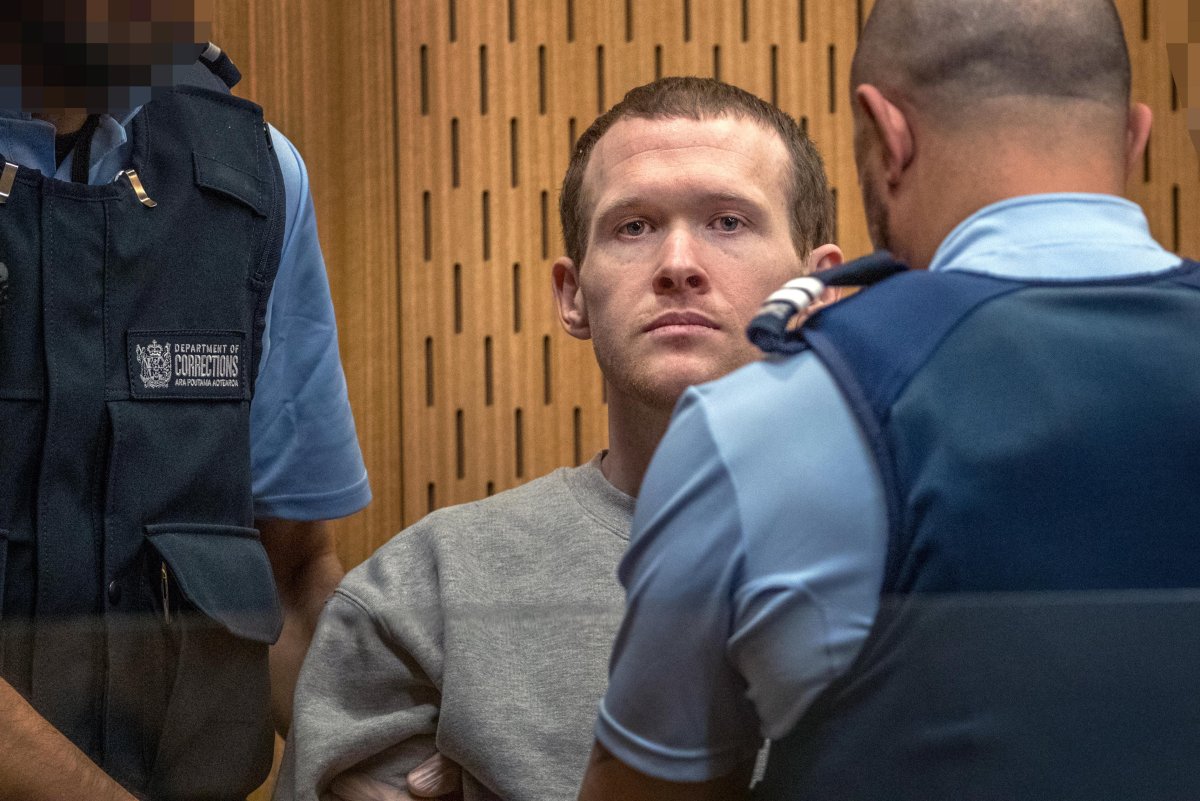
Brenton Tarrant appeared in a New Zealand court via video link, from a prison where he is serving life, seeking permission to reverse his guilty pleas in deadly attacks on two mosques in which 51 people were shot dead and 40 wounded. File photo by John Kirk-Anderson/EPA-EFE
Feb. 9 (UPI) — An Australian man serving life without parole for shooting dead 51 people and attempting to murder another 40 in partially live-streamed attacks on two New Zealand mosques in Christchurch in 2019, asked the Court of Appeal on Monday to allow him to reverse his plea to not guilty.
Claiming the “torturous and inhumane” conditions in which he was held in prison rendered him unable to make logical decisions, Brenton Tarrant, 35, who also pled guilty to one terrorism charge, was also seeking to appeal his sentence.
Testifying from prison via a video link to a hearing expected to run all week, the self-professed white supremacist will attempt to persuade a three judge bench he should be permitted to withdraw his plea and be tried on all the charges.
If the appeal court vacates his pleas, he will go to trial in the High Court. Failing that, a separate hearing in coming months will rule on his appeal against his sentence.
The current hearing will rule whether mental illness impacted the course of justice and whether statutory time limits apply as both appeals were filed after the expiry of the window for appeals.
Tarrant told the court Monday that solitary confinement and limited reading material and contact with other prisoners meant his mental health deteriorated to such an extent that he switched his plea to guilty before his case came to trial, believing he had no other option.
Barnaby Hawes, representing the Crown, put it to Tarrant that delaying the start of his trial on mental health grounds was open to him as well as the option of defending himself, saying there wasn’t much evidence of the nervous breakdown he claimed he’d suffered.
Tarrant said he hid his mental health condition because of the “political movement” he belonged to and that he had missed the deadline to lodge his appeal because he was unable to access the necessary information.
The hearing in the Court of Appeal in Wellington was taking place amid tight security with only legal counsel, court staff and media present.
Survivors and family of victims were able to witness proceedings via a delayed video link broadcast in Christchurch, avoiding the need to fly or make the nine-hour drive from Christchurch, which is on the south Island, to Wellington on the north island.
The attacks during Friday prayers at the Al Noor mosque and Linwood Islamic Center on March 15, 2019, led to the country tightening gun laws, including banning military-style assault rifles and semi-automatic guns and magazines, as well as a buyback scheme.
Survivors and family members of victims condemned Tarrant’s court bid, saying they believed it was an attempt to re-open old trauma and make himself focus of attention and relevant once again, but vowed they would not play into his games.
“He took the right of life of my brother and 50 others, and then we’re going to sit through now and talk about the legal arguments of his right to appeal. When you place those two together, they are morally not comparable,” said Hussein al-Umari who was awarded a New Zealand Bravery Star for his actions on the day.
Then-prime minister Jacinda Ardern said at the time Tarrant was handed his life sentence without parole that it effectively neutralized him, saying he had “no notoriety, no platform… and we have no cause to think about him, to see him or to hear from him again.”